From Myths to Empathy: How to Dismantle Transphobia Through Education and Acceptance

You shape beliefs through what you teach, what you question, and what you accept. Transphobia often grows from myths, not facts, and those myths cause real harm in schools, families, and daily life. When you replace fear with accurate information, respectful language, and human connection, prejudice tends to weaken. The evidence is clear, but the deeper challenge is more personal: how you respond when someone’s dignity asks something of you.
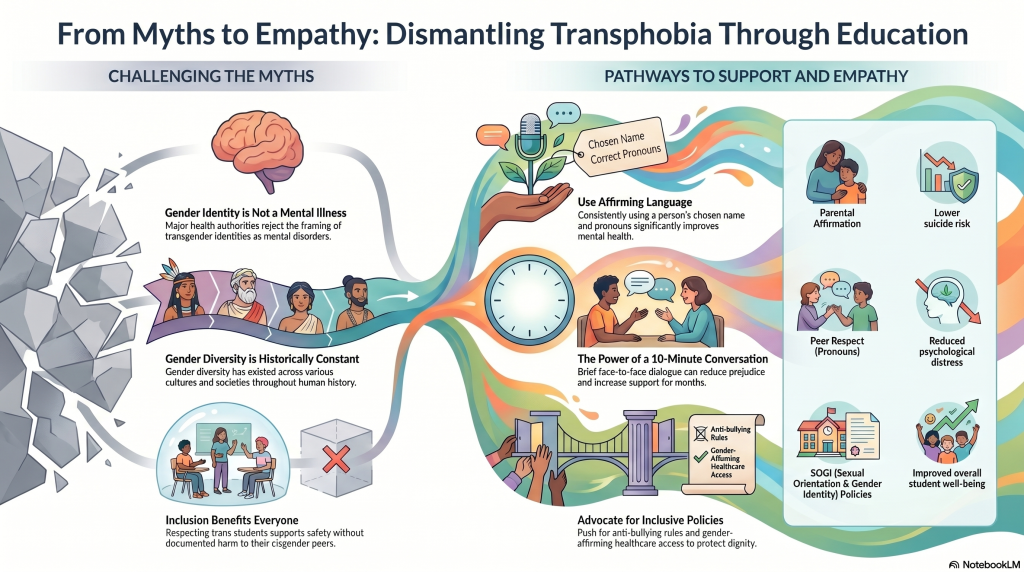
Too often, harmful myths about trans people are repeated as facts, and the damage is real. When you hear Medical myths claiming being transgender is a mental illness, remember major health authorities reject that framing. It doesn’t protect anyone; it deepens stigma and raises suicide risk for trans youth.
You also harm people when you deny Gender diversity by insisting assigned sex always determines gender. That belief ignores lived reality, valid nonbinary identities, and evidence from science and culture. Trans people aren’t new, either; their Historical presence spans societies and generations. Ultimately, myths that affirming pronouns, bathrooms, or sports access threaten others distort the truth. Respecting trans students supports safety and wellbeing without documented harm to cisgender peers. Protecting Legal rights isn’t special treatment; it’s a basic, evidence-based commitment to human dignity.

Building understanding starts with what students are taught and what adults choose to affirm. When you support curriculum integration that includes accurate, age-appropriate facts about gender diversity, you help replace fear with familiarity. UNESCO, WHO, and UNAIDS have endorsed inclusive learning because it consistently reduces prejudice and builds empathy across stages 5–18.
You can also see change through classroom activities and everyday conversations. When students discuss gender diversity openly, they’re less likely to absorb stigma from peers, family, or religion without question. Research shows even brief face-to-face dialogue can shift attitudes for months. Inclusive codes of conduct and anti-bullying policies reinforce those lessons, making respect expected rather than optional. Education doesn’t erase difference; it teaches you to meet difference without hostility, assumptions, or dehumanization in daily life.

Safety begins with what trans youth can count on from the people around them. When you offer family affirmation, respect names and pronouns, and expect schools to enforce protections, you lower chronic stress and help prevent despair. Evidence shows affirmed trans youth report far lower suicidality than unsupported peers. Because harassment and discrimination remain common, your active support matters immediately. It helps secure equal access to learning, healthcare, extracurriculars, and community resources.
| Support | Protective effect |
|---|---|
| Parents affirm | Lower suicide risk |
| Teachers intervene | Safer classrooms |
| Peers respect pronouns | Less distress |
| SOGI policies | Better well-being |
| Visible inclusion | Equal participation |
You can see the pattern: acceptance isn’t symbolic. It changes daily safety, mental health, and belonging for vulnerable students in every school.
One honest conversation can open minds in ways slogans and headlines often can’t. Research shows that when you engage someone face-to-face for even ten friendly minutes, prejudice can drop and support for transgender nondiscrimination laws can rise for months. In Miami, this shift proved remarkably durable, even after people later heard counterarguments.
What makes that change stick isn’t who starts the conversation. It’s how you invite reflection. When you use personal narratives and perspective taking exercises, you encourage active thinking instead of passive reaction. That deeper processing helps people reconsider assumptions and remember why empathy matters. Skilled, respectful dialogue works better than impersonal mailers or television appeals because it asks you to listen, reflect, and connect human experience to fairness. Sometimes understanding begins with feeling heard and seeing someone else fully.
Showing up for trans youth can save lives. You can lower suicide risk by becoming one of the supportive adults they can trust. Listen, use their name and pronouns, and step in when you hear misgendering, deadnaming, invasive questions, or outing. Correct behavior privately, affirm the student, and don’t make them teach others.
You can also advocate beyond one interaction. Push for inclusive school policies that protect trans students through anti-bullying rules, bathroom and locker room access, and name recognition. Join parental allies, teachers, and community members in sharing reliable guidance, including SOGI resources and the Lawyers Against Transphobia handbook. Support access to gender-affirming healthcare, challenge insurance and school barriers, and insist on culturally competent care that protects long-term well-being.
Psychologists say you should understand transgender people through evidence-based clinical perspectives: being transgender reflects gender identity, not a mental disorder. They recognize that some people experience gender dysphoria, which deserves compassionate, individualized care. You’ll also find strong support for trauma-informed assessment, family acceptance, and inclusive environments, because these reduce depression, anxiety, and suicide risk. When appropriate, gender-affirming support and treatment can markedly improve well-being and long-term mental health.
You can tell someone they’re being transphobic by calmly address behavior and express impact: “When you used their deadname, it caused harm and reinforced exclusion.” You should name the comment, explain that misgendering links to higher anxiety and suicidal ideation in trans youth, and offer better phrasing. Keep it compassionate, not shaming. If needed, remind them they have a duty of care and legal responsibility to avoid discrimination and protect safety.
When you challenge myths with accurate, age-appropriate education, you help replace fear with understanding. When you listen, use chosen names and pronouns, and support affirming policies, you protect trans youth in ways research consistently shows matter. Even brief, respectful conversations can open minds. Think of acceptance as a bridge: each small action helps someone cross from isolation to belonging. If you lead with empathy and evidence, you can help build safer, more humane communities for everyone.

 Featured PostsOctober 21, 2026The Trans Journey to Passing
 Featured PostsOctober 17, 2026From Job Search to Success: A Transgender Woman’s Employment Journey
 UncategorizedOctober 17, 2026Trans Rights at Risk? The Implications of a Trump 2024 Win
 Featured PostsOctober 17, 2026One Step Closer: Trans and Passing