The Psychology of Becoming: Does HRT Change Who You Are?

A few months into hormones, some people say it feels like someone at last turned down the static. You might notice shifts in mood, confidence, or how easily you speak up, and studies do find short-term drops in distress and, at times, more outward ease. But that doesn’t mean you become a different person. More often, life change alters which parts of you can show up—and the pattern isn’t the same for everyone.
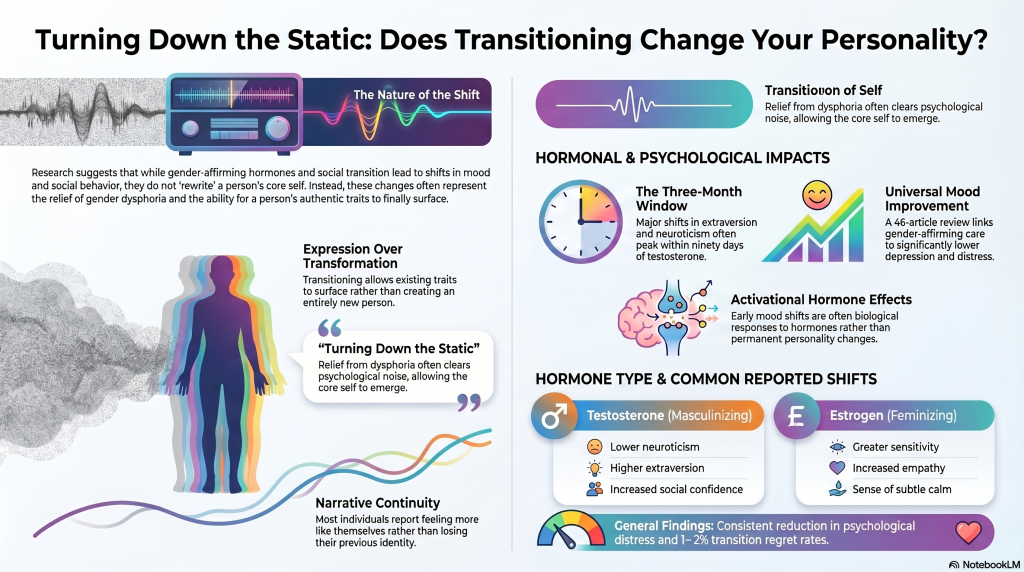
While beginning gender-affirming processes can seem to change your personality, the evidence suggests it more often shifts how your underlying traits are expressed than it rewrites who you are. If you start GAHT, studies often find early changes in mood, confidence, and social behavior, especially reduced distress and depression. In trans men, prospective NEO-PI-R research also shows lower neuroticism and higher extraversion within months of testosterone. Those shifts can feel like a new self, but they usually reflect activational hormone effects, improved affect regulation, and relief from dysphoria rather than a replaced identity. Your social identity may become easier to inhabit, which strengthens narrative continuity instead of breaking it. Still, evidence remains tentative: many studies are small, nonrandomized, and self-reported, so broad claims that beginning gender-affirming processes changes stable personality aren’t yet firmly proven.

Most consistently, the traits that seem to shift after starting masculinizing hormones are neuroticism and extraversion: prospective controlled studies in trans men found lower neuroticism and higher extraversion, with the biggest changes often appearing within the initial three months of testosterone treatment.
For you, that pattern may look like less interpersonal stress and more ease in social settings. Studies using NEO-PI-R measures also suggest an assertiveness increase, greater sociability, and stronger social engagement after testosterone begins. At the same time, traits tied to social anxiety often decline. Evidence around aggression is less clear: some short-term studies reported temporary rises in anger expression, but longer follow-up usually didn’t show lasting increases. Because samples were small and designs weren’t randomized, you should treat effect sizes cautiously, while recognizing the general trend appears fairly consistent.

Beyond broader personality patterns, mood often shifts even sooner after you start gender-affirming hormones. Across multiple studies, including a 46-article review, GAHT is consistently linked to lower depressive symptoms and less psychological distress with both estrogen and testosterone. You may notice early changes in mood trajectories even before visible physical changes appear.
Your emotional reactivity can also shift. With estrogen, some people report greater sensitivity, tearfulness, empathy, mood swings, or subtle calm. With testosterone, you might feel more confident or experience higher libido. Some prospective studies found short-term increases in anger expression around three months after starting testosterone, but longer follow-up usually doesn’t show lasting increases. Anxiety results are less clear. Because most evidence is observational and sometimes small, hormones seem crucial, but they aren’t the whole story either.
Because change affects both your body and your social world at the same time, personality changes don’t follow one universal pattern. If you start testosterone, early studies show the biggest shifts often happen within three months, with lower neuroticism and higher extraversion or sociability for some trans men. Yet aggression findings don’t move in one direction: some cohorts show short-term increases, while longer follow-up usually doesn’t.
Your experience can also differ because researchers measure different traits, follow people for different lengths, and don’t always separate hormones from social adjustment, medications, baseline mental health, or stress. As your social identity becomes more affirmed, your coping strategies may change too. That can make you seem more confident, sensitive, or steady—or barely different at all—while hormones and daily life gradually stabilize over time.
Although the research points to real changes after gender-affirming hormone therapy, it isn’t strong enough to support sweeping claims that shift permanently changes your personality. You can see why: a systematic review covering 46 studies found possible changes, but many studies had limited sample size, uneven quality, and poor control of confounding variables.
When researchers followed people over time, some patterns appeared. In one controlled study, trans men showed lower neuroticism and higher extraversion within three months of starting testosterone. Aggression findings were mixed: some short-term increases appeared, but longer follow-up usually didn’t show lasting effects. Larger surveys more consistently found less depression and distress after treatment. So, if you’re asking whether transition rewires who you are, the evidence currently supports short-term shifts more than permanent personality transformation.
You can expect change regret rates to be very low—often around 1–2%, meaning about one or two people out of 100 report regret in many studies. Evidence shows most regret ties to surgical complications, social stigma, or medical costs rather than rejecting change itself. Older higher estimates often used weaker methods. With informed consent, solid assessment, and supportive care, you’d likely see regret remain low over time in most studies.
You can face negative effects from transitioning, but they vary widely and often lessen with support. Early hormone treatment may bring mood swings, irritability, or temporary anger changes, while supervised care usually improves depression and distress overall. You might also experience acne, sleep issues, libido or fertility changes, and sexual-function shifts. Beyond medical effects, social stigma and relationship strain can harm wellbeing, especially if you lack affirming, monitored care.
Yes—HRT can change how you feel and express yourself, though it doesn’t usually create a completely different personality. Evidence shows you may notice early mood shifts, greater confidence, less distress, or changes in sociability, especially within months. Some people also report temporary increases in anger on testosterone. Your experience can reflect both hormone effects and identity exploration, so changes often feel like becoming more yourself, not less than before.
A good era to start transitioning depends on your needs, not a single birthday. Picture a forked path at puberty: you might use blockers early, then consider hormones in mid-to-late adolescence or adulthood. Evidence suggests earlier care can ease distress, but you should weigh fertility, bone health, peer support, and legal rights. You’ll make the safest choice with trans-affirming clinicians, family input, and informed consent guiding you.
Shifting doesn’t usually rewrite who you are; it more often turns down the static so more of you can come through. You may notice shifts in mood, confidence, or sociability, especially early on with hormones, but research suggests these changes reflect expression, not replacement, of core traits. Your experience may be subtle or profound, shaped by hormones, stress, support, and mental health. The evidence is growing, but it still points to individuality over any single, universal pattern.

 Featured PostsOctober 21, 2026The Trans Journey to Passing
 Featured PostsOctober 17, 2026From Job Search to Success: A Transgender Woman’s Employment Journey
 Activism and ChangeOctober 17, 2026Trans Rights at Risk? The Implications of a Trump 2024 Win
 Featured PostsOctober 17, 2026One Step Closer: Trans and Passing