Am I Trans Enough Now? Unpacking Late-Stage Transition Imposter Syndrome

You’ve changed your name, you’ve adjusted your body, you’ve built a life—and you still wonder if you qualify. Late-stage transformation can heighten imposter syndrome because your brain keeps scanning for safety, and culture rewards tidy, linear stories. You might be feeling dysphoria, anxiety, or shame that’s been learned through rejection, not truth. There isn’t a single “right” timeline, but your doubt is trying to say something specific—and once you know what it is, things can shift.
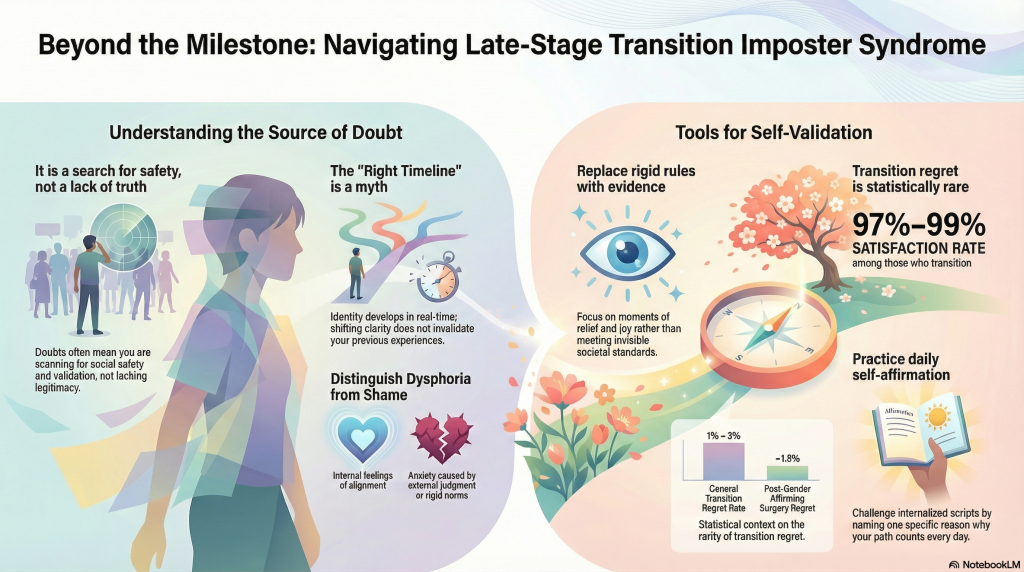

Why can “am I trans enough?” doubts show up even late in change? You’re moving through a landscape shaped by myths that a “real” trans life includes early certainty and a clean, consistent story. When your timeline or feelings don’t match societal expectations or rigid gender norms, your nervous system may read that mismatch as danger, not truth, and you can slip into imposter syndrome. Comparison culture intensifies this: you measure your body, voice, or confidence against others and internalized transphobia frames the differences as failure. Yet gender can be fluid, and your self-acceptance experience doesn’t end at any milestone. You can seek identity validation from trusted peers and affirming clinicians who reflect your reality back accurately.

When you ask, “Am I trans enough now?”, what you’re often really asking is whether you’re safe to be seen and still be believed. You’re scanning for identity validation from partners, clinicians, family, or online communities, because society rewards legible stories and punishes ambiguity. That’s societal pressure, not a measure of your truth.
You may also be asking whether you’ve met an invisible standard: the “right” timeline, the “right” body changes, the “right” certainty. Internalized transphobia can turn those external expectations inward, so you start policing yourself. Imposter syndrome thrives in that gap between your lived experience and the narrow narratives you’re told to follow. There isn’t one way to be trans; you don’t have to earn it.

Sometimes the hardest part of asking “am I trans enough?” is figuring out what you’re actually feeling in your body and mind: dysphoria, anxiety, shame, or a mix of all three. Dysphoria can show up as body unease or tension around social expectations, but you might not have it—and that doesn’t disqualify you. Anxiety can spike when you anticipate judgment, misgendering, or pressure to fit rigid norms. Shame often grows from learned messages that only certain trans stories count, and comparisons can intensify it.
Identity validation doesn’t require a specific symptom profile.
After you’ve teased apart dysphoria, anxiety, and shame, another source of pressure often comes into focus: the myth that there’s a “right” trans timeline. This story says you should know early, come out in a set order, pursue certain steps, and feel more “real” at specific milestones. It’s not evidence-based; it’s built from societal expectations and narrow media narratives that erase variation within trans communities.
What’s true is that trans timelines vary widely, and many people’s sense of gender shifts or clarifies over time. That fluidity doesn’t invalidate you; it reflects how identity develops in real life, especially under stress and safety concerns. When you believe there’s one correct sequence, internalized transphobia can spike, fueling “not trans enough” fears. Diverse timelines deserve equal respect and celebration.
Because imposter syndrome feeds on comparison and rigid rules, “trans enough” anxiety often eases when you replace those rules with evidence-based reality: questioning is common, there’s no universal threshold for legitimacy, and your gender doesn’t need to match anyone else’s timeline or presentation to be real. When doubt spikes, name it as a learned message, not a truth, then bring in gentler data: your feelings, needs, and moments of relief when you’re seen.
You’re allowed to investigate without proving anything. You’re already enough.
Regret rates for changing stay low—about 1%–3% in well-conducted studies, with ~1.5% reporting regret after gender-affirming surgeries. Your changing experiences often improve quality of life, while medical regrets more often link to weak support systems, untreated mental health needs, or discrimination. Societal perceptions can intensify distress, so you’ll benefit from informed consent, careful assessment, and ongoing, affirming care to reduce risk and support you.
You can be trans, or it can be a phase—either way, your feelings count. Patient, persistent pondering fits identity exploration, and research shows gender understanding often shifts over time. Societal expectations can spark doubt, especially after stress or trauma, so you’ll want personal validation from what brings calm, congruence, and relief. Build emotional resilience by journaling, trying low-stakes steps, and connecting with supportive communities and clinicians.
You can be trans and have mental health struggles; one doesn’t cancel the other. Evidence shows anxiety and depression often rise from stigma, not from being transgender. If you’re in identity exploration, questioning can feel intense without being “just mentally ill.” You deserve trauma-informed, affirming support to sort feelings from symptoms. A clinician experienced with trans care can help you assess distress, safety, and next steps.
Yes—you’re still trans even if you don’t feel dysphoria, like breathing easier after holding your breath. Evidence and community research show gender identity doesn’t require distress; it can be an emotional experience of alignment or joy. Societal expectations often overemphasize dysphoria and can trigger shame or doubt, especially after trauma. You deserve personal validation based on your self-knowledge, and you can seek support that honors your needs.
You’re not auditioning for a role; you’re living your life. When “Am I trans enough now?” echoes like a gatekeeper’s riddle, remember the data and lived experience agree: trans identity isn’t earned by milestones, suffering, or speed. Like Theseus in the labyrinth, you can follow your own thread—your needs, safety, and joy—without proving anything. When shame spikes, breathe, ground, and reach for support that respects your pace.

 Featured PostsSeptember 29, 2026A Kansas Law Voided 1,700 Licenses. Now Judges Must Decide Whether It Stands
 Featured PostsSeptember 29, 2026Privacy, Dignity, and Rights: The Transgender Bathroom Controversy
 Featured PostsSeptember 29, 2026Finding Your Feminine Voice: A Guide to MtF Voice Therapy
 Featured PostsSeptember 29, 2026The First Time I Realised My Body Was Changing