The Right Words: A Practical Guide to Discussing Gender Identity

To inform, to respect, to include, people should approach gender identity talks with care. Research-backed communication starts with clear terms for sex, gender, and nonbinary identities, then sets a safer tone by sharing one’s name and pronouns. It avoids assumptions and uses open, optional questions. It affirms chosen names and pronouns and corrects mistakes briefly without defensiveness. It also plans for how to respond when bias shows up, because that moment can change everything…

Gender exists across an identity spectrum that includes male, female, nonbinary, genderqueer, and genderfluid identities. Nonbinary people may feel partly male and female, neither, or no gender (agender). Cisgender people align with assigned sex; transgender people don’t, and they may face stressors that affect wellbeing. Accurate terms and pronouns support gender diversity and reduce harm.

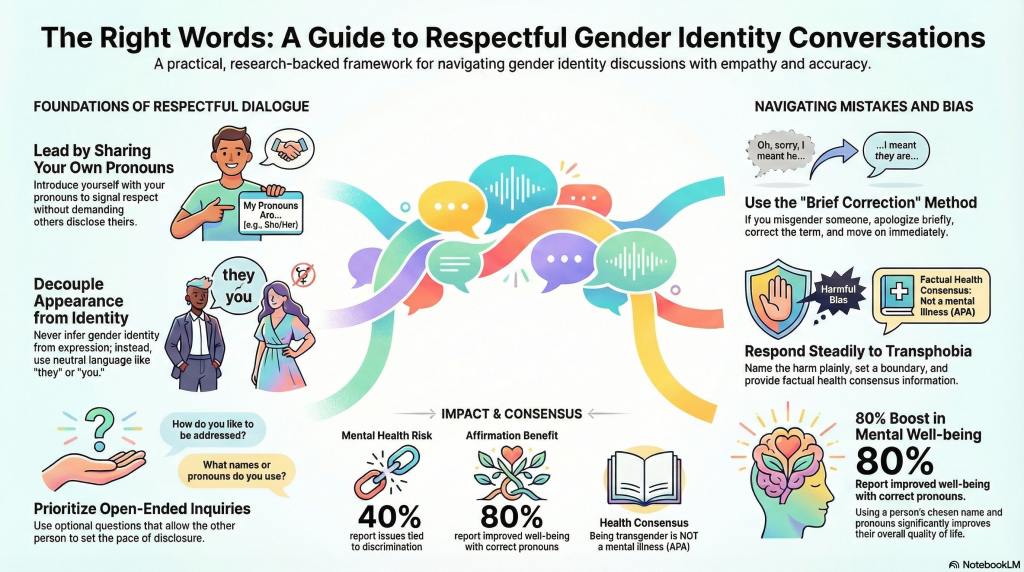
Many people experience identity along a wide spectrum, so a respectful conversation starts with creating safety and leaving room for self-definition. A person can introduce themself initially and share their own pronouns, which signals openness and reduces pressure. They can use open-ended prompts that invite personal stories and let the other person set the pace. They should respect the name and pronouns someone chooses and avoid linking gender expression to identity, since appearance doesn’t reliably communicate either. They can acknowledge that gender identity can feel complex and may shift across time or contexts, so listening matters more than debating. If misunderstandings arise, they can respond with patience, repair harm quickly, and consult credible educational resources to support accurate, affirming language.

How can someone ask about gender identity without putting anyone on the spot? They can start by sharing their own name and pronouns, which signals openness without demanding disclosure. They shouldn’t infer identity from gender expression; research on minority stress suggests that assumptions and misgendering can increase harm. Instead, they can make respectful inquiries only when relevant, and keep language inclusive (for example, “they,” “you,” or “you all”) until someone shares more. They should watch for verbal and nonverbal cues and let the other person set the pace, since safety and control matter in trauma-informed communication. Ongoing self-education supports accuracy and respect.
Once someone has made space for disclosure without pressure, the next step is to use the name and pronouns a person asks for and treat them as standard parts of respectful communication. This affirmation supports mental well-being and signals safety. They can model inclusion by introducing themselves with their own name and pronouns, which invites others to share if they want to. Because pronoun importance applies to everyone, consistent use improves everyday clarity, not just for transgender or nonbinary people. They should also remember some people use multiple pronouns or different ones in different settings, so it’s appropriate to ask and adapt. If a mistake happens, they should offer a brief apology, correct the pronoun, and move on—respectful corrections keep attention on the person, not the error.
Even when a conversation feels calm, transphobic comments can surface and land hard because transgender people face widespread stigma linked to serious mental health impacts—about 40% report significant mental health issues tied to discrimination. A helpful response stays steady, protects those targeted, and uses transphobia education grounded in health consensus: being transgender isn’t a mental illness, per major organizations such as the American Psychological Association. They can invite empathy building without forcing anyone to disclose trauma.
Even calm conversations can turn harmful; respond steadily, protect trans people, and rely on health consensus: being transgender isn’t a mental illness.
They should also support inclusive policies and practices, since legal protections reduce discrimination and improve quality of life.
They explain their gender identity by naming their internal sense of self and how it may not match sex assigned at birth. They use terms that fit (transgender, nonbinary, genderqueer) and share personal experiences and societal perceptions that shape understanding. They distinguish identity from sexual orientation, describe gender expression, and invite respectful questions. They ask others to use correct pronouns, noting evidence supports affirmation improves wellbeing and safety.
They start by sharing their name and pronouns, then invite open dialogue with respectful questions about pronouns or identity. They use supportive language, practice active listening, and reflect back what they hear. They ask permission before discussing personal experiences and acknowledge boundaries, since trauma can shape disclosure. They address common misconceptions with evidence-based information and note societal impacts without debating someone’s validity. If they misstep, they apologize, correct it, and keep learning.
They refer to gender identity by using a person’s stated identity and gender pronouns, choosing respectful language, and avoiding “preference.” Research reports transgender and nonbinary people face far higher harassment rates than cis peers, so accurate terms matter. They can introduce themselves with their name and pronouns, then ask what others use. If they misgender someone, they should apologize briefly, correct it, and move on without excuses.
They can name seven commonly cited gender identities as: cisgender, transgender woman, transgender man, nonbinary, genderqueer, agender, and genderfluid. Research and clinical practice place these on a gender spectrum, acknowledging identity fluidity across personal experiences. Cultural perspectives and societal norms shape how people describe themselves, with historical context and language evolution influencing labels. They should treat categories as practical, not exhaustive, and invite self-identification without pressure or assumptions.
They close gender identity conversations by keeping the space steady and people-first. Evidence shows that respectful language and affirmed names/pronouns reduce distress, so they use what’s shared and adjust when needed. They don’t guess from appearance; they ask only when it’s relevant and welcome. If they misspeak, they correct it quickly and move on without spotlighting anyone. When “rough talk” shows up, they set boundaries and redirect toward safety and understanding.

 Featured PostsOctober 17, 2026One Step Closer: Trans and Passing
 Activism and ChangeOctober 14, 2026I’m I7 and Male, I Don’t Know Whether or Not I am a Trans Girl
 Featured PostsOctober 13, 2026A New Beginning: Embracing the Realization That I’m Trans
 Featured PostsOctober 13, 2026Colorado and Michigan Join States Ending Medicaid Coverage for Trans Youth