Navigating the Interview: Job Searching While Transgender

You don’t have to choose between being yourself and getting hired. You can approach interviews with a clear plan that protects your safety, respects your energy, and helps you judge whether an employer deserves your time. From researching trans-inclusive policies to deciding how you’ll share your name, pronouns, and boundaries, each step gives you more control. The key is knowing what to prepare before the initial question lands.
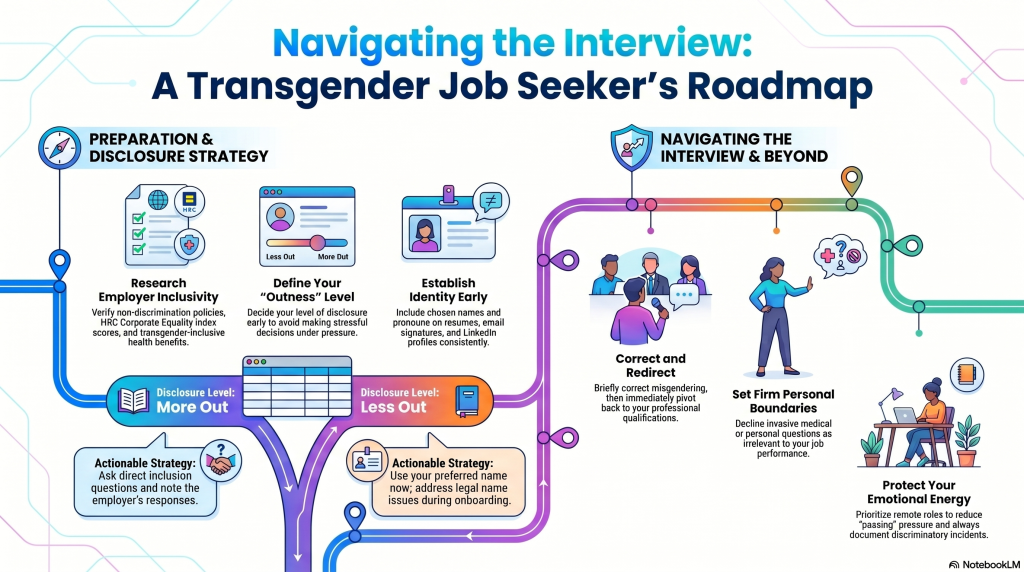

Before you invest time in an application, check whether the employer has a real track record of supporting trans employees. Start with the Human Rights Campaign’s Corporate Equality Index and confirm the company has explicit transgender-inclusive nondiscrimination policies and trans-related health benefits. Then review benefits documents closely, especially parental leave, equal-family policies, and any exclusions that limit transgender care.
Next, look for workplace signals that show sustained inclusion, not just polished statements. Employee resource groups, recurring Pride participation, gender-neutral restroom signage, and LGBTQ hiring or retention programs can reveal follow-through. You can also request informational conversations with out queer employees or local LGBTQ organizations to learn how policies work in practice. After an offer, ask for the health plan contact and verify coverage for HRT, surgery, and exclusions directly.

Whether you’re fully out, selectively out, or not ready to disclose at all, make that choice intentionally before interviews start so you can protect your comfort and stay focused. Think through disclosure timing, visibility, and what support you need. Use practice scripts so you’re not deciding under pressure.
| Option | Strategy |
|---|---|
| More out | Ask direct inclusion questions and note responses. |
| Less out | Use your preferred name now; plan for legal-name issues later. |
You can also test safety subtly through LinkedIn, email cues, or LGBTQ involvement. If video or voice concerns raise stress, choose remote formats or request alternatives when possible.

Once you’ve decided how visible you want to be in the hiring process, make your name and pronouns clear as early as possible so employers have the right information from the start. Include pronouns in your resume header, email signature, LinkedIn profile, and contact info — for example, “Josie Smith — she/her.” Resume header formatting tips — keep your chosen name foremost and easy to spot.
If forms require a legal name, add your preferred name and pronouns in your cover letter’s opening line or in parentheses on your resume. At each interview, introduce yourself with your name and pronouns to set expectations confidently. In confirmation and thank-you emails, restate them for consistency. If someone uses the wrong name, send a brief, professional correction and keep your materials aligned throughout.
If an interviewer misgenders you, correct it briefly and professionally—“I use she/her pronouns,” for example—and then move the conversation forward so the focus stays on your qualifications. You can correct briefly, stay calm, and keep your attention on showcasing your skills. Afterward, document incident details, including who was involved and when it happened.
For invasive questions about your body, medical history, or gender journey, use a short response: “That’s personal and not relevant to my ability to do this job.” If they continue, remind them you expect compliance with non-discrimination laws. Questions about surgeries or procedures are inappropriate and may be unlawful. Treat repeated disrespect as useful information about workplace culture. In multi-stage interviews, contact HR to clarify practices, correct records, and create a paper trail.
Because job searching can already be draining, protect your safety and emotional energy as deliberately as you protect your résumé. Prioritize remote or flexible-location roles when you can; they reduce pressure to “pass” every day and can lower public-facing risk. If it feels right, update your legal name or IDs before interviews to reduce deadnaming during checks, while remembering some screenings may still reveal former names.
Limit exposure online by matching LinkedIn and application materials, tightening privacy settings, and removing photos that could out you. Vet health plans through HR and by calling as a prospective member to confirm inclusive coverage and exclusions. Most critically, document interactions if discrimination occurs, keep trusted support on call, and change travel, meeting, or presentation plans whenever safety matters most.
A red flag in a job interview is when you’re misgendered, asked invasive personal questions, or get vague answers about inclusion. You should also watch for discomfort around your gender presentation or unclear bathroom access. If interviewers dodge questions about nondiscrimination policies, benefits, or manager training, that signals risk. Trust your instincts: if the interaction feels dismissive, hostile, or testing, you’re likely seeing future workplace problems ahead.
Yes—you may be able to sue if coworkers repeatedly and intentionally misgender you. Imagine your manager keeps using the wrong pronouns after you’ve corrected them, HR gets written complaints, and nothing changes. You should document every incident, report it in writing, and follow internal steps first. If the behavior creates a hostile environment, you can pursue legal remedies through your state agency or the EEOC, including damages and workplace training.
You can’t point to one definitive largest employer of transgender people, because most employers don’t publish gender identity data. You’ll usually find the biggest numbers in government agencies, major healthcare systems, universities, and very large companies with strong workplace inclusion policies. If you’re evaluating options, look for scale, trans-inclusive benefits, and corporate prominence, since those signals often show where you’re more likely to find affirming, supportive colleagues and leadership.
About 70% of transgender workers report taking steps to avoid mistreatment at work, so you should know your rights. Employers can’t ask about your gender identity, medical history, legal or prior names, sexual orientation or marital and family plans, or restroom and dress-code preferences meant to force disclosure. If an interviewer asks, you can redirect professionally, note the concern, and decide whether the workplace feels safe and respectful.
You deserve interviews where you can show up prepared, respected, and fully yourself. As you move through each conversation, let your research, boundaries, and instincts be your compass. Share what feels right, correct what needs correcting, and bear in mind red flags are weather, not your worth. The right workplace won’t ask you to shrink to fit the room—it’ll open the door wider. Trust yourself, protect your peace, and keep walking toward work that honors all of you.

 Featured PostsAugust 27, 2026Dysphoria: Acknowledging the Pain, Finding Hope
 Featured PostsAugust 27, 2026Transgender Identity: Ancient Roots and Modern Understanding
 Featured PostsAugust 27, 2026What Does Non-Binary Mean?
 Featured PostsAugust 27, 2026A Guide to Dating a Trans Woman