One crucial aspect of gender-affirming care could transform lives; discover the essentials and why major medical associations endorse it.
0:00
When it involves gender-affirming care, there’s a lot you should know to support yourself or someone you care about. This type of care includes a variety of treatments and interventions designed to help transgender individuals live authentically. From hormone replacement therapy (HRT) to surgeries and even vital non-surgical options like speech therapy and mental health support, each aspect plays a significant role. But why do major medical associations stand firmly behind these practices? How exactly do they impact mental health and well-being? Let’s dive into these questions and uncover the necessities of gender-affirming care.
Key Insights
- Gender-affirming care includes social, psychological, behavioral, and medical interventions to support transgender individuals.
- Hormone Replacement Therapy (HRT) helps align physical characteristics with gender identity through hormones like testosterone or estrogen.
- Mental health support is crucial for navigating emotional challenges and reducing depression and anxiety.
- Non-surgical treatments like speech therapy and laser hair removal enhance quality of life and confidence.
- Gender-affirmation surgeries, such as top surgery and genital reconstruction, align physical appearance with gender identity.
Dora’s Deep Dive Podcast – What Is Gender Affirming Care?
Understanding Gender-Affirming Care
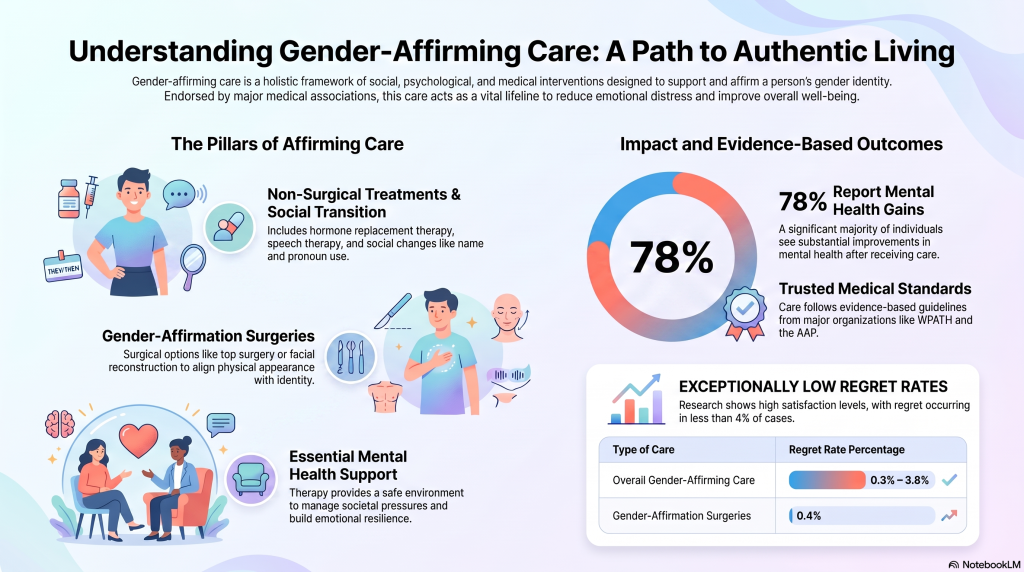
Understanding gender-affirming care means recognizing the diverse ways it helps transgender individuals live authentically and healthily. This type of care includes a broad range of social, psychological, behavioral, and medical interventions tailored to support and affirm a person’s gender identity. For many transgender individuals, gender-affirming care provides a pivotal lifeline that helps alleviate emotional distress and promotes overall well-being.

Medical interventions are a significant part of gender-affirming care. These interventions often include hormone therapy and different surgical options to help align a person’s physical characteristics with their gender identity. These procedures are necessary for reducing the emotional distress that comes from the mismatch between how someone feels inside and how they appear outwardly.
Social transition is another crucial aspect of gender-affirming care. This can involve changing one’s name, pronouns, and even appearance to better reflect their gender identity. These changes are often supported by counseling and other mental health services, which play an important role in helping individuals navigate the complexities of transitioning.
Major U.S. medical associations endorse gender-affirming care as vital healthcare. Access to this care has been shown to reduce suicidality and depression in transgender youth, highlighting its significance in fostering a healthier, happier life.
Non-Surgical Treatment Options
Non-surgical treatment options for gender-affirming care play a pivotal role in helping individuals align their physical characteristics with their gender identity. These options offer diverse ways to support your transition without undergoing surgery.
Here are three key non-surgical treatment options:
- Hormone Replacement Therapy (HRT): Though we’ll delve deeper into this in the next section, it’s crucial to note that HRT involves taking hormones like testosterone or estrogen to help your body develop characteristics that align with your gender identity. This can include changes in body fat distribution, muscle mass, and skin texture.
- Speech Therapy: If you’re looking to adjust your vocal characteristics to better match your gender identity, speech therapy can be incredibly valuable. Specialized therapists can help you modify pitch, resonance, and intonation to achieve a more gender-affirming voice.
- Mental Health Therapy: Navigating gender identity and affirmation can be intricate and emotionally challenging. Mental health therapy provides essential support, helping you work through feelings, build resilience, and develop strategies for coping with societal pressures.

Additionally, many individuals choose electrolysis/laser hair removal to eliminate unwanted facial or body hair, aligning their physical appearance more closely with their gender identity.
These non-surgical options can markedly improve your quality of life and enhance your confidence.
Hormone Replacement Therapy
When aligning your physical characteristics with your gender identity, hormone replacement therapy (HRT) offers a potent option. This treatment involves taking hormones like testosterone or estrogen to match your body to your gender identity.
For transgender men, testosterone therapy can lead to deeper voices, increased body hair, and muscle development. These changes help you feel more aligned with your gender identity.
On the other hand, estrogen therapy is commonly used by transgender women. This type of therapy can result in breast development, a redistribution of body fat to create a more feminine shape, and softer skin. These physical changes can greatly enrich your sense of well-being and comfort in your body.

Before starting HRT, you’ll typically undergo a thorough evaluation by healthcare providers and mental health professionals. This ensures that hormone replacement therapy is the right fit for you.
One of the key benefits of HRT is that many of its effects are reversible, giving you the option to customize your treatment as needed.
Gender-Affirmation Surgeries
When you’re seeking to fully align your physical appearance with your gender identity, gender-affirmation surgeries can be the final, transformative step. These surgical treatments help you achieve a physical form that matches your internal sense of self.
Here’s what you need to know about the different types of surgeries available:
- Top Surgery: For transgender men, chest surgery, also known as chest masculinization, removes breast tissue to create a more traditionally masculine chest. For transgender women, breast augmentation involves implants to improve breast size and shape.
- Facial Reconstruction: This includes a variety of procedures aimed at altering facial features to appear more traditionally masculine or feminine. It can involve jaw contouring, forehead reshaping, and other modifications.
- Genital Surgeries: These are more complex and include vaginoplasty for transgender women, which constructs a vagina, and phalloplasty for transgender men, which constructs a penis. These surgeries often require longer recovery times and multiple stages.
Surgeons specializing in these procedures follow strict guidelines to guarantee safe and effective outcomes. Each surgical treatment is a step toward aligning your physical body with your gender identity, offering you the chance to live more authentically.
Importance of Mental Health Support

Understanding the significance of mental health support is essential to ensuring the well-being of transgender individuals undergoing gender-affirming care. Mental health support plays a pivotal role in addressing the emotional challenges that often accompany the process of aligning one’s physical characteristics with their gender identity.
Therapy provides a safe and affirming environment where you can navigate your gender identity, manage societal pressures, and navigate the complexities of the transition process.
Studies indicate that transgender individuals who receive mental health support experience a notable reduction in depression and anxiety. Access to therapy helps you build resilience and promotes overall well-being. Mental health professionals are trained to offer guidance and support tailored to your unique needs, ensuring you feel heard and understood.
A safe and affirming environment is crucial for expressing your feelings and concerns without judgment. By engaging in therapy, you acquire valuable tools for coping with stress and emotions, which can facilitate your transition journey.
Frequently Asked Questions
What Is Involved in Gender-Affirming Care?
Did you know that 78% of transgender individuals who receive gender-affirming care report substantial improvements in their mental health?

In gender-affirming care, you’ll find a mix of therapies like hormone replacement, counseling, and voice training. It might also include surgeries such as chest reconstruction or facial feminization.
These interventions help align your physical appearance with your gender identity, enhancing your well-being and mental health significantly.
What Is the Regret Rate for Gender-Affirming Care?
The regret rate for gender-affirming care is incredibly low, between 0.3% and 3.8%. For surgeries specifically, the rate drops even further to just 0.4%.
Most transgender individuals who undergo these procedures report high satisfaction and a better quality of life. Proper assessment, informed consent, and access to affirming care all contribute to these low regret rates, ensuring you make well-informed decisions that align with your identity.
What Is the Standard of Care Gender-Affirming Care?
Imagine a roadmap guiding you to your true self— that’s what the standard of care for gender-affirming care feels like.

Organizations like WPATH and AAP set these guidelines to guarantee you receive thorough, evidence-based treatments.
You’ll find a mix of counseling, hormone therapy, and surgeries tailored to your needs.
Providers follow these standards to affirm your identity and support your health and well-being every step of the way.
What Are the Benefits of Gender-Affirming?
You’ll find that gender-affirming care offers immense benefits. It can greatly improve mental health, reducing depression and suicidality.
By aligning your emotional and physical self with your gender identity, you’ll feel more authentic and comfortable. Access to hormone therapy, surgeries, and supportive counseling can boost your overall well-being.
Major medical associations even endorse it, highlighting its significance in promoting health and happiness for transgender individuals.
Conclusion
In a summary, gender-affirming care is like a lifeline for transgender individuals, offering a mix of medical and non-medical treatments to assist you in living authentically.
From hormone therapy to mental health support, each component plays a vital role in your well-being.
Embracing this care can change your life, enhancing your confidence and joy.
So, start with exploring the options available—you deserve to live authentically!
Originally posted 2024-10-24 17:48:30.
Profile Author / Editor / Publisher

- Dora Kay Saparow came out in a conservative Nebraskan town where she faced both misunderstanding and acceptance during her transition. Seeking specialized support, she moved to a big city, where she could access the medical, legal, and social resources necessary for her journey. Now, fourteen years later, Dora is fully transitioned, happily married, and well-integrated into society. Her story underscores the importance of time, resources, and community support, offering hope and encouragement to others pursuing their authentic selves.
Latest entries
 Featured PostsOctober 21, 2026The Trans Journey to Passing
- Activism and ChangeOctober 17, 2026Trans Rights at Risk? The Implications of a Trump 2024 Win
- Featured PostsOctober 17, 2026One Step Closer: Trans and Passing
- Featured PostsOctober 14, 2026Navigating Manhood: The Challenges FTM Individuals Face