One Step Closer: Trans and Passing

Passing doesn’t always mean claiming a new identity; it can mean managing what others notice about you in a particular setting. You may adjust your speech, appearance, or personal disclosures to reduce risk or gain acceptance, but those choices can carry different consequences across race, gender, and sexuality. Over time, concealment can affect your well-being and relationships. The difficult question is how you can protect yourself without losing the chance to be known.
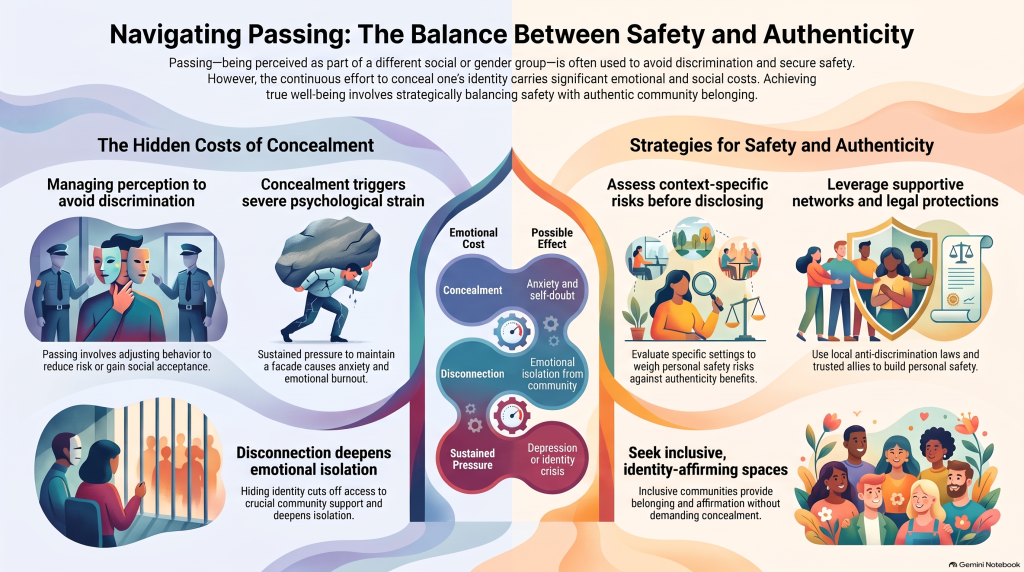
In everyday life, passing means being perceived as a member of a social or cultural group other than one’s own, often to avoid discrimination or gain acceptance. You may encounter it when someone adjusts how others perceive them to navigate social dynamics or cultural contexts. Passing can influence access to opportunities, relationships, and acceptance, but it may also require ongoing effort to sustain a particular impression. You might see this effort as a response to social expectations rather than a simple personal choice. People who pass can experience stress, including fear that others will unearth information they’ve withheld or misinterpreted. These pressures show how belonging depends partly on how others classify you and how institutions respond. Passing thus reveals the practical consequences of identity perception in everyday interactions, without making those perceptions fixed or universal.

The pressures of passing vary with race, gender, and sexuality because each shapes how others classify and treat a person. If you belong to a marginalized racial group, passing as a member of another group may offer access to social opportunities, but it can also require concealing your background. For transgender people, acceptance often depends on how others read their gender and how closely they conform to societal expectations. If you’re LGBTQ+, you may hide your sexual orientation to reduce exposure to discrimination or violence, influencing relationships and well-being. These experiences don’t operate separately: race, gender, and sexuality intersect, shaping which identities others recognize and what forms of acceptance become available. Your identity navigation consequently reflects both personal choices and social conditions, not a single, universal route through passing. The risks and benefits vary across contexts.

Passing can create emotional strain by requiring people to conceal parts of themselves to gain acceptance or avoid harm. When you maintain a persona, anxiety and inauthenticity can build, while pressure to conform may intensify shame or guilt. These effects can extend beyond private feelings:
| Emotional cost | Possible effect |
|---|---|
| Concealment | Anxiety and self-doubt |
| Disconnection | Emotional isolation from community |
| Sustained pressure | Depression or identity crisis |
| Projected persona | Strained relationships |
If you pass, distance from your community may limit access to support and increase stress. The ongoing effort to manage a facade can also affect mental health, especially when your public identity conflicts with your private sense of self. These outcomes aren’t identical for everyone, but they show how passing can carry psychological costs alongside its social consequences.
Balancing safety and authenticity while passing means weighing the risks of being exposed against the need to express and acknowledge your identity. Research suggests that prioritizing authenticity can improve mental health, yet it may increase your vulnerability in unsafe settings. You can assess specific risks, including likely responses at work, school, or home, before deciding what to share and when. Support networks can help you evaluate options and prepare for difficult interactions. Practicing self advocacy lets you state your needs and boundaries while choosing how much to disclose. Legal protections, including anti-discrimination laws, may affect how safe you feel expressing your identity, though protections vary by location and circumstance. Open dialogue with trusted people can clarify trade-offs, helping you make informed choices that protect your well-being without treating safety or authenticity as an all-or-nothing decision.
Belonging without hiding who you are often starts with finding spaces where you can express your identity without fear of judgment or rejection. Inclusive communities, online or offline, can strengthen your sense of belonging and reduce isolation. Look for clubs or support groups that celebrate diversity; shared experiences and values can help you build authentic connections. Community support also gives you opportunities to exchange practical advice and feel understood.
Open dialogue about identity can foster acceptance, though you can choose when and with whom to share personal experiences. You don’t owe everyone disclosure to belong. Practicing self-acceptance and resilience can help you assess whether relationships honor your genuine identity and seek spaces that do. Over time, supportive relationships may make it easier to participate openly without treating concealment as the price of connection.
No single person is known to have coined “passing.” You’ll find the term’s use in English documented well before modern discussions of race, and it later gained prominence in the United States for describing someone perceived as belonging to a different racial group. Its historical context matters: usage developed over time, rather than from one identifiable author. When you examine identity fluidity, distinguish the word’s broader history from its specific racial meaning.
Passing has appeared in literature and film as a pressure cooker for identity exploration, exposing the risks and rewards of crossing social boundaries. You can see characters conceal or reshape aspects of themselves to gain safety, opportunity, or acceptance, while facing anxiety and divided loyalties. Works such as Nella Larsen’s *Passing* and films like *Imitation of Life* also reveal how cultural representation reflects racial hierarchies, challenging audiences to examine who controls belonging and whose stories receive recognition.
You’re protected by identity legislation that prohibits discrimination based on traits such as race, sex, disability, religion, and national origin. In the United States, federal laws including Title VII, the Americans with Disabilities Act, and the Fair Housing Act provide discrimination protections in employment, public accommodations, and housing. Coverage varies by jurisdiction and identity category; state and local laws may add protections, including for sexual orientation or gender identity. Check current rules and enforcement agencies.
Online spaces act as mirrors and masks, shaping how you investigate identity and whether others perceive you as belonging. Through online identities and digital expression, you can choose names, images, and details that support or complicate passing. Virtual communities may offer affirmation and practical advice, while social media can amplify scrutiny, stereotypes, and harassment. These effects depend on platform norms, audience, and safety; online interaction can expand your options, but it can’t eliminate discrimination offline.
You can find support through peer-support groups, moderated online forums, local community centers, and organizations serving people with similar identities or circumstances. These spaces can offer shared experiences, practical guidance, and identity affirmation, though their quality and safety vary. Check group rules, privacy practices, accessibility, and facilitator training before participating. Libraries, clinics, and community resources directories can help you locate options. If one group doesn’t feel supportive, you can investigate another.
Passing can make you fluent in the room’s rules: soften this, conceal that, smile on cue. Congratulations—you’ve mastered a system that calls your performance “acceptance” while charging you for the costume. Yet every adjustment can widen the gap between being safe and being known. You don’t owe anyone a polished disguise, and you needn’t risk your safety to prove authenticity. Belonging should require less acting, not better acting; the audience, after all, can change the script.

 Featured PostsOctober 17, 2026One Step Closer: Trans and Passing
 Activism and ChangeOctober 14, 2026I’m I7 and Male, I Don’t Know Whether or Not I am a Trans Girl
 Featured PostsOctober 13, 2026A New Beginning: Embracing the Realization That I’m Trans
 Featured PostsOctober 13, 2026Colorado and Michigan Join States Ending Medicaid Coverage for Trans Youth