The Three-Front Resistance: Courts, Congress, and the Public Rebuke Trump

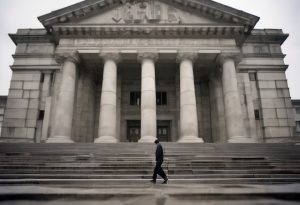
Although Donald Trump entered office promising to upend established constraints on executive power, his early agenda met a sustained and multi‑front rebuke from the courts, Congress, and the public. Federal judges moved quickly, issuing injunctions that signaled sharp judicial pushback against methods they deemed unlawful or retaliatory. Courts halted cuts to billions in clean energy funds that disproportionately targeted Democratic‑leaning states, blocked the cancellation of an American Academy of Pediatrics grant, and stopped efforts to withhold federal election and child‑care dollars. These rulings didn’t merely slow policy; they articulated constitutional limits on using federal spending as a weapon against political opponents.
Congress, meanwhile, produced an unusually visible bipartisan backlash. Lawmakers rejected a proposed 56 percent cut to the National Science Foundation, trimming its budget by less than 1 percent and increasing basic research funding by more than 2 percent. They resisted efforts to shrink NOAA’s capacity and, in foreign policy and health care, registered tangible defections from party discipline. Five Senate Republicans joined Democrats on a war‑powers resolution, while 17 House Republicans crossed the aisle to oppose Affordable Care Act–related rollbacks. These votes reflected an institutional interest in preserving congressional prerogatives and policy baselines.
Outside Washington, state and local officials, along with civil society, translated discontent into coordinated litigation. Attorneys general, unions, and nonprofits filed more than 40 suits, contesting personnel purges, immigration shifts, and benefit cuts. Democracy Forward alone brought nine cases and secured four court orders.
Simultaneously, mass protests—over a thousand demonstrations nationwide after incidents such as the ICE killing of Renee Nicole Good, from Minneapolis to Fairbanks at −25°F—signaled broad civic repudiation. Together, rapid court rulings, cross‑party resistance, and public mobilization formed a three‑front constraint that repeatedly checked and recalibrated the administration’s early initiatives.

 Featured PostsOctober 21, 2026The Trans Journey to Passing
 Featured PostsOctober 17, 2026From Job Search to Success: A Transgender Woman’s Employment Journey
 UncategorizedOctober 17, 2026Trans Rights at Risk? The Implications of a Trump 2024 Win
 Featured PostsOctober 17, 2026One Step Closer: Trans and Passing