Trans People Are Valid — End of Story —

It’s funny how we often overlook the simplest truths, like the fact that trans people are valid. We share a world where identity is a rich tapestry, not confined to outdated binaries. Acknowledging this is vital for an inclusive society. Yet, anti-trans laws and myths harm countless lives. Understanding and supporting trans identities isn’t just kind; it’s essential. What role do we each play in fostering acceptance and respect? Let’s investigate further.
Understanding trans identity is crucial for fostering empathy and acceptance. We must recognize that transgender identities are valid and deserve respect. These identities arise when a person’s gender identity is different from the sex they were assigned at birth. It’s essential to understand that being transgender is not a mental disorder. Some individuals may experience gender dysphoria, which is a recognized condition due to the distress of this incongruence.
Moreover, gender isn’t strictly binary. There are diverse identities beyond just male and female, which include non-binary and gender-expansive experiences. As a society, embracing these varied identities enriches our understanding and supports individuals in living authentically. By learning and acknowledging these facts, we contribute to a more inclusive and supportive environment for everyone.
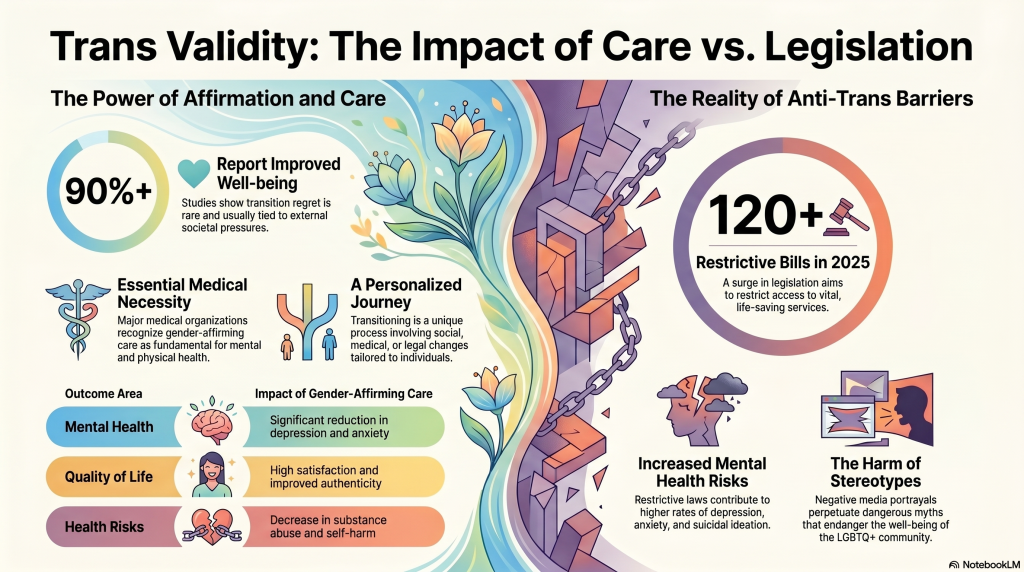
As anti-trans legislation ramps up, we’re seeing a troubling rise in its impact on transgender individuals and their communities. Over 120 bills were introduced in 2025 aim to restrict access to vital services. This leads to increased mental health issues, with higher rates of depression, anxiety, and suicidal ideation among trans individuals. These laws don’t just harm transgender health; they create a ripple effect, affecting families, communities, and allies by fostering fear and stigmatization. Misinformation fuels these efforts, spreading misconceptions about trans identities and medical care. As violence and discrimination rise, particularly against trans women of color, it’s clear that such legislation endangers the well-being of the entire LGBTQ+ community, undermining their right to live authentically and safely.
Though the topic of changing often stirs debate, it’s crucial we address the misconceptions head-on. Shifting for transgender individuals is a deeply personal experience, not a trend or impulsive choice. Many believe it always involves surgery, but that’s not true. Transitioning can include social, medical, and legal changes tailored to each person’s needs. Puberty blockers and hormone replacement therapy are part of this, following strict medical guidelines to guarantee safety.
Research shows that access to gender-affirming care improves mental health, reducing depression and anxiety. Not every transgender person chooses medical transition, and that’s okay. Each path is unique, emphasizing informed decision-making. Let’s challenge these misconceptions and recognize the authenticity and validity of transgender experiences. Understanding is key to acceptance.
Gender-affirming care is an essential component of healthcare for transgender individuals, recognized by major medical organizations as fundamental for both mental and physical well-being. It plays a critical role in alleviating gender dysphoria, allowing individuals to live authentically. Research highlights how access to this care greatly reduces depression, anxiety, and suicidal thoughts. When transgender people receive gender-affirming surgeries, they often report high satisfaction and improved quality of life. Without such care, many face negative health outcomes, including increased substance abuse and self-harm. Tailored to each person’s needs, gender-affirming care includes hormone therapy and surgeries, ensuring thorough support. Let’s keep advocating for accessible and affirming healthcare to improve the lives of transgender individuals everywhere.
Media plays a significant role in shaping how society views trans people, and it’s clear that these portrayals can greatly influence public perception. We’ve seen a positive shift over the past decade, with more authentic media representation of trans experiences, which helps increase public awareness and acceptance. Positive portrayals can break down stigma, while negative ones often perpetuate harmful stereotypes, like depicting trans individuals as deceptive or dangerous. It’s essential that media narratives include diverse trans identities, including non-binary and gender-expansive characters, to foster inclusivity and validate trans experiences. When media representation is fair and nuanced, it not only supports the trans community but also encourages broader societal acceptance and support for transgender rights and policies.
Imagine dialing a rotary phone to check on old regrets. We often hear about trans people regretting their changes, but studies show that’s rare. Over 90% find joy and improved well-being post-change. Regret is usually tied to societal pressures, not the change itself. So, let’s focus on supporting each other in understanding and acceptance, ensuring everyone can live their truth without fear of judgment or misinformation.
We don’t choose to be trans, just like we don’t choose our eye color. Gender identity is an intrinsic part of who we are, not a decision or preference. Understanding this helps us foster empathy and acceptance. Society often misconstrues this reality, but it’s vital to recognize that being trans is about aligning with one’s true self, not selecting an identity. Let’s support each other in living authentically and embracing diversity.
Did you know 1-5% of teenagers identify as transgender or questioning? We recognize our trans identity through a deep, internal understanding, often emerging in childhood. For many, it’s a realization of incongruence between assigned sex and true gender. This self-awareness can vary; some know early on, others find it later. The key is self-exploration in supportive environments, which helps affirm and understand our true selves. Let’s foster acceptance and understanding together.
We can definitely recognize we’re trans later in life. Our understanding of gender can evolve as we grow and learn more about ourselves. It’s not uncommon to feel a disconnect with our assigned gender from an early period but only fully acknowledge it later. Society’s increasing awareness and acceptance can help us investigate our identities more openly. So, if you’re uncovering this about yourself now, know that it’s valid and you’re not alone.
In a world bursting with endless possibilities, why would anyone want to box people into outdated categories? We can’t let fear and ignorance rule. Let’s stand together and shatter the misconceptions about trans identities. Their courage to live authentically is nothing short of extraordinary. By embracing and supporting trans people, we’re not just changing lives; we’re transforming the world into a vibrant tapestry of acceptance and love. Let’s make this world a place where everyone truly belongs.
Originally posted 2025-02-26 16:34:37.

 Featured PostsOctober 17, 2026One Step Closer: Trans and Passing
 Featured PostsOctober 14, 2026Navigating Manhood: The Challenges FTM Individuals Face
 Activism and ChangeOctober 14, 2026I’m I7 and Male, I Don’t Know Whether or Not I am a Trans Girl
 Featured PostsOctober 13, 2026A New Beginning: Embracing the Realization That I’m Trans