HIV and Transgender People: A Look at the Data

When discussing the health landscape for transgender individuals, it’s crucial to approach the topic with sensitivity. The statistics reveal a troubling reality: HIV prevalence among transgender populations is considerably higher than in the general population. This disparity raises questions about the underlying factors at play. How do discrimination and healthcare access intertwine with these figures? The answers may provide critical insights into addressing the unique challenges transgender individuals face in managing their health.
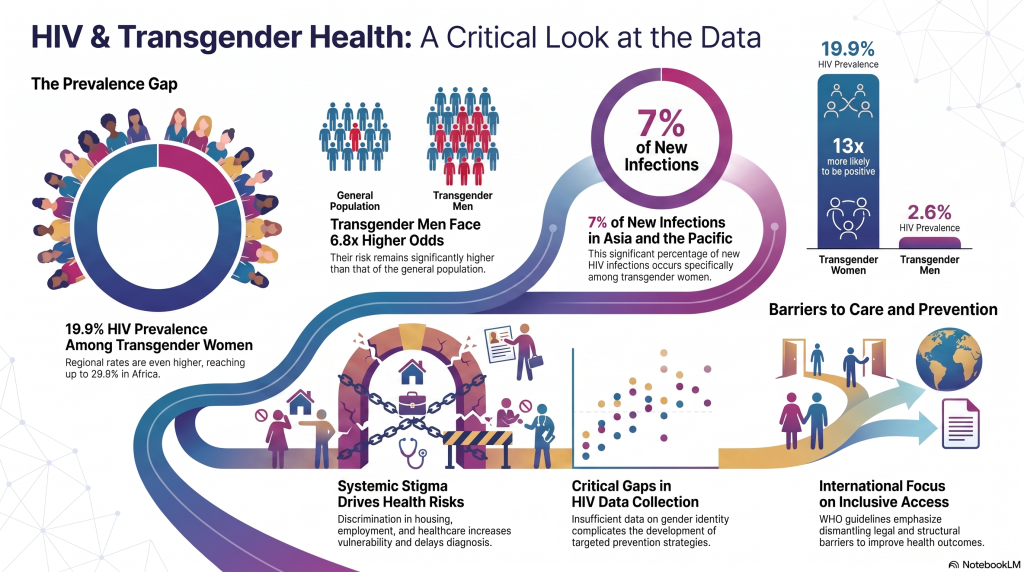
HIV prevalence among transgender populations reveals a stark health disparity that demands attention. Transgender women face an alarming HIV prevalence of 19.9%, with regional variations as high as 29.9% in Africa. Though transgender men have a lower prevalence of 2.6%, they still exhibit an odds ratio of 6.8 for being HIV-positive compared to the general population. New infections among transgender women account for significant percentages, such as 7% in Asia and the Pacific. There’s a critical gap in data collection for transgender men and other transgender groups, hindering effective epidemiology and sexual health strategies. Addressing these health disparities is crucial for developing targeted prevention strategies and improving health outcomes for all transgender individuals.

Although many transgender individuals seek healthcare, significant barriers often prevent them from accessing necessary services. These barriers stem from pervasive stigma and discrimination, which can discourage you from disclosing your gender identity to healthcare providers. Experiences of violence and family rejection may lead to heightened mental health issues, making it harder to pursue care. Furthermore, marginalization and lack of legal recognition create conditions of social exclusion, contributing to housing insecurity and poverty. Consequently, you might face legal barriers that limit your access to vital services. These factors not only hinder your ability to receive appropriate care but also negatively impact your overall health outcomes, including HIV prevention and treatment. Addressing these barriers is fundamental for improving healthcare access for transgender individuals.

Discrimination greatly impacts the health risks faced by transgender individuals, particularly concerning HIV. The interplay of stigma and systemic discrimination creates an environment where HIV risk escalates. Consider the following:
These factors contribute to compounded health disparities, revealing that social determinants appreciably shape health outcomes for transgender populations. Addressing discrimination and stigma is vital to improving healthcare access and reducing HIV risk. By recognizing these systemic issues, you can advocate for equitable solutions that elevate the health and well-being of transgender individuals.
Understanding the health needs of transgender populations hinges on thorough data collection, which reveals critical insights into HIV prevalence and related disparities. Trans women are approximately 13 times more likely to be HIV-positive than other adults of reproductive significance, yet limited data exists for transgender men and other groups. The CDC emphasizes collecting both sex assigned at birth and current gender identity to improve HIV surveillance accuracy. Inconsistent data complicates predictive models, making it challenging to develop effective interventions. Advocacy for improved data collection is essential, as extensive data on gender identity in health services informs targeted policies for preventing HIV infection. Without this data, addressing the unique health needs of transgender individuals remains insufficiently supported.
Thorough data collection lays the groundwork for international efforts aimed at addressing the health needs of transgender individuals, particularly concerning HIV prevention and treatment.
The World Health Organization’s 2022 guidelines focus on improving health care access for transgender individuals, emphasizing the need for targeted interventions. By addressing structural barriers, these efforts aim to reduce health disparities and improve extensive care. Continuous monitoring guarantees culturally competent care, ultimately leading to better health outcomes for transgender communities. Through these international initiatives, we can work towards a more equitable healthcare landscape.
Transgender people face a higher risk of HIV due to a combination of stigma impact, limited healthcare access, and socioeconomic factors. Many experience mental health challenges and substance use, which can further increase vulnerability. Testing barriers and inadequate sexual education contribute to the risk as well. Without robust support networks and effective prevention strategies, transgender individuals remain disproportionately affected by HIV prevalence, making it essential to address these systemic issues for better health outcomes.
When it pertains to HIV, transgender women face the harshest reality, often maneuvering a sea of stigma and healthcare disparities. Their HIV transmission rates soar due to multiple risk factors, including social support gaps and testing accessibility issues. While prevention strategies exist, public awareness remains low, leaving many unaware of their vulnerabilities. Gender identity plays a key role in shaping experiences, making it essential to address these challenges to reduce infections effectively.
Transgender women have the highest confirmed HIV prevalence, with statistics showing a rate of 19.9%. This group faces significant healthcare access barriers and stigma, impacting their general health outcomes. Effective prevention strategies and community health initiatives are vital for addressing these issues. Regular testing frequency recommendations and treatment adherence challenges must be tackled to reduce HIV prevalence rates. A strong support network is important for maneuvering intersectional risk factors and improving health outcomes.
Yes, transgender men can get HIV. Access to transgender healthcare is important, as stigma can impact their willingness to seek help. All-encompassing sexual health education and awareness of hormone therapy effects are critical for prevention strategies. Community support networks improve testing availability and encourage regular check-ups. Moreover, mental health considerations must be addressed, recognizing intersectionality issues that affect this group. Advocacy efforts are fundamental for improving resources and tailored services to reduce risks.
In addressing the HIV crisis among transgender populations, it’s crucial to dismantle barriers to healthcare access and combat discrimination. For example, consider a hypothetical case where a transgender woman faces stigma at a clinic, ultimately delaying her diagnosis and treatment. This underscores the need for targeted interventions and thorough data collection to implement effective strategies. Only through inclusive healthcare practices and a focus on the unique challenges faced by transgender individuals can we hope to reduce HIV prevalence and improve health outcomes.
Originally posted 2025-10-01 22:01:01.

 Featured PostsOctober 21, 2026The Trans Journey to Passing
 Activism and ChangeOctober 17, 2026Trans Rights at Risk? The Implications of a Trump 2024 Win
 Featured PostsOctober 17, 2026One Step Closer: Trans and Passing
 Featured PostsOctober 14, 2026Navigating Manhood: The Challenges FTM Individuals Face