Facial Feminization Surgery Results: A Guide to Healthy, Realistic Expectations

FFS is less like flipping a switch and more like tuning an instrument, with each change shaping collective harmony over time. You can expect meaningful facial softening and structural refinement, but not an instant or identical outcome. Your results will reflect your anatomy, the procedures you choose, and how you heal. Early swelling can mask progress, while final details take months to emerge. Knowing what tends to last, what evolves, and what recovery truly feels like matters.
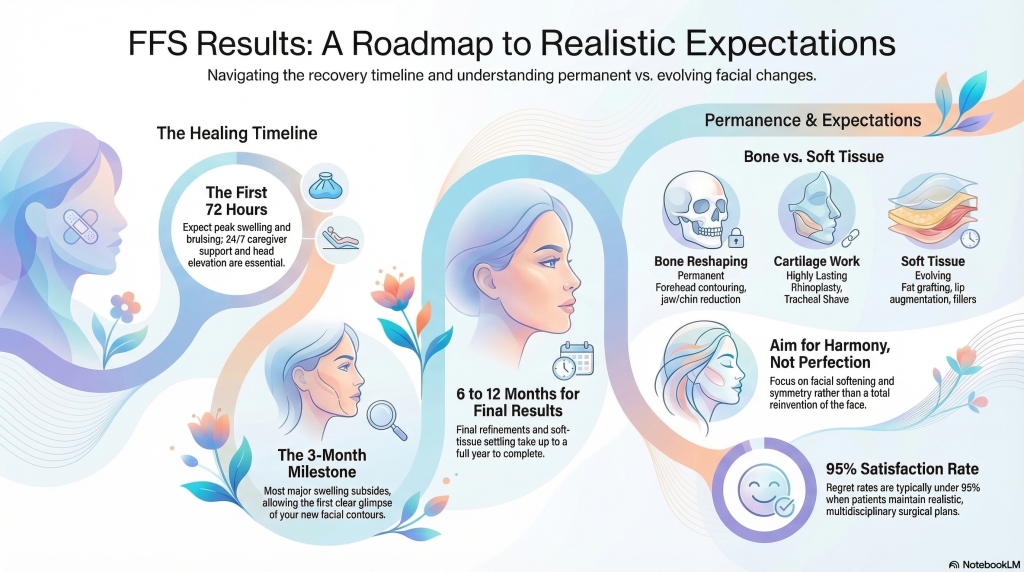
Although facial feminization surgery can produce significant change, you should expect a gradual, individualized process rather than an instant or absolute transformation. FFS permanently reshapes bone and soft tissue across the forehead, nose, cheeks, lips, jaw, chin, or trachea, with goals centered on harmony and facial symmetry, not total reinvention.
You’ll usually see major swelling improve by about three months, but final refinements often take six to 12 months or longer. The initial week brings the most pain and swelling, and you may need overnight monitoring, a caregiver for 72 hours, head elevation, walks, and temporary diet changes. Many patients experience less gender dysphoria and better psychosocial well-being, yet emotional adjustment still matters because surgery can’t guarantee perfect recognition or solve every personal or social challenge.

Because every face starts with a different skeletal framework, FFS results can’t look the same from one person to the next. Your forehead, orbital rims, jaw, and chin create baseline bone variability, so the same operation can produce different visible changes in different patients.
Results also depend on surgical technique and judgment. A surgeon may choose frontal sinus remodeling instead of burring, or genioplasty instead of an implant, based on your anatomy. Soft tissue matters too: skin thickness, fat volume, muscle bulk, elasticity, and hormone history all affect how bony changes appear at the surface. Procedure selection, staging, and adjuncts influence overall balance. In the end, your healing response, scar tendency, swelling pattern, postoperative care, and preoperative expectations shape how refined your result looks and how satisfied you feel in general afterward.

Generally, the most permanent FFS results come from procedures that reshape or reposition bone. That includes forehead and brow contouring, sliding genioplasty, mandible contouring, and the structural portions of rhinoplasty. These changes create true bone permanence, so your facial framework usually doesn’t revert.
Soft-tissue procedures can last well, but they aren’t comparably fixed. Fat grafting may partially resorb over months, and lip augmentation or facelift results still evolve with aging and weight change. Non-surgical options, including fillers and Botox, are temporary by design and don’t replace surgical bone work.
A tracheal shave usually gives a lasting reduction in thyroid cartilage prominence, although subtle contour refinement can continue during scar maturation. Scars are permanent too, but many incisions stay hidden or fade markedly with time and proper care overall.
Most patients find that FFS recovery feels intense initially, with pain, swelling, and bruising peaking during the initial 48 to 72 hours, then easing steadily as medication, rest, and close aftercare take effect. You’ll likely need hourly icing, head elevation, bandages or compression, and around-the-clock help during those initial days.
As healing progresses, expect tightness, stiffness, numbness, and other sensory changes, especially after forehead, jaw, or chin work. These symptoms can last for months, while soft tissue settles over 6 to 12 months or longer. You may need a soft-food diet, notice limited mouth opening, or experience brief voice huskiness after tracheal shave. Activity stays restricted: no driving on narcotics, no heavy lifting, but short daily walks are significant. Emotional shifts, including temporary blues or anxiety, are also common.
Setting realistic FFS expectations starts with defining specific, anatomically achievable goals for each facial area and confirming them with your surgeon in a detailed plan.
You can expect reported regret rates after facial feminization surgery to stay low, usually under 5%, with many studies showing even lower numbers. Most regret is temporary and tied to expectations or aesthetic dissatisfaction, not complications. You improve your chances of long term satisfaction when you receive strong decision making counseling, realistic preoperative guidance, and psychosocial support. Careful multidisciplinary planning helps you align surgical goals with likely outcomes.
There’s no one-size-fits-all best stage of life for FFS. You’re typically considered once you’ve reached legal adulthood, but stage thresholds matter less than developmental readiness, goals, and health. If you use estrogen, you’ll often benefit from waiting 1–2 years for soft-tissue changes to stabilize. You can still pursue FFS later in life, since bone structure won’t change with hormones. You’ll do best with individualized evaluation and realistic expectations.
You can expect facial feminization surgery to have a high success rate, with most patients reporting strong satisfaction and meaningful relief from gender dysphoria. Success depends on individualized planning, your surgeon’s expertise, and realistic expectations. Procedures involving bone contouring and soft tissue typically show low complication rates in experienced hands. You’ll usually see final results after 6–12 months, and long-term outcomes often include improved confidence, comfort, and quality of life.
Yes—FFS is considered major surgery. You may spend several hours under general anesthesia, and swelling can take 6–12 months to fully settle, which shows how significant recovery is. Because surgeons may reshape bone, cartilage, and soft tissue, you should treat FFS like other major craniofacial operations. You’ll need careful screening, support at home, and follow-up. Ask about insurance coverage upfront, and discuss possible scar revision before consenting.
FFS can meaningfully feminize your features, but it won’t erase every trace of your prior anatomy or produce instant perfection. The common theory that “you’ll know your final result at three months” isn’t fully true: while major swelling often resolves by then, refinement continues for six to 12 months or longer. If you anchor your expectations to gradual change, surgical limits, and facial harmony—not fantasy—you’ll judge your results more accurately and recover with greater confidence and emotional steadiness.

 Featured PostsOctober 21, 2026The Trans Journey to Passing
 Featured PostsOctober 17, 2026From Job Search to Success: A Transgender Woman’s Employment Journey
 UncategorizedOctober 17, 2026Trans Rights at Risk? The Implications of a Trump 2024 Win
 Featured PostsOctober 17, 2026One Step Closer: Trans and Passing