What Does Being Transgender Really Mean?

Understanding transgender identity can feel like adjusting a lens until the picture ultimately comes into focus. You may have heard different ideas, but the core is simple: a person’s gender identity doesn’t match the sex assigned at birth. That experience isn’t one story or one path, and evidence shows that respect and support matter for health and safety. To make sense of what that really means, you need to look at a few key distinctions initially.
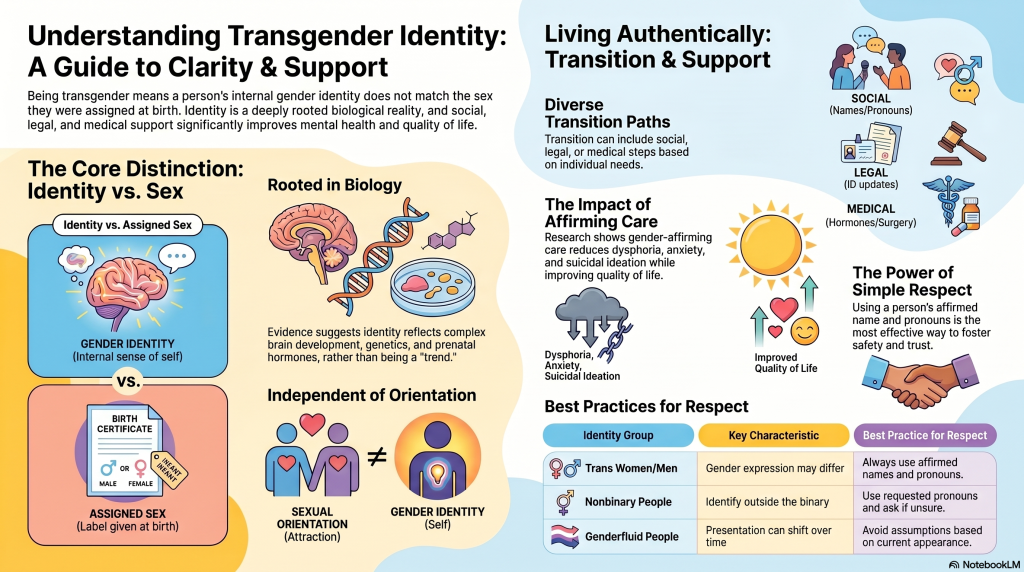
Although people often use the term in different ways, transgender generally describes someone whose gender identity—their inner sense of being male, female, both, neither, or another gender—doesn’t match the sex they were assigned at birth. You may hear people describe themselves as trans men, trans women, or nonbinary, reflecting the broad gender spectrum and real cultural variations in how people understand gender.
You shouldn’t assume being transgender tells you anything about someone’s sexual orientation. It doesn’t. You also can’t assume every trans person feels dysphoria or wants the same changes in life. Some people change their name or pronouns, while others may pursue legal or medical steps. The most respectful approach is simple: use the name and pronouns someone asks for, and ask politely when you’re unsure.

When people talk about sex assigned at birth, they mean the label—usually male or female—given based on a newborn’s anatomy, while gender identity refers to a person’s deeply felt internal sense of being male, female, both, neither, or another gender.
You might recognize your identity early in childhood, or much later; either experience is valid. It doesn’t depend on your gender expression, clothing, appearance, or medical steps. Some transgender people experience gender dysphoria, meaning distress related to a mismatch between identity and sex-related traits, while others don’t. Sexual orientation is separate, so your identity doesn’t determine who you’re attracted to. You may also see AMAB or AFAB, which describe assignment at birth without replacing affirmed identity. Understanding this distinction supports respectful care, accurate communication, and legal recognition.
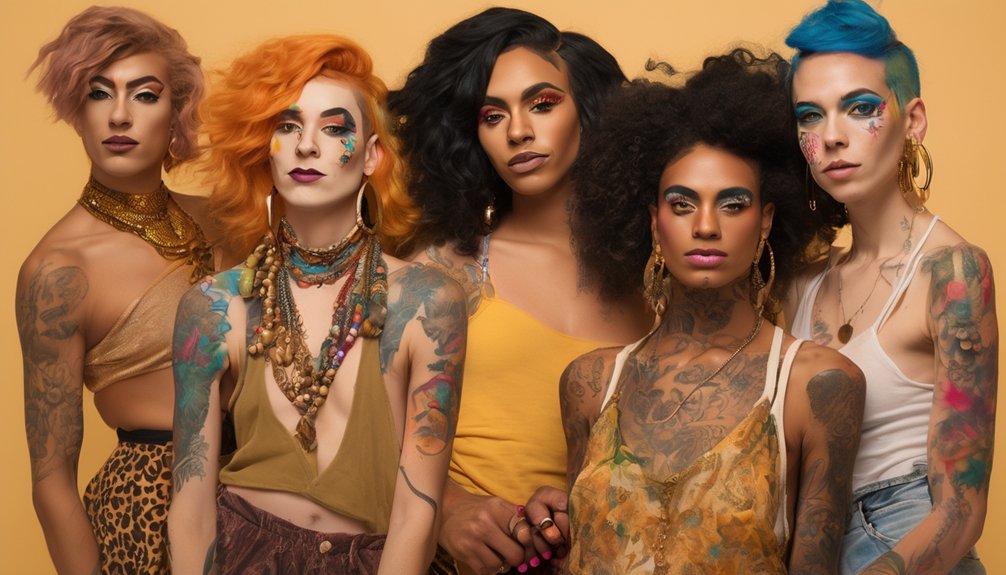
There’s no single way to be transgender: some people identify as trans women or trans men, while many others are nonbinary, genderqueer, or genderfluid. If you’re trans, your identity doesn’t depend on appearance, behavior, or fitting stereotypes.
| Identity | What varies | Respect |
|---|---|---|
| Trans women/men | gender expression differs | use names |
| Nonbinary people | pronouns may vary | ask politely |
| Genderfluid people | presentation can shift | don’t assume |
Evidence shows transgender experiences include broad cultural variation. Some people feel dysphoria; others don’t. Some pursue medical care, while others don’t, for personal, practical, or health reasons. Your clothing, voice, hairstyle, or mannerisms may be feminine, masculine, mixed, or changing over time. The most respectful response is simple: believe what people tell you about who they are.
For many transgender people, changeover can include social, legal, and medical changes that help them live more fully in their affirmed gender. Your social transition might involve a new name, pronouns, clothing, hairstyle, or presentation, and it’s often the initial step.
Your legal transition can mean updating a driver’s license, passport, or birth certificate. Requirements, costs, and proof can differ widely depending on where you live. Your medical transition may include hormone therapy, such as testosterone or estrogen, or surgeries like top surgery, vaginoplasty, phalloplasty, or facial procedures. Not every trans person wants or needs these options.
Research shows gender-affirming care can reduce dysphoria, anxiety, depression, and suicidal ideation while improving quality of life. Still, access barriers like cost, insurance denials, wait times, and restrictive laws can limit choices.
Start with respect: use the name and pronouns a transgender person asks you to use, and don’t use a previous name or terms like “transgendered.” If you’re unsure, ask politely and privately—“What name and pronouns do you use?” is simple, respectful, and avoids assumptions.
You should treat transgender people according to their gender identity at work, school, and in healthcare. Support practical needs, like correct restroom access and updated IDs. When someone wants gender affirming care, you can support social, legal, or medical steps; research links that care with lower anxiety, depression, and suicidal thoughts. You can also challenge transphobic comments, learn from trusted sources like WPATH, Fenway, and Trevor, and offer real help by listening, sharing resources, or going to appointments. These actions reduce isolation and improve well-being.
Yes, transgender men can feel pleasure. You should know sexual sensation depends on your body, hormones, mental health, and comfort, not simply identity. Testosterone often raises libido, while surgery or binding may shift erogenous zones. If genital dysphoria eases through affirming care, many people report better intimacy and orgasm experiences. Still, experiences vary widely, so you’d benefit from knowledgeable providers who can help you support sexual health and satisfaction.
Yes—if you still have a uterus and ovaries, you can still get a period. With testosterone, hormone effects stop bleeding for most trans men within 3–6 months, though breakthrough bleeding can happen. You may also use menstrual suppression methods like an IUD or continuous birth control. If you’ve had a hysterectomy or oophorectomy, you won’t menstruate. Heavy bleeding or severe pain means you should see a clinician soon.
Yes—you can be straight and transgender. Your sexual orientation and gender identity are separate, so being transgender doesn’t determine who you’re attracted to. You might also investigate gender expression, social shift, and identity development in your own way. Evidence-based guidance shows transgender people have diverse orientations, including straight. If you’re questioning, you don’t need to fit stereotypes; you can understand yourself gradually, with support, respect, and self-compassion.
The science is huge: your gender identity doesn’t appear out of thin air—it likely reflects brain development, genetic influences, prenatal hormones, and life experience working together. Research finds brain structure patterns, twin-study links, and hormone-related clues, though no single cause explains everyone. Major medical groups agree it’s a complex, natural human variation. If you’re wondering what’s “real,” the evidence says transgender identities are valid and deeply rooted.
Being transgender isn’t confusion or a trend—it’s a real, deeply rooted part of who someone is. When you understand that gender identity and assigned sex can differ, you can replace assumptions with respect. You don’t have to know every detail to make a difference; using someone’s name, pronouns, and treating them with dignity helps create safety, trust, and better mental health. Your willingness to listen and affirm can help make the world feel more livable, one interaction at a time.

 Featured PostsOctober 8, 2026Say NO to Props 134 & 135 in Colorado
 Featured PostsSeptember 29, 2026A Kansas Law Voided 1,700 Licenses. Now Judges Must Decide Whether It Stands
 Featured PostsSeptember 29, 2026Election Season & Transgender Rights: Reporting Responsibly in a Divided America
 Featured PostsSeptember 29, 2026Privacy, Dignity, and Rights: The Transgender Bathroom Controversy