When a Child Says They’re Trans: a Deep Dive Into Pediatric Care and Family Decisions

When your child says they’re trans, it can feel like every decision in the world has suddenly landed in your hands. You don’t need to have every answer immediately. Start by listening, asking respectful questions, and seeking qualified pediatric and mental health support when needed. Care typically unfolds over time, with attention to your child’s well-being, development, and family circumstances. The next steps may be more individualized—and less irreversible—than you expect.
When a child says they’re trans, they’re communicating that their internal sense of gender differs from the sex assigned to them at birth. You may hear this through words, names, pronouns, clothing choices, or discomfort with gendered expectations. This statement describes identity, not a diagnosis, and it doesn’t by itself determine a child’s future needs or path.
Children develop gender awareness early, while identity exploration can continue across childhood and adolescence. Play preferences, interests, or appearance alone don’t establish that a child is transgender; many children enjoy activities or styles not stereotypically associated with their assigned sex. What matters clinically is the child’s consistent experience, the meaning they give it, and whether gender-related distress affects daily functioning.
Some children express certainty; others use tentative language or change how they describe themselves over time. You can understand their statement as significant information about their current experience. Careful, developmentally appropriate assessment can distinguish exploration from persistent gender dysphoria and identify any co-occurring emotional concerns.

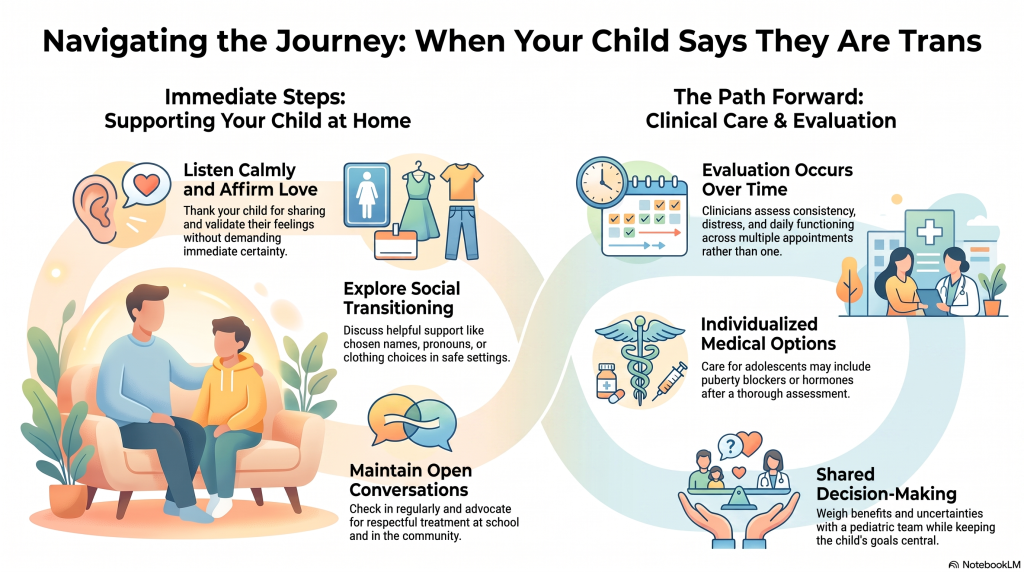
A supportive response starts with listening calmly, thanking your child for telling you, and taking their feelings seriously without demanding immediate certainty. Offer emotional validation: you can say, “I love you, and we’ll work through this together.” Avoid dismissing, debating, or treating disclosure as misbehavior. Your steady, respectful response can reduce isolation and help your child feel safe at home.
Ask what support would feel helpful now. This may include using a chosen name or pronouns, discussing clothing or hairstyle preferences, or considering a social shift in selected settings. Collaborate with your child while considering privacy, school policies, safety, and family circumstances. You don’t need to have every answer immediately.
Seek guidance from qualified pediatric, mental health, or gender-specialized professionals who use developmentally appropriate, individualized care. They can help you address stress, peer relationships, school communication, and co-occurring anxiety or depression. Maintain open conversations, check in regularly, and advocate for respectful treatment.

Gender dysphoria is evaluated over time through careful, individualized conversations about a child’s gender-related feelings, distress, development, and daily functioning. You and the clinical team consider when these feelings began, how consistently they occur, and whether they intensify, lessen, or change across settings. There is no single test that predicts a child’s future gender identity.
A thorough evaluation also examines puberty-related concerns, anxiety, mood, peer relationships, family stress, and other factors that may affect well-being. Clinicians listen without assuming a predetermined outcome and distinguish gender-related distress from broader emotional difficulties when possible.
Longitudinal assessment allows you to revisit concerns as your child develops, rather than relying on one appointment or label. Developmental trajectories vary: some children describe persistent, insistent experiences, while others investigate or understand their feelings differently over time. The goal is to understand your child’s experience accurately, reduce distress, and support healthy functioning through ongoing, respectful follow-up.
Care can take different forms depending on your child’s years, development, goals, and level of distress. For many children, care begins with respectful listening, mental-health support when needed, and social transitioning, such as using a chosen name, pronouns, clothing, or hairstyle. You may also address practical needs at school, in activities, and through legal documentation when it is appropriate and available.
For adolescents who experience persistent, clinically significant distress about pubertal changes, specialized pediatric teams may discuss medical options. Puberty blockers can temporarily pause certain physical changes; gender-affirming hormones may be considered later for some adolescents after thorough assessment. These treatments require monitoring for physical effects, mental health, and general development. Gender-affirming care also includes routine primary care, support for anxiety or depression, and attention to safety, belonging, and peer relationships. Not every child wants or needs every intervention. Care should respond to your child’s individual experience rather than assume a single pathway.
Shared decision-making helps families weigh potential benefits, limits, and uncertainties while keeping a child’s well-being at the center. You can begin with a qualified pediatric clinician who listens to your child, reviews their developmental history, screens for anxiety, depression, and safety concerns, and coordinates referrals when needed.
Ask what each option can and cannot do, including social support, counseling, puberty blockers, or hormones. A careful risk assessment should consider your child’s physical health, pubertal stage, distress about body changes, family support, school environment, and ability to attend follow-up care. Evidence is still evolving for some interventions, so it’s appropriate to ask about research quality, known side effects, fertility implications, and areas of uncertainty.
Informed consent is an ongoing conversation, not a single signature. Encourage your child to share goals and worries in maturity-appropriate ways. Seek a second opinion if you need one, and revisit decisions as your child grows.
Protect, provide, and promote: you may receive protections against sex discrimination under Title IX implications, though enforcement and court rulings vary by state and jurisdiction. Your school may need to address harassment, respect your affirmed name and pronouns where policy requires, and provide equitable participation in programs. Bathroom access rules differ widely; schools should avoid singling you out and consider your safety, privacy, and dignity. Check local laws and district policies.
You can find transgender-friendly support through LGBTQ+ community centers, pediatric clinics, school counselors, and reputable national directories. Ask providers about Local meetups, parent groups, and youth programs with trained facilitators. Seek Faith affirming groups if spirituality matters to your family. Verify each group’s confidentiality policies, safeguarding practices, and leadership credentials. You’ll benefit most from spaces that respect your child’s identity, welcome questions, and connect families to evidence-based mental-health and medical resources.
Insurance coverage for gender-affirming care for minors varies—because healthcare paperwork rarely makes anything simple. You’ll need to review your plan’s exclusions, network rules, prior-authorization requirements, and coverage for counseling, puberty blockers, or hormones. Most insurers require parental consent and documentation of medical necessity from qualified clinicians. Ask your insurer for written criteria, appeal denials when appropriate, and work with your child’s care team to identify financial-support options.
Use correct pronouns and the name the child asks you to use, even when they aren’t present. Respect boundaries around privacy, disclosure, clothing, and questions about their body or medical care. Listen without debating or demanding explanations. If you make a mistake, apologize briefly, correct yourself, and move on. Offer consistent warmth and inclusion at family events. Your support can reduce stress and strengthen the child’s sense of safety and belonging.
You deserve medical confidentiality: clinicians generally protect your transgender child’s health information, including gender identity and treatment discussions, within applicable laws. The devil’s in the details: privacy rules vary by location, stage of life, service, and insurance. You may have confidential consent rights for certain care, while parents often access records for minors. Ask the clinic how it protects portal messages, billing notices, records, and conversations, and discuss safety concerns openly.
When your child says they’re trans, you don’t need every answer at once. You can listen, affirm their feelings, and seek clinicians who assess development, distress, mental health, and family goals over time. Supportive steps may begin at home and school, while medical decisions require careful, individualized discussion and monitoring. The most crucial next step may be simpler than you expect: stay present, ask open questions, and let your child know you’re beside them.

 Fashion and ExpressionSeptember 26, 2026Finding Joy in Your Gender Expression
 Featured PostsSeptember 20, 2026Full or Partial Transition? Understanding the Options for Older Trans Adults
 Featured PostsAugust 27, 2026Understanding Love: Embracing My Trans Girlfriend
 Activism and ChangeAugust 27, 2026From Erasure to Oppression: The Rise of Anti-Trans Laws