WPATH Checklist: Why You Need It and When to Start the Process

Setting out on your path toward your true self might feel like a delicate dance, but understanding the role of the WPATH Checklist can ease your steps. It’s an essential guide for accessing gender-affirming care, ensuring you’re well-prepared for each stage of transformation. Starting early is key, as it allows you to navigate the intricate process without haste, giving you the confidence to face the road ahead. Curious about what comes next?
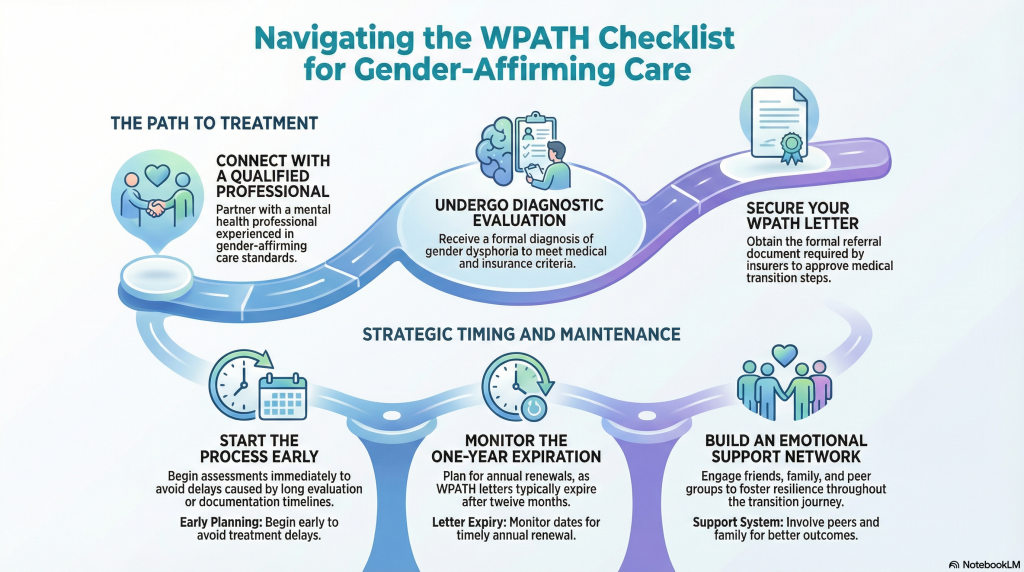

Understanding the WPATH checklist is vital for anyone seeking gender-affirming care, as it provides a structured roadmap to navigate this complex course. Following the WPATH guidelines overview guarantees you’re on track with the necessary steps, including documentation and mental health assessments. Prioritizing mental health importance is significant, as a diagnosis of gender dysphoria is needed to obtain WPATH letters from qualified professionals. This checklist not only prepares you for your transition goals but also helps assess your readiness for treatment. By aligning with these standards, you can facilitate smoother communication with healthcare providers and insurance companies. Embracing this thorough guide supports your journey, assuring you receive the care you deserve while honoring your unique path.

When exactly should you start the WPATH checklist process? Ideally, you should begin as soon as you start considering your gender-affirming expedition. Early planning is key, especially since healthcare providers and insurers often need WPATH letters before approving treatments. Starting early helps you avoid delays, as engaging with a mental health professional can take time. Remember, these letters usually expire after a year, so initiating the process early gives you room to complete assessments and renew letters if needed. Consider your personal circumstances, like your shift timeline and support systems, to decide the best time to start.
| Key Considerations | Impact | Action Needed |
|---|---|---|
| Early Planning | Avoids treatment delays | Start process early |
| Personal Circumstances | Influences timing choice | Evaluate your situation |
| Expiry of WPATH Letters | Requires timely renewal | Monitor expiration dates |

To commence the WPATH checklist process, you initially need to connect with a qualified mental health professional experienced in gender-affirming care. This connection is vital, as their role includes conducting thorough mental health evaluations, determining your readiness for hormone therapy or surgery. During the evaluation, you’ll discuss your gender identity, previous treatments, and support systems. This helps tailor the evaluation to your unique needs.
Once the evaluation is completed and criteria are met, the mental health professional will issue a WPATH letter. This document is often required by healthcare providers and insurance companies to approve treatment. Keep in mind that WPATH letters generally expire after one year, so plan for follow-up appointments to obtain updated letters and continue your care seamlessly.
As you prepare for your mental health assessment and the subsequent referral letters for gender-affirming treatment, it’s fundamental to approach the process with openness and honesty. Preparation strategies include reflecting on your gender identity, emotional readiness, and understanding the risks and benefits of treatments. During the assessment, expect to share personal experiences and discuss your support systems. Establishing rapport with a therapist is critical, and while some may write referral letters after one session, others might require more to guarantee you’re fully prepared. Remember, WPATH letters typically expire after a year, so plan for future assessments to align with insurance requirements. Finding a therapist familiar with WPATH Standards of Care is essential for receiving the best support.
Reflecting on your mental health assessment, it’s likewise vital to contemplate the support network surrounding you as you navigate the WPATH checklist. Building a strong support network is important for fostering emotional resilience and easing your transition process. Engaging with peer support groups offers shared experiences and insights, helping you feel less isolated. Friends, family, and mental health professionals can provide emotional, informational, and logistical assistance. Including supportive individuals in therapy sessions can improve understanding, making it easier to meet WPATH checklist requirements. Local LGBTQ+ organizations offer tailored resources and guidance, ensuring your needs are met. By surrounding yourself with a compassionate network, you’re better equipped to handle challenges, empowering you to take each step confidently and authentically.
You should start gender-affirming care as soon as you express the desire to change. Early access can greatly improve your mental health and provide vital support systems. Engaging with healthcare professionals helps guarantee you’re ready and fully informed. Starting discussions in therapy can clarify your goals and boost your well-being. Don’t hesitate to reach out for the care and support you need to begin this significant path.
Before starting gender-affirming care, you need to focus on pre-transition considerations. It’s essential to undergo a mental health evaluation with a therapist familiar with WPATH Standards of Care. This step assesses your readiness and helps you understand potential risks and benefits. Openly communicate your experiences and expectations, and document any previous treatments. This groundwork guarantees a smoother path and supports the necessary approvals for your care process. You’ve got this!
You should start shifting when you notice early signs of personal readiness, like a persistent desire to align your physical appearance with your gender identity. It’s essential to listen to yourself and begin when you feel emotionally and mentally prepared. Engaging with a supportive therapist can help clarify your goals and make certain you’re ready for the path ahead. Remember, this is a personal experience, and it’s okay to start at your own pace.
To start changing, reflect on your gender identity and feelings. Seek support from mental health professionals who understand WPATH standards. Building a strong support network is essential—friends, family, and online communities can offer empathy and guidance. Communicate openly with your therapist about your goals. Take advantage of resources like free telehealth services when available. Remember, changing is a personal process, and regular therapy can help you navigate the challenges you encounter.
Starting on the WPATH Checklist expedition early is like planting seeds for a future where you can thrive. You’ve got the empowerment to take these steps now, ensuring you’re prepared and confident in your path. Remember, it’s not just about ticking boxes; it’s about building a foundation for the care that resonates with your true self. You’re not alone in this—support is here, and your future is waiting, ready for you to accept it fully.

 Featured PostsOctober 21, 2026The Trans Journey to Passing
 Featured PostsOctober 17, 2026From Job Search to Success: A Transgender Woman’s Employment Journey
 UncategorizedOctober 17, 2026Trans Rights at Risk? The Implications of a Trump 2024 Win
 Featured PostsOctober 17, 2026One Step Closer: Trans and Passing