Trans Man vs. Transmasculine: Terms, Nuance, and Self-Definition

In recent U.S. survey data, about 1 in 4 transgender adults identify as nonbinary, which shows how often people choose labels beyond “man” or “woman.” You might use “trans man” if you know you’re a man, or “transmasculine” if masculinity fits but “man” doesn’t always. These terms can overlap, and your choice can shift with context and comfort. The tricky part is how this plays out in real-life language, community spaces, and care…
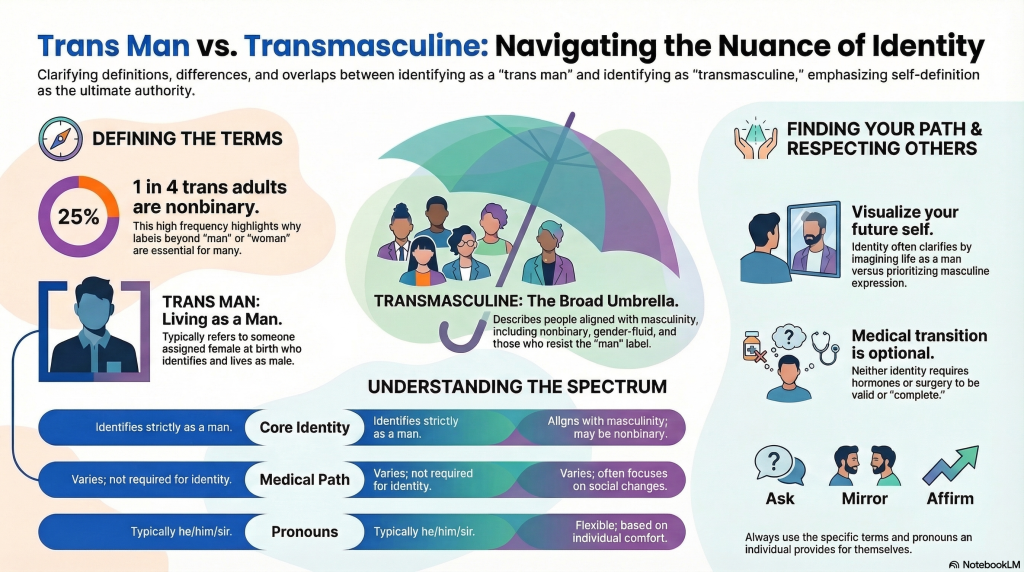
Transmasculine is broader: you can identify with masculinity without identifying strictly as a man, including non-binary or gender-fluid identities. This nuance matters because societal perceptions often assume a single path—especially medical change—when many people don’t want or need it. Centering personal narratives helps you respect self-definition and avoid erasing transmasc visibility. It also makes room for intersectional experiences, where race, disability, culture, and safety shape how masculinity is expressed and recognized.

Where do you feel most like yourself—when others see you as a man, or when you’re simply allowed to be more masculine than your assigned role? Use identity exploration to track what reliably increases gender comfort across settings, not just in one moment. Consider these quick signs:
Track where you feel most yourself: being seen as a man, or simply freer to express masculinity across settings.
If you’re unsure, journaling and affirming trials can clarify patterns.
If the quick signs didn’t point you cleanly toward “trans man,” that doesn’t mean you’re any less valid—it may mean a broader label fits better. “Transmasculine” can describe people assigned female at birth who relate to masculinity in different ways, including trans men alongside non-binary and gender-fluid people who don’t always identify as men. You might use it if your gender identity leans masculine some days, sits between categories, or resists “man” entirely while still feeling connected to masculinity. Transmasculine also fits if you don’t want medical alteration, or if you only pursue social changes like name, pronouns, clothes, or voice. Using inclusive language helps others avoid misidentifying you or flattening your experience. It also validates masculine expression beyond strict male roles.
Because people use these labels to describe distinct lived realities, you’ll communicate more respectfully when you treat “trans man” and “transmasculine” as self-identifications rather than interchangeable terms. “Trans man” typically refers to someone assigned female at birth who identifies and lives as male, while “transmasculine” is broader and can include nonbinary or gender-fluid people who feel connected to masculinity without identifying fully as male. Ask what term someone uses and mirror it, along with their preferred pronouns, in introductions, records, and referrals. Don’t assume “transmasculine” means “trans man,” and don’t mislabel transmasc people as butch lesbians or erase their gender. If you’re unsure, invite respectful dialogue: “What language feels right for you?” Treat corrections as identity affirmation, and stay open to language evolution over time.
A trans man identifies as a man; a transmasculine person aligns with masculinity but might be nonbinary or another gender. If you worry a diagram “boxes people in,” use it as a guide: transmasculine (umbrella) → includes trans men, plus others. You can use these terms during identity exploration, and you’ll notice societal perceptions may treat them in a comparable way, though lived experiences and changes vary. Respect self-described labels.
A trans man is someone who was assigned female at birth and knows his gender identity is male. You’ll often see him live, be addressed, and relate to the world as a man, even if his body doesn’t match societal perceptions of what men “should” look like. You don’t have to assume he’s had hormones or surgery; medical steps vary. You can support him by using his name and pronouns.
You’ll pee in several ways, like choosing a path through a well-lit forest: you can sit to urinate, use a stand-to-pee device, or—if you’ve had phalloplasty or metoidioplasty—urinate through a created penis-like structure. These urinary methods vary with comfort, anatomy, resources, and safety. Your gender identity doesn’t dictate one “right” approach; you pick what fits you and your restroom environment best.
You’d typically call a person who describes themselves as without a gender agender. You can use this term to describe a gender identity marked by feeling no gender, or feeling gender-neutral. You’ll often hear agender discussed within non binary experiences, because many agender people don’t fit traditional categories. You should ask what pronouns they use, since many prefer they/them. You support well-being when you respect their self-definition.
You’ve seen that “trans man” and “transmasculine” aren’t interchangeable labels; they’re tools you can choose to fit your lived experience. If you identify as a man, “trans man” may match; if you connect with masculinity without being strictly male, “transmasculine” can fit. Like a compass, these terms can help you navigate identity without dictating your destination. You’ll use them most respectfully by asking, listening, and following people’s stated language.

 Featured PostsOctober 21, 2026The Trans Journey to Passing
 Featured PostsOctober 17, 2026From Job Search to Success: A Transgender Woman’s Employment Journey
 UncategorizedOctober 17, 2026Trans Rights at Risk? The Implications of a Trump 2024 Win
 Featured PostsOctober 17, 2026One Step Closer: Trans and Passing