The New Voter Suppression: GOP Bill Targets Trans Americans at the Ballot Box
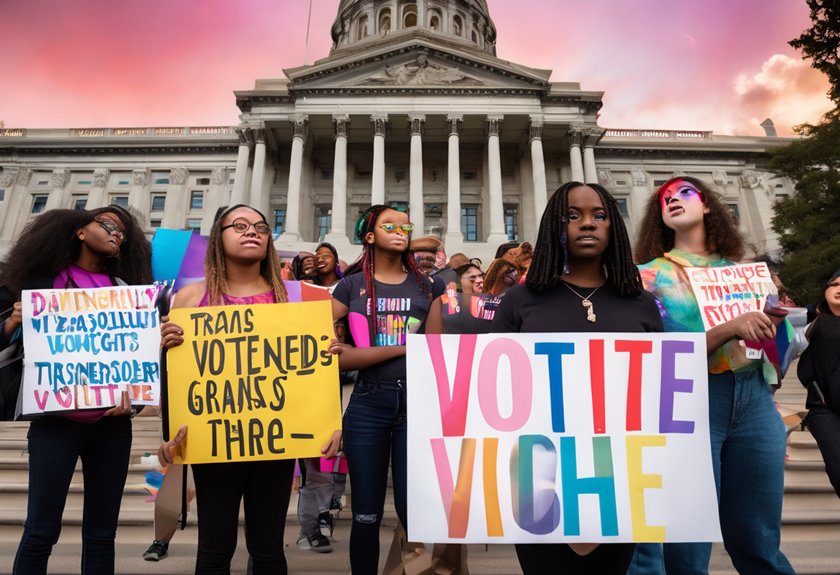
While voter suppression has long been a contentious issue in the United States, recent legislation like the SAVE America Act has intensified barriers for transgender Americans. These laws impose strict identity verification requirements that disproportionately affect transgender individuals. Many face challenges aligning their legal ID with their gender identity, complicating their ability to vote.
Voter suppression laws amplify challenges for transgender Americans by enforcing strict ID verification that complicates their voting process.
Approximately 21 million eligible voters in the U.S. lack access to the required documentation. Transgender individuals, in particular, struggle with discrepancies in name and gender markers on IDs, which are essential for identity verification at polling stations. This issue is exacerbated in states like Texas, where new laws have blocked updates to gender markers on IDs, creating further obstacles for trans voters.
The impact on civic engagement among transgender and nonbinary individuals is significant. Fear of discrimination and harassment at polling locations has led to a chilling effect, discouraging many from participating in elections. This fear undermines their fundamental right to vote and participate in democratic processes, further marginalizing an already vulnerable community.
Advocacy organizations are stepping in to address these challenges. Groups like the ACLU and VoteRiders are mobilizing to support trans voters by providing resources and education on maneuvering the complex identification landscape imposed by new laws. These efforts aim to mitigate the barriers created by strict identity verification requirements and guarantee that transgender individuals can engage in civic activities without fear.
The SAVE America Act and similar legislation highlight the ongoing struggle for transgender rights in the electoral process. As these laws continue to evolve, the focus remains on balancing election security with the inclusivity of all eligible voters, making sure that civic engagement is accessible to everyone, regardless of gender identity.

 Featured PostsSeptember 20, 2026Full or Partial Transition? Understanding the Options for Older Trans Adults
 Activism and ChangeAugust 27, 2026From Erasure to Oppression: The Rise of Anti-Trans Laws
 Activism and ChangeAugust 27, 2026The Power of Resistance: Lessons From the Stonewall Riots
 Featured PostsAugust 27, 2026Dysphoria: Acknowledging the Pain, Finding Hope