Step into My Shoes: What It Truly Means to Be Trans

When you hear a trans coworker say, “I’ve known since childhood,” you’re hearing more than a personal preference—you’re hearing years of self-understanding shaped by joy, fear, and persistence. You may not share that experience, but you can recognize that identity isn’t chosen on a whim. The consequences of dismissing it are real, and so is the difference your respect can make…
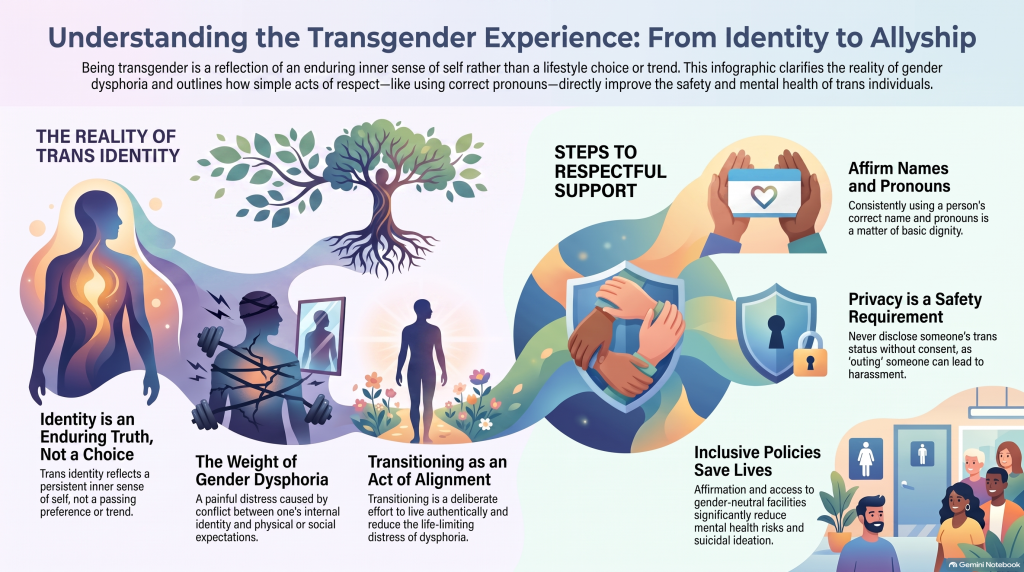
Being trans isn’t a choice because a person’s gender identity reflects an enduring inner sense of self, not a passing preference or political statement. You may recognize that truth early in life, or only after years of trying to hide it for safety, family acceptance, or survival. Social influences can shape how freely you express yourself, but they don’t manufacture who you are.
Clinical and psychological evidence recognizes gender incongruence as persistent, not trendy. Trans people make up a small share of the population, and many describe a long, consistent process of identity development. When you shift socially, medically, or legally, you aren’t choosing to become trans; you’re choosing honesty and alignment. Public debates should respect that reality instead of reducing your life to stereotypes. Everyone deserves the freedom to live authentically, with dignity, safety, and support.

For many trans people, gender dysphoria describes the painful gap between who you know yourself to be and how your body or the world insists on seeing you. You may carry childhood discomfort for years, sensing something is wrong without having words for it. Each misgendering, rigid expectation, or unsafe locker room can deepen the hurt.
Dysphoria can also feel intensely physical. You might experience body aversion when facial hair, breasts, or other changes seem to contradict your identity. That distress isn’t vanity, confusion, or a phase; it can fuel anxiety, isolation, and depression. You deserve to be believed when you describe it. Even if others can’t see the struggle, you live with its weight daily. Respecting your name, pronouns, and boundaries is not special treatment—it’s basic dignity and care.

Many trans people undergo change because living in closer alignment with their gender can ease the distress of dysphoria and support their wellbeing. If you listen to personal narratives, you’ll hear no single timeline or path. You may shift socially through names, pronouns, or presentation; medically through hormones; or surgically, if those options fit your needs, health, access, and finances. Many people don’t pursue every form of shift.
You might know your gender early, or spend decades suppressing it because family pressure, safety concerns, and cultural influences make honesty feel impossible. Shift isn’t about attention or following a trend. It’s often a deliberate effort to live with greater comfort and authenticity. Yet hostile attitudes, healthcare shortages, legal barriers, and discrimination can limit your choices. People deserve affirming care, safety, and the freedom to determine what alignment means for them.
Calling trans identity a “choice” may sound harmless, but it dismisses the deeply felt reality that many trans people describe from early life. When you repeat that myth, you erase the persistent distress of gender dysphoria and imply that undergoing gender-affirming care is merely cosmetic or optional. For many, clothing, hormones, or surgery are not proof of a chosen identity; they’re ways to reduce pain and live safely.
You also help strengthen social stigma when you frame trans lives as a trend. That stigma can isolate people, worsen mental-health risks, and make healthcare harder to reach. The policy impacts are real, too: misleading claims can fuel restrictions aimed at a small, already vulnerable population. If you listen to trans people’s accounts and credible clinical research, you can see the debate differently: not as permission to police identity, but as an urgent question of dignity, safety, and health.
Support starts with treating trans people as the experts on their own names, pronouns, and identities. You can use correct pronouns, update records promptly, and correct mistakes without making someone comfort you. These actions matter: affirmation can reduce suicidal ideation among trans youth.
You should provide privacy protections and never disclose someone’s trans status without consent. Outing can expose them to discrimination, harassment, or violence. Advocate for gender-neutral facilities, inclusive policies, workplace accommodations, and enforced anti-bullying rules. Don’t let manufactured bathroom panic dictate who gets safety and dignity.
You can also support access to gender-affirming care, including evidence-based hormone therapy and puberty blockers, which improve mental health for many people. Listen when trans people describe their lives. Believe them. Respect isn’t difficult; it’s a daily choice to protect dignity, safety, and belonging.
You build inclusion by opening every workplace door, not leaving anyone in the hallway. Create Gender neutral restrooms, protect chosen names and pronouns, and offer Pronoun inclusion training for all staff. You must enforce anti-discrimination rules, provide care-related benefits, and establish confidential reporting channels. Listen to trans employees, compensate them for advisory work, and act on their feedback. Don’t treat dignity as optional; make it a daily workplace standard for everyone.
Your protections depend on where you live, but you may have rights under federal law, state statutes, and municipal ordinances. Federal employment law generally prohibits sex discrimination, including discrimination based on life stage. Check your state civil rights agency and city code for protections covering housing, public spaces, healthcare, schools, and identity documents. If anyone discriminates against you, document it, seek legal aid, and report it—you deserve safety and equal treatment.
You can support trans children by listening, believing them, and adapting care to their developmental stage. Offer lifespan-appropriate guidance about names, pronouns, privacy, and safety. For younger children, affirm exploration; for teens, advocate at school and healthcare appointments. Provide boundary setting support when relatives or peers misgender them. You don’t need every answer immediately—commit to learning, protect their dignity, and make certain they know your love isn’t conditional.
Even if you think “negative” portrayals reflect reality, you should recognize that stereotypical caricatures and victimizing narratives cause real harm. You observe damage when media depicts trans people as deceptive, dangerous, tragic, or defined only by trauma. These stories fuel fear, invite discrimination, and limit public understanding. You can demand portrayals that show trans people as complex, joyful, capable individuals with agency, relationships, ambitions, and ordinary lives beyond change.
You can find affordable, affirming healthcare through community clinics, LGBTQ+ health centers, Planned Parenthood locations, and telehealth networks that offer gender-affirming care. Search directories from GLMA, WPATH, and local LGBTQ+ organizations for vetted providers. Ask about sliding-scale fees, uninsured discounts, payment plans, and financial-assistance programs. You deserve respectful care that honors your identity, uses your name and pronouns, and supports your health without judgment or unnecessary barriers.
You don’t have to fully understand every path to respect the person walking it. When you honor someone’s name, pronouns, privacy, and access to care, you help replace a locked door with an open bridge. Being trans isn’t a costume chosen for a day; it’s a truth carried through storms. Choose compassion over suspicion. Stand beside trans people, challenge harmful myths, and help build a world where everyone can breathe freely and live honestly.

 Activism and ChangeOctober 14, 2026I’m I7 and Male, I Don’t Know Whether or Not I am a Trans Girl
 Featured PostsOctober 13, 2026Colorado and Michigan Join States Ending Medicaid Coverage for Trans Youth
 Featured PostsOctober 8, 2026From Self-Doubt to Self-Acceptance: Confronting Internalized Transphobia
 Featured PostsOctober 8, 2026Say NO to Props 134 & 135 in Colorado