Expression vs. Identity: A Guide to Feminine Male Presentation and Transgender Womanhood

You might not know that feminine clothing, makeup, pronouns, or interests can signal expression without determining whether you’re a man, nonbinary person, or transgender woman. Your identity concerns your internal sense of self, while expression reflects how you move through social expectations shaped by culture, race, class, safety, and community. If you’re questioning, bodily comfort, persistent desires, and dysphoria may offer clues—but they don’t always speak plainly.
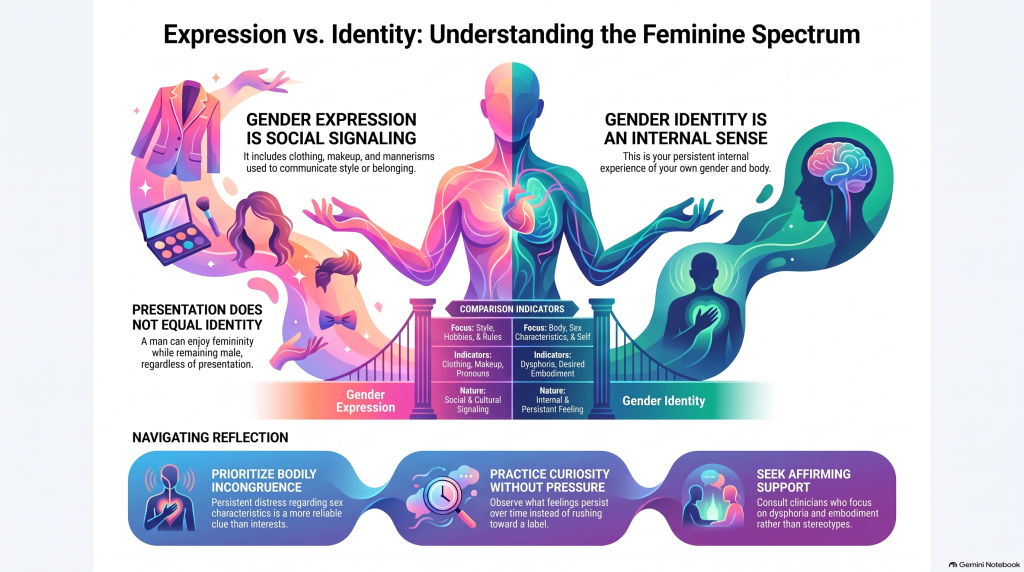
Gender expression and gender identity describe related but distinct parts of a person’s experience. Your clothing, hairstyle, hobbies, mannerisms, cultural signaling, and pronoun practices can communicate how you wish to be perceived, but they don’t by themselves establish your gender identity. You may enjoy makeup, bright colors, or activities coded feminine while feeling fully at ease as a man. Such presentation doesn’t inherently indicate transgender womanhood or persistent gender dysphoria.
When exploring identity, attend to your embodied experience rather than stereotypes about masculinity or femininity. Persistent discomfort with male sex characteristics, a sustained desire for female anatomy, or recurring wishes for female embodiment may warrant deeper reflection. Neutral or mixed body feelings need careful consideration: they can reflect comfort, denial, social pressure, or ongoing exploration. Clinicians should prioritize your self-report and bodily incongruence, recognizing culture, race, disability, and safety shape expression.

Because social meanings attached to femininity vary across cultures and communities, outward expression can’t reliably reveal a person’s internal gender identity. Your clothing, interests, mannerisms, and cultural signaling may communicate style, belonging, or safety—not whether you’re a man or a trans woman.
Outward expression may signal style, belonging, or safety—but it cannot reliably define a person’s internal gender identity.
Neutral reports about your body also require context. Fear, denial, overwhelm, racism, class barriers, or process-related risk can shape what you disclose. Expression offers clues about social experience, not a definitive diagnosis.

Comfort living as a man and the presence of body-focused dysphoria often provide more useful context than feminine presentation alone. You may enjoy femininity, clothing, or roles while feeling settled in a male social position; that experience differs from persistent incongruence with being assigned male. Transgender women often describe distress about primary or secondary sex characteristics, longing for female anatomy, or enduring embodiment desires that support greater body congruence.
Still, neutral or mixed feelings about your body don’t yield a simple determination. They can reflect genuine comfort, denial shaped by stigma, limited language, or evolving experience. If you report both strong desires for a female body and comfort living as a man, that combination warrants careful, nonjudgmental attention. Presentation has limited diagnostic weight; the intensity, persistence, and personal meaning of bodily yearning matter more.
Reflecting safely starts with curiosity rather than pressure to reach a label. Notice patterns without treating any feeling as proof. Your race, culture, disability, safety, and access to care may shape what feels possible to name or imagine.
Start with curiosity, not pressure. Notice what persists, while honoring the cultural, practical, and safety realities that shape self-understanding.
Neutrality can mean comfort, denial, or complexity. You don’t need certainty today; observe what persists over time.
Finding support that respects the difference between gender expression and gender identity can help you investigate without being steered toward—or away from—womanhood. Choose gender-affirming clinicians who assess body-related dysphoria, embodiment, fantasies, and desires—not clothing or hobbies. Ask whether they offer clinical referrals and respect uncertainty, denial, overwhelm, disability, culture, and race-informed experiences.
| Resource | What to seek |
|---|---|
| Therapist | Dysphoria-focused assessment |
| Peer support | Trans-led, mixed-gender dialogue |
| LGBT+ center | Inclusive local services |
| Gender clinic | Evidence-based protocols |
Consult WPATH Standards of Care, university gender clinics, and local LGBT+ health centers. Online forums and regional support lines can provide immediate peer support, clarify distinctions between feminine men and trans women, and connect you with providers. You don’t owe anyone a label; seek people who take your narrative seriously and support your pace.
Hormone therapy doesn’t usually change your gender identity; it may clarify identity development by changing how your body feels. One review found that over 90% of transgender adults reported improved well-being after gender-affirming care. If you already experience persistent body-focused dysphoria, estrogen may feel affirming. If you’re uncertain or identify as a feminine man, it won’t automatically make you a woman. Examine your feelings with an affirming clinician before deciding.
Start with a calm, private conversation: “I want to share my wardrobe preferences and hear how they land for you.” Explain that feminine expression doesn’t automatically define your gender identity or relationship roles. Ask open questions, listen without defensiveness, and name emotional boundaries around privacy, language, intimacy, and disclosure. Acknowledge that culture, race, sexuality, and safety can shape reactions. Agree on practical next steps, revisit the conversation, and seek affirming support if needed.
Yes—workplace protections can form a shield, not a costume, for your gender presentation. In many places, laws prohibit workplace discrimination based on sex, gender nonconformity, gender identity, or expression. You may challenge unequal dress codes, harassment, or retaliation while maintaining professional boundaries. Protections vary by jurisdiction, employer, and religious exemptions. Document incidents, save policies and messages, contact HR, and consult a local employment lawyer or human-rights agency if needed.
Yes, you can usually pursue a legal namechange without undergoing gender-affirming steps, medical care, or changing a sex marker. You’ll generally file a court petition, pay fees, and meet local notice requirements; rules vary by jurisdiction. Minors often need parental involvement. A court order lets you update employment, banking, school, and medical records. Consider privacy considerations carefully, especially if publication could expose you to discrimination, family conflict, or safety risks.
Safe communities act like well-lit trailheads: you can investigate without being pushed down one path. Seek moderated gender-questioning support groups, LGBTQ+ center Discords, PFLAG-linked spaces, and Trevor Project–connected resources. Check rules against harassment, coercion, and medical misinformation. Roleplaying forums can help you test names or pronouns, but protect privacy and avoid unmoderated threads. Choose communities that welcome trans, nonbinary, cis, feminine-male, disabled, and racialized experiences with respect.
Your feminine expression may be an authentic part of being a man, or it may accompany a transgender identity; only you can name your experience. Let clothing, pronouns, bodily feelings, and recurring hopes offer clues—not verdicts. Gender exploration is a compass, not a courtroom. Notice what brings relief, joy, or distress across time, while accounting for culture, race, disability, safety, and access. Seek affirming, clinically competent support when you want it, and give yourself room to evolve.

 Featured PostsOctober 8, 2026Say NO to Props 134 & 135 in Colorado
 Featured PostsSeptember 29, 2026A Kansas Law Voided 1,700 Licenses. Now Judges Must Decide Whether It Stands
 Featured PostsSeptember 29, 2026Election Season & Transgender Rights: Reporting Responsibly in a Divided America
 Featured PostsSeptember 29, 2026Privacy, Dignity, and Rights: The Transgender Bathroom Controversy