Human Rights or Culture War? Reacting to Kansas’ Anti-Trans Law

You may not know that Kansas’ bathroom restrictions hinge on a legal definition of “sex” that’s already being tested against federal equal protection and Title IX precedents. When you’re told to treat this as a culture-war skirmish, you risk missing the rights at stake: bodily autonomy, public access, and freedom from arbitrary enforcement. You also inherit a system that invites suspicion and selective punishment—so the real question becomes who gets protected, and who gets policed…
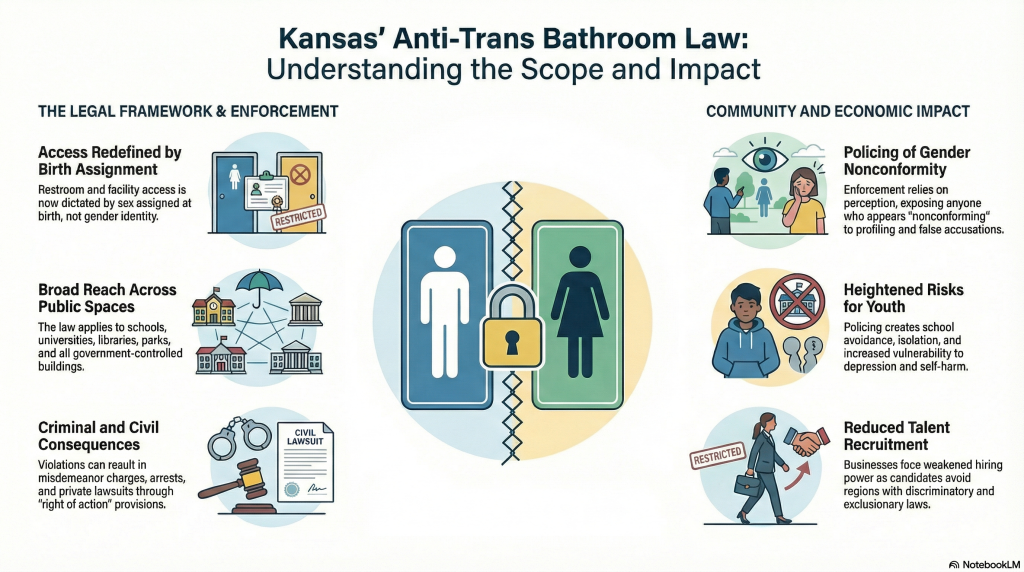
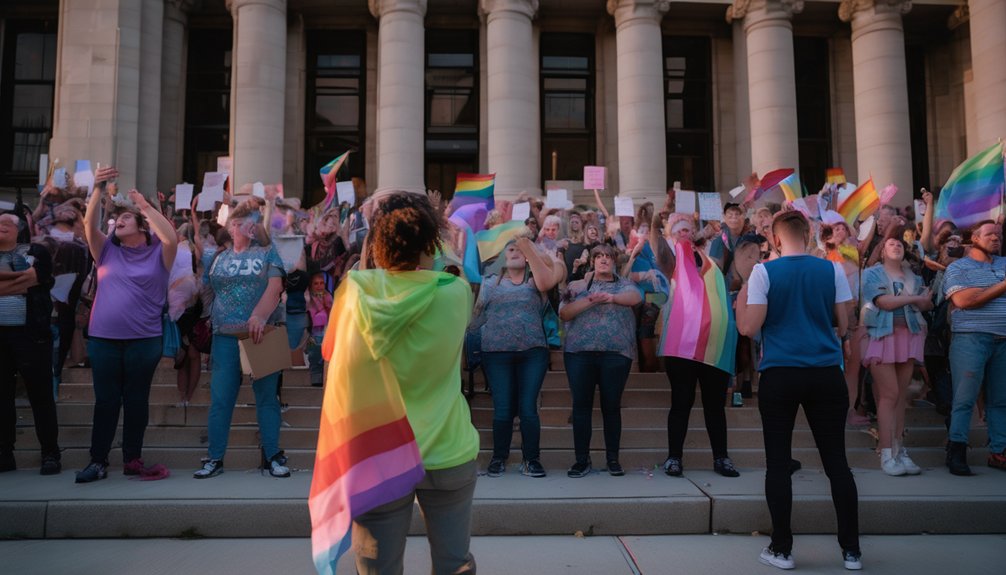
While supporters frame it as a safety measure, Kansas’s anti-trans bathroom law compels transgender people to use restrooms and changing facilities that match their sex assigned at birth, not their gender identity. One observes the state redefine access as a matter of classification, not dignity, placing trans rights in tension with equal-protection principles and modern sex-discrimination precedent. One also confronts the legal implications: the law invites enforcement through complaint-driven scrutiny, rewarding suspicion over evidence and turning ordinary presence into a potential allegation. By elevating societal fear of difference into policy, one normalizes surveillance of anyone who doesn’t fit gender expectations. One can’t ignore the community impact: schools, workplaces, and public life become sites where exclusion is administratively routine and stigma becomes state-sanctioned practice.
Where does a classification rule become a statewide regime of exclusion? It applies wherever Kansas defines “public accommodations” and publicly controlled facilities, so you encounter it in schools, universities, libraries, courthouses, parks, and other government buildings. You also face it in any setting tied to public funds or official authority, where policies can dictate bathroom access by sex assigned at birth.
When you don’t comply, the state can treat the act as a misdemeanor, exposing you to arrest, prosecution, fines, and potential jail time. You also confront civil enforcement through a private right of action, which courts may treat as a state-enabled remedy. These legal implications echo prior rights disputes: the law converts an administrative classification into an enforceable barrier with criminal and civil consequences.
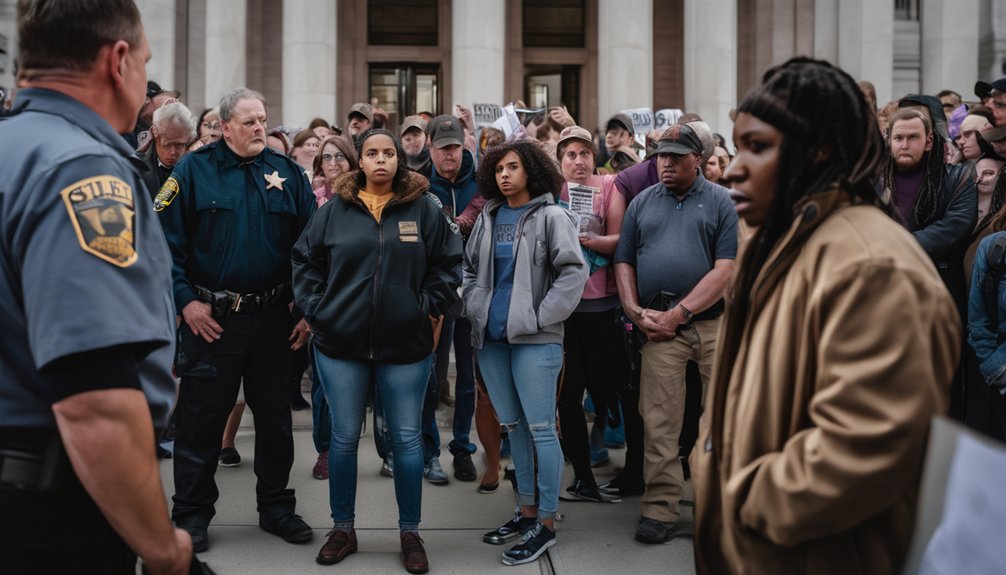
How easily can a bathroom rule become a tool for accusation rather than safety? Under Kansas’ framework, you don’t need to be transgender to become a suspect; any person perceived as “nonconforming” can be pulled into scrutiny. You can be one of the targeted individuals if your body, voice, clothing, or disability disrupts others’ expectations, especially in schools, parks, and other public buildings.
Because enforcement can hinge on perception, you face heightened exposure to false accusations, retaliation, and selective reporting. History shows identity-based regulations often expand beyond their stated class, inviting profiling and inconsistent application. When the law authorizes private lawsuits, you also risk being dragged into civil court without objective verification. In practice, you’re judged initially and asked to prove yourself later.
Because safety claims carry legal consequences, you should measure Kansas’ bathroom mandate against evidence and constitutional norms, not fear-based narratives. When the state criminalizes restroom use and authorizes private suits, it shifts from preventing misconduct to policing identity, raising equal protection and due process concerns. You can’t credibly claim it improves safety concerns without showing a demonstrable risk distinctly tied to transgender access, especially when existing laws already punish assault, harassment, and voyeurism. Instead, the statute predictably increases community impact by inviting surveillance, escalating confrontations, and deterring public participation in schools, parks, and civic life. If you center marginalized voices, you’ll hear predictable harms: exclusion, stigma, and exposure to selective enforcement. Those are legislative consequences courts often scrutinize as burdens unsupported by necessity.
Legal scrutiny may show that Kansas’ bathroom mandate increases harm while offering no evidence-based safety gain, but Christians still must decide what faithful public witness looks like under such a regime. You should begin with rights-based clarity: every person retains equal dignity, and laws must not invite harassment or private vigilantism. You can cite precedent warning against identity policing and selective enforcement in public spaces. Practice truthful dialogue by refusing rumors about restroom threats and by naming the actual risks of targeting gender-nonconforming people. Pair that candor with compassionate outreach: accompany trans neighbors to public meetings, advocate for nondiscrimination policies, and support legal challenges that narrow overbroad criminal exposure. When you speak, use measured language, protect privacy, and insist on due process over fear-driven punishment.
You’ll likely see reduced recruiting power because candidates read this law as a signal: exclude, police, punish. You’ll lose talent retention and weaken workplace inclusivity when employees fear harassment in public facilities, travel, or client sites. You’ll also face reputational risk and litigation exposure as private enforcement creates uncertainty. Precedent shows restrictive identity laws trigger boycotts, relocations, and higher hiring costs, shrinking your talent pipeline.
Increased bathroom policing can heighten youth anxiety, intensify stigma effects, and erode mental wellness by making ordinary routines feel surveilled and unsafe. You’ll see more avoidance, isolation, and school disengagement, especially among gender-nonconforming students facing identity struggles. Precedent shows that enforcement-driven scrutiny fuels harassment, not safety, and chills equal access to public accommodations. You can expect higher depression risk, panic symptoms, and self-harm vulnerability in targeted youth.
Yes—you can challenge it in federal court, and you’ve got multiple grounds. You can argue it violates constitutional rights under the Equal Protection Clause by discriminating based on sex and transgender status, and under Due Process by enabling arbitrary enforcement and harassment. You can also raise Title IX and ADA-based preemption theories for schools and public entities. You can seek federal intervention via injunctions, citing analogous restroom and discrimination precedents.
You should adopt privacy policies that let any student access single-user options without explanation, and you must bar staff from disclosing a student’s transgender status absent consent or a lawful, narrowly tailored need. You should document accommodations under neutral categories, train personnel on confidentiality, and provide student support through a designated coordinator. You should align practice with Title IX guidance, FERPA protections, and controlling circuit precedent to reduce liability.
You can seek legal aid through Kansas Legal Services and the ACLU of Kansas, and you can request referrals from the Kansas Bar Association’s Lawyer Referral Service. For harassment reporting, you can file with local law enforcement, document incidents, and report discrimination to the Kansas Human Rights Commission and the U.S. Department of Education Office for Civil Rights when schools are involved. You should preserve evidence, identify witnesses, and track timelines for complaints.
You’re left standing at a courthouse door where a restroom sign becomes a gate, and dignity is weighed against birth records. This law invites suspicion, chills equal access, and risks arbitrary accusations, straying from equal protection principles recognized in civil-rights precedent. You shouldn’t confuse enforced conformity with safety; you can’t build public order by policing identity. You’re called to defend rights, refuse harassment, and insist that law serve justice, not fear.

 Featured PostsOctober 17, 2026One Step Closer: Trans and Passing
 Featured PostsOctober 14, 2026Navigating Manhood: The Challenges FTM Individuals Face
 Activism and ChangeOctober 14, 2026I’m I7 and Male, I Don’t Know Whether or Not I am a Trans Girl
 Featured PostsOctober 13, 2026A New Beginning: Embracing the Realization That I’m Trans