Fighting for Rights: Legal Battles of the LGBTQ Movement
Imagine you’re following the LGBTQ movement‘s legal battles. It’s not just about marriage anymore; the fight now includes critical transgender rights issues. Organizations like Lambda Legal and the ACLU are at the forefront, challenging laws that restrict gender-affirming care for trans youth. As public opinion shifts, so do the movement’s goals, pushing for broader inclusivity and equality. Curious about the impact of these battles and what’s next on the horizon?
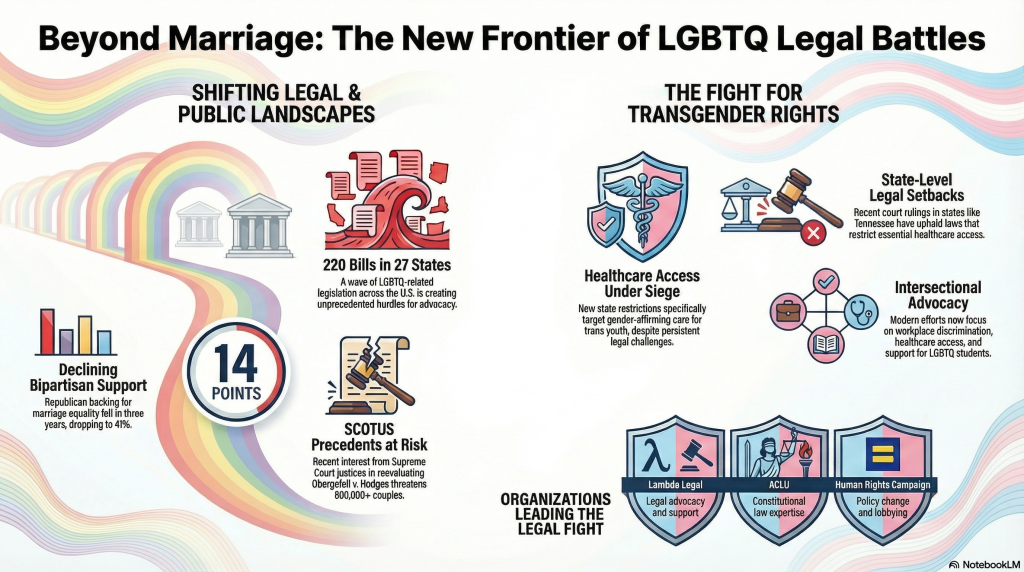
When you think about the Supreme Court’s role in shaping society, it’s easy to see why revisiting landmark decisions like Obergefell v. Hodges raises concerns. The Obergefell implications touch on more than just same-sex marriage; they’re about broader constitutional rights and how judicial activism can redefine them. You may be curious about what happens if the Supreme Court decides to reevaluate this decision. Justices like Alito and Thomas have shown interest in overturning it, which could affect over 800,000 married same-sex couples across the U.S. This potential shift challenges the stability of current rights and highlights the power the Supreme Court holds. It’s essential to understand how these decisions impact the very fabric of societal norms and individual freedoms.
While public opinion on same-sex marriage has seen considerable changes over the years, recent trends show a new wave of division. You might notice how public perception around marriage equality is splitting along party lines. For instance, Republican support has dropped considerably, creating a noticeable divide.
Consider these points:
Despite majorities still supporting same-sex marriage, these divides highlight the ongoing struggle for marriage equality in a politically charged climate.
As public opinion on same-sex marriage shows increasing polarization, the LGBTQ movement is broadening its focus to encompass a wider range of rights beyond just marriage equality. You might think the fight stops at marriage, but it’s just the beginning. Intersectional advocacy is key, addressing issues like workplace discrimination and healthcare access. Through community outreach, you’re encouraged to connect with diverse groups, ensuring no one gets left behind. Imagine campaigns supporting LGBTQ youth in schools or aiding seniors facing unique challenges. When you engage in these efforts, you amplify voices and create stronger alliances. It’s about building a more inclusive society, where everyone’s rights are upheld, and diverse experiences are acknowledged and respected.
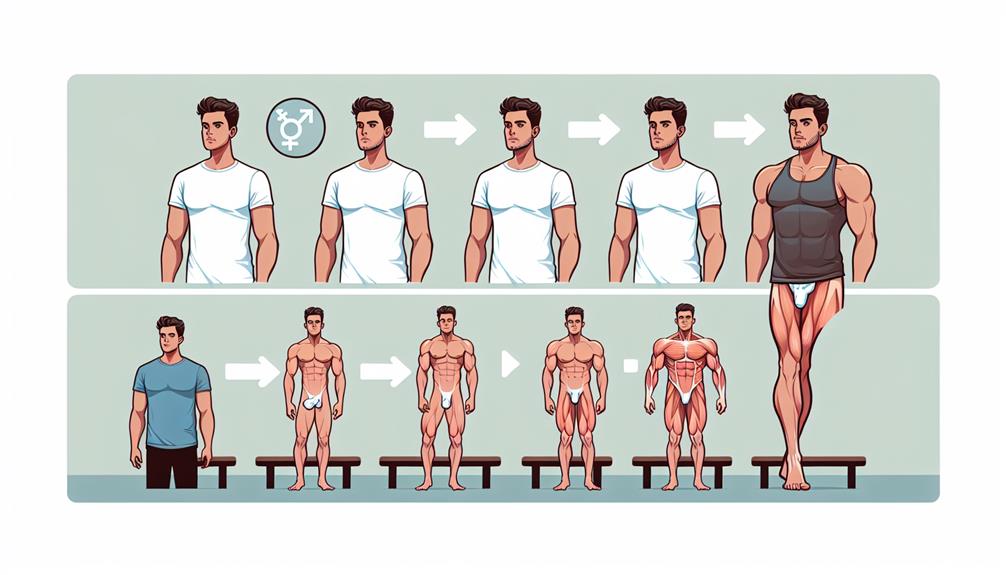
Despite the progress made in LGBTQ rights over the years, trans rights are facing significant legal challenges today. Trans youth are at the heart of many of these battles, especially regarding healthcare access. Imagine you’re a young person needing gender-affirming care, but laws in your state make it nearly impossible. It’s a tough reality many face. Consider these key points:
Trans youth face tough legal battles for gender-affirming healthcare access amidst restrictive state laws.
Understanding these challenges is essential as these battles shape the future of trans rights in America.
Organizations play a vital role in the ongoing fight for LGBTQ rights, stepping in where laws and regulations often fall short. You can observe groups like Lambda Legal and the Human Rights Campaign using effective organization strategies to challenge unjust laws. They provide legal resources to individuals and communities, ensuring access to justice. Think of how they support cases in courts across the nation or advocate for policy changes.
| Organization | Key Strategy |
|---|---|
| Lambda Legal | Legal advocacy and support |
| Human Rights Campaign | Policy change and lobbying |
| ACLU | Constitutional law expertise |
| GLAAD | Media and public education |
| National LGBTQ Task Force | Grassroots organizing |
These organizations empower you to stand up for your rights, making a real difference in the fight for equality.
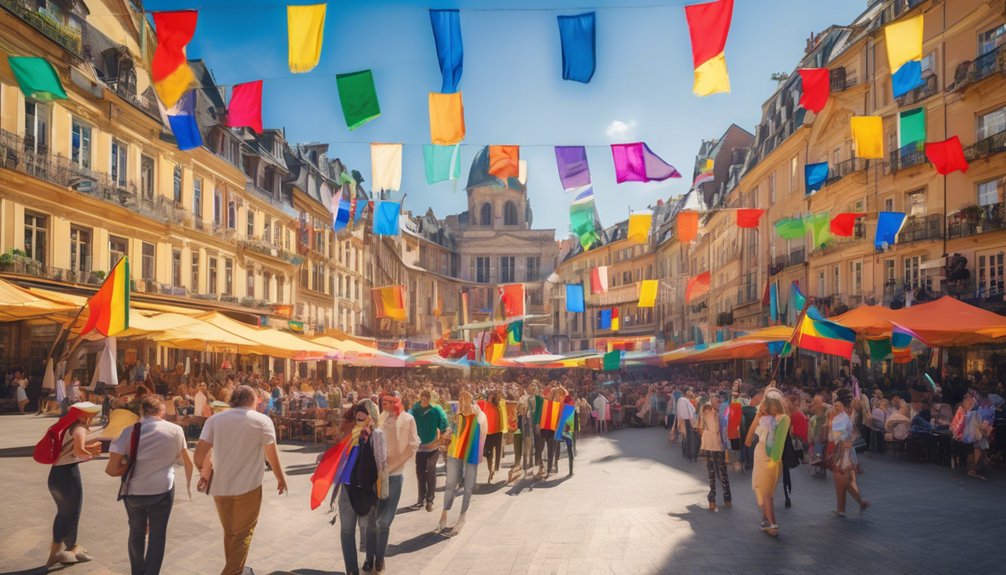
You can support LGBTQ rights by actively engaging in community events. Attend Pride parades or local LGBTQ gatherings to show solidarity. Educate yourself and others about LGBTQ issues through workshops or online resources. Practice allyship by speaking up against discrimination and offering support to LGBTQ friends and colleagues. Encourage conversations that promote understanding. By doing these, you’ll contribute to a more inclusive society beyond legal battles.
When you look at international perspectives on same-sex marriage, you’ll notice global trends vary widely. In some countries, such as Canada and the Netherlands, there’s widespread cultural acceptance and legal recognition. However, in others, like certain African and Middle Eastern nations, same-sex marriage remains illegal due to cultural or religious opposition. These differences highlight how cultural acceptance greatly impacts legal recognition, and why advocacy efforts must adapt to each country’s unique context.
Imagine watching a TV show where LGBTQ characters are portrayed positively and authentically. This kind of media representation can enhance advocacy effectiveness by changing perceptions and encouraging acceptance. When one observes diverse stories, it’s easier to empathize and support LGBTQ rights. However, misrepresentation or lack of visibility can hinder progress, making advocacy efforts more challenging. Accurate portrayals can spark conversations and inspire people to join the fight for equality.
Religion can greatly influence LGBTQ rights acceptance. You might find that religious interpretations vary, leading to different levels of acceptance. Some faith communities welcome LGBTQ rights, often engaging in faith-based activism to support equality. Others might hold traditional views, affecting how they perceive these rights. For instance, a church promoting inclusivity can foster acceptance, while another may reinforce opposition. Understanding these dynamics helps you navigate the complex relationship between religion and LGBTQ rights.
You’ll find that LGBTQ rights can vary dramatically across cultures due to differing cultural attitudes and legal frameworks. In some countries, like Canada, you’ll see strong legal protections and broad acceptance. Meanwhile, in places like Saudi Arabia, harsh penalties exist due to conservative cultural norms. These differences highlight how local traditions and laws shape LGBTQ experiences, making it essential to understand the unique landscape of each region when discussing rights.
You’ve seen how far the LGBTQ movement has come, yet challenges remain. While love triumphed with marriage equality, the battle now shifts to securing rights for trans individuals. Picture a world where everyone can love openly and live authentically. Organizations like Lambda Legal and the ACLU stand on the frontlines, defending these rights. Your support and awareness can turn the tide, making this vision a reality. It’s not just a fight; it’s an expedition toward true equality.
Originally posted 2025-07-01 19:07:26.

 Activism and ChangeOctober 14, 2026I’m I7 and Male, I Don’t Know Whether or Not I am a Trans Girl
 Featured PostsOctober 13, 2026Colorado and Michigan Join States Ending Medicaid Coverage for Trans Youth
 Featured PostsOctober 8, 2026From Self-Doubt to Self-Acceptance: Confronting Internalized Transphobia
 Featured PostsOctober 8, 2026Say NO to Props 134 & 135 in Colorado