Federal Ruling Halts Gender Restrictions on U.S. Passports
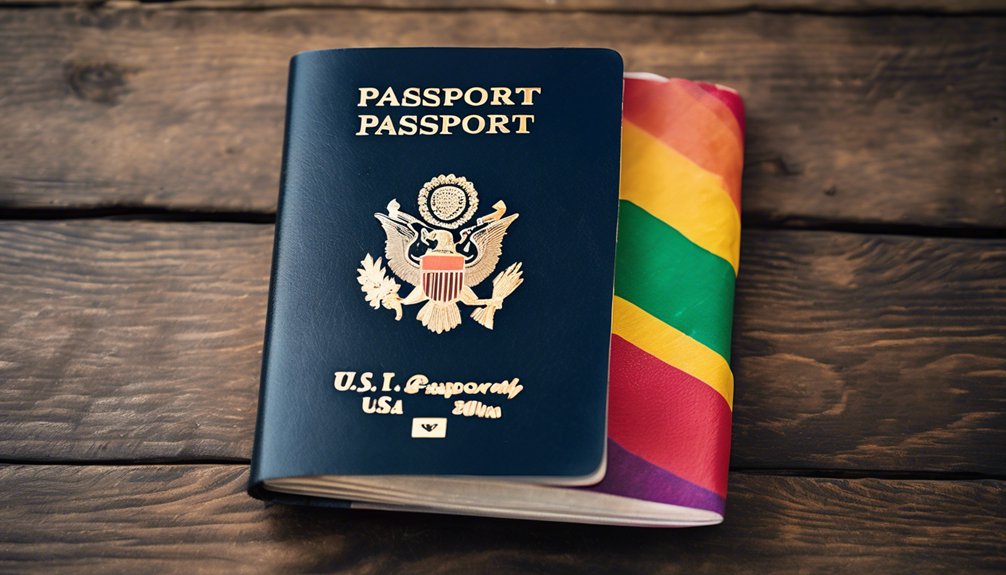
In a notable legal development, a federal judge has blocked the Trump administration’s policy that restricted gender marker changes on U.S. passports, including a ban on the “X” designation for nonbinary individuals. This ruling, issued by U.S. District Judge Julia Kobick, marks a pivotal moment in the ongoing fight for the constitutional rights of transgender Americans and nonbinary individuals.
The judge determined that the restrictive passport policy likely violated these rights by discriminating based on sex, deeming it incompatible with principles of equality.
The policy was deemed discriminatory based on sex, conflicting with equality principles.
The decision emerged from a lawsuit filed by the American Civil Liberties Union (ACLU) on behalf of five transgender Americans and two nonbinary plaintiffs. The ACLU lawsuit challenged the discriminatory nature of the previous passport policies, arguing that they unfairly limited gender recognition and marginalized a vulnerable segment of the population.
Judge Kobick’s ruling allows the lawsuit to proceed and temporarily halts the enforcement of the contentious policy, underscoring the need for legal scrutiny and adherence to constitutional standards.
By invoking intermediate scrutiny, Judge Kobick emphasized that the government’s rationale for its restrictive passport policy was insufficient. This standard requires the government to demonstrate that its actions are substantially related to a crucial governmental objective, a burden it failed to meet.
As a result, existing passport policies that provide broader gender recognition remain in force, thereby offering transgender and nonbinary individuals access to identity documents that accurately reflect their gender identity.

 Featured PostsOctober 21, 2026The Trans Journey to Passing
 Activism and ChangeOctober 17, 2026Trans Rights at Risk? The Implications of a Trump 2024 Win
 Featured PostsOctober 17, 2026One Step Closer: Trans and Passing
 Featured PostsOctober 14, 2026Navigating Manhood: The Challenges FTM Individuals Face