Bulldozers at Pulse: Demolition Underway at Scene of Orlando Mass Shooting
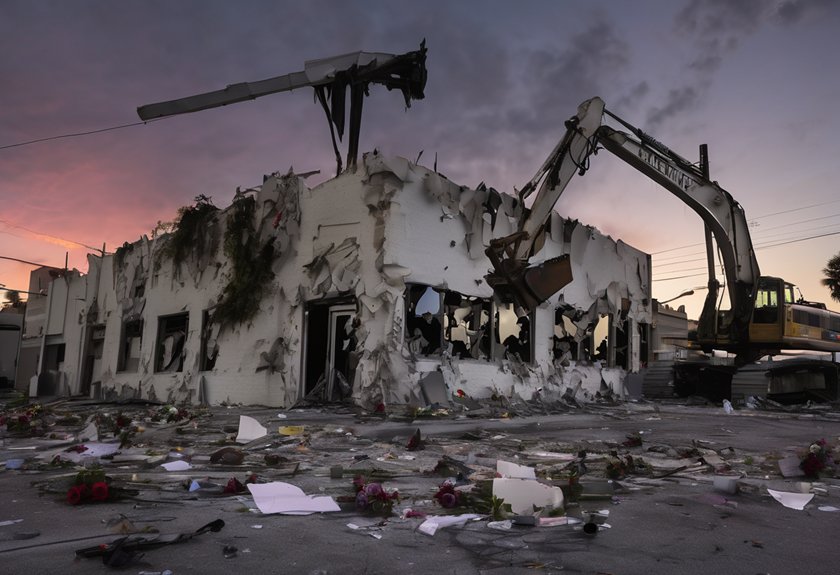
Excavators began tearing down Orlando’s Pulse nightclub on March 18, 2026, nearly a decade after the mass shooting that killed 49 people and wounded dozens more, marking a visible shift from crime scene to memorial site. The demolition, observed by survivors, families, and local residents, represents a calibrated step in community healing, shaped by years of public debate, planning, and consultation with victims’ families and LGBTQ+ advocates.
Work crews operated heavy machinery to dismantle the structure in controlled stages, causing walls and roofing to collapse inward so debris wouldn’t spill onto surrounding properties. City officials and project managers estimate the process will continue for several weeks, allowing crews to remove hazardous materials and catalog remaining items. The methodical approach underscores the site’s memorial significance and the intent to treat it as a place of historical record rather than a routine teardown.
A careful, weeks-long demolition treats Pulse as sacred ground, prioritizing safety, remembrance, and historical record over routine teardown
A week before demolition began, workers removed the nightclub’s black-and-white Pulse sign, long a landmark for mourners and visitors leaving flowers, photos, and handwritten notes. Local leaders and survivors described that removal as a symbolic pivot, signaling that the location’s future would center on remembrance and education instead of preservation of the original building.
Survivor Orlando Torres, who was inside Pulse the night of the attack, livestreamed the initial day of demolition, narrating what he saw and recalling moments from June 12, 2016. His real-time account, shared across social media, offered viewers an intimate view of how survivors continue to process trauma as the physical environment changes.
Project organizers have preserved artifacts from inside the club, including personal items and structural elements, for potential display in a future memorial or museum space. Their preservation efforts aim to guarantee the tragedy remains documented and visible as the community moves forward.

 Featured PostsSeptember 20, 2026Full or Partial Transition? Understanding the Options for Older Trans Adults
 Activism and ChangeAugust 27, 2026From Erasure to Oppression: The Rise of Anti-Trans Laws
 Activism and ChangeAugust 27, 2026The Power of Resistance: Lessons From the Stonewall Riots
 Featured PostsAugust 27, 2026Dysphoria: Acknowledging the Pain, Finding Hope