Becoming Her: How Estrogen Reshapes Emotions and Mental Health for Trans Women

You might not know that estrogen’s influence goes beyond physical changes, deeply affecting emotions and mental health in trans women. As you navigate this transformative experience, you’ll encounter shifts that challenge your perceptions and emotional responses. These changes improve empathy and self-connection, yet they also introduce mood swings and emotional fluctuations. This intricate interplay between hormones and emotions invites a complex exploration of identity, urging you to reflect on how these elements shape your path toward authenticity.
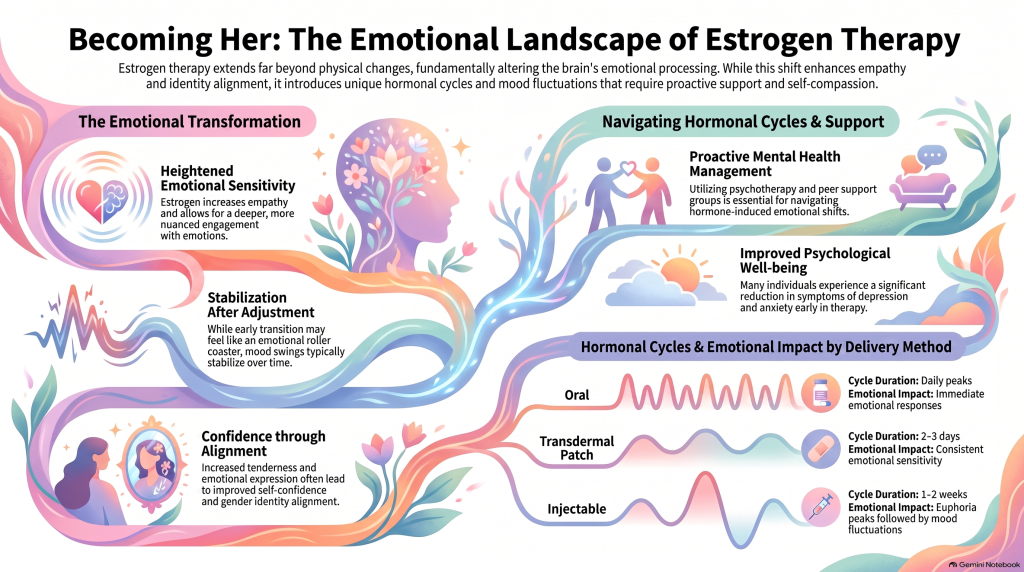
When you start estrogen therapy, the emotional impact can be both profound and multifaceted. As a transgender woman, you might find that estrogen greatly influences your emotional state, leading to increased sensitivity and more pronounced emotional responses. This shift allows for a deeper engagement with your emotions, enhancing empathy and your ability to understand others’ feelings. While mood swings are a concern, it’s vital to recognize that experiences vary, with not everyone facing intense fluctuations. Emotional changes can occur faster than physical ones, offering a new avenue for self-exploration and identity affirmation. Support from healthcare providers is essential during this adjustment period, as they help you navigate the complex emotional landscape and maintain your mental health while undergoing therapy.

As you begin estrogen therapy, managing mood swings and emotional changes becomes a critical aspect of your transition. The adjustment period often resembles an emotional roller coaster, akin to puberty, as your brain’s amygdala and hypothalamus, sensitive to estrogen, respond with increased sensitivity. This can lead to a broader emotional spectrum and heightened emotional awareness, common experiences among trans women. While not every individual will encounter intense fluctuations, it’s crucial to acknowledge these potential changes in your mental health path. Over time, as your body adapts to new hormone levels, mood swings generally stabilize. Engaging with healthcare providers and peer-led groups offers valuable support, helping you navigate these changes effectively. Embracing this path requires patience and self-compassion.

Adopting femininity and confidence during estrogen therapy involves a multifaceted voyage that interweaves emotional, psychological, and social dimensions. As trans women undergo feminizing hormone therapy, the emotional changes you experience, such as increased tenderness and empathy, enrich your connection with your gender identity. This expedition nurtures self-confidence, empowering you to accept your true self.
| Aspect | Experience | Impact |
|---|---|---|
| Emotional Changes | Tenderness, empathy | Improved self-confidence |
| Gender Identity | Exploration through hormone therapy | Alignment with true self |
| Interpersonal Relations | Increased sensitivity | Strengthened social connections |
Hormonal changes create a space for you to express femininity without cultural confines. These shifts, integral to your mental health, uplift interpersonal relationships, aligning with personal values. Accept this conscious choice, fostering authenticity in your identity.
Steering through the emotional landscape of feminizing hormone therapy not only boosts self-confidence and identity alignment but also introduces distinct mental health considerations. Estrogen often heightens emotional sensitivity, akin to an emotional roller coaster. To manage this change effectively:
Such strategies boost emotional resilience during your change.
When starting estrogen therapy, it’s vital to understand how hormonal cycles impact your emotional well-being. Hormonal cycles differ based on your estrogen delivery method. Oral estrogen creates peaks post-dosing, while patches maintain cycles every few days. Injectable estrogen forms weekly or bi-weekly cycles, leading to mood changes aligned with hormonal peaks and dips. It’s significant for transfeminine individuals to grasp these cycles to manage emotional sensitivity and mental health during the shift process.
| Delivery Method | Cycle Duration | Emotional Impact |
|---|---|---|
| Oral | Daily peaks | Immediate emotional responses |
| Transdermal Patch | 2-3 days | Consistent emotional sensitivity |
| Injectable | 1-2 weeks | Euphoria peaks and mood fluctuations |
Recognizing how these cycles influence emotional responses improves your understanding of hormones and aids in steering through the shift.
When you start taking estrogen, you’ll experience hormonal changes leading to emotional fluctuations and physical transformations. Your body image will evolve as you notice changes like breast development. Social interactions may shift as you navigate this self-acceptance process. Mental resilience grows, often aided by support networks. Medication management becomes essential. Personal experiences vary, but many find their mental health improves, forging a stronger connection between your gender identity and mental well-being.
Imagine emotions as a symphony conductor, guiding the orchestra of your feelings. Estrogen amplifies emotional sensitivity, often leading to mood swings and fluctuating anxiety levels. It can improve empathy, elevating your ability to connect with others, shifting relationship dynamics and social interactions. While estrogen might disrupt emotional stability initially, it often strengthens self-esteem and refines emotional expression. Stress responses evolve, enabling a more nuanced engagement with life’s emotional complexities.
Taking estrogen can indeed lead to a curvier body shape through hormone therapy. You’ll notice changes in fat distribution, primarily around hips and thighs, contributing to this effect. Breast development and reduced muscle mass further improve this transformation. Softer skin texture and emotional changes also influence your self-image. However, individual results vary due to maturity factors and genetic differences, making each physical transformation unique and deeply personal.
Imagine your brain evolving with estrogen’s touch. Estrogen receptors activate, influencing brain development and mood regulation. Your neurotransmitter balance shifts, leading to cognitive changes and improved emotional resilience. You might notice better stress response, sharper memory function, and altered social behavior. As these changes unfold, your sense of identity formation strengthens, creating a more profound understanding of yourself. It’s a transformative experience that reshapes your mind in unexpected ways.
As you travel through change, estrogen becomes both a sculptor and a guide, reshaping your emotional landscape like an artist with a canvas. While mood swings might feel like storms, they also reveal new depths of empathy and self-understanding. Welcome these changes as parts of a complex symphony, where each note contributes to your authentic self. Remember, psychotherapy and peer support are essential instruments, helping you navigate this intricate dance of hormones and identity with resilience and confidence.

 Featured PostsSeptember 29, 2026A Kansas Law Voided 1,700 Licenses. Now Judges Must Decide Whether It Stands
 Featured PostsSeptember 29, 2026The First Time I Realised My Body Was Changing
 Featured PostsSeptember 28, 2026Staying Together After a Partner Comes Out as Trans
 Featured PostsSeptember 26, 2026Navigating Intimacy: A Trans Woman’s Path to Authentic Dating Experiences