Aging With Pride: How LGBTQ+ Elders Are Redefining Dignity in Later Life

As you investigate the lives of LGBTQ+ elders, you’ll uncover how they’re redefining dignity in their later years. These individuals face unique challenges, yet they find strength in community and chosen families. By advocating for inclusive care and policies, they’re not just surviving but thriving. Their stories of resilience and authenticity offer valuable insights into the complexities of aging. What might their experiences teach us about dignity and pride in our own lives?
As you reflect on the lives of LGBTQ+ elders, it’s essential to recognize the historical context that shaped their experiences. Throughout their aging path, LGBTQ+ seniors have faced significant legal and societal challenges, with homosexuality classified as a mental illness until 1973. The lack of legal protections for same-sex couples until the 21st century deeply impacted their lives. The AIDS epidemic in the 1980s and 1990s reshaped their social support networks, emphasizing resilience among LGBTQ+ elders. Many turned to chosen families, relying on peers for connection and care. Discrimination, especially against transgender individuals, further complicated healthcare access and fostered mistrust in medical systems. Understanding this history highlights the strength and courage that define the lives of LGBTQ+ seniors today.

LGBTQ+ elders confront a range of unique challenges that stem from their historical experiences and societal dynamics. As older LGBTQ+ seniors, you may find yourself lacking the traditional familial support systems that heterosexual counterparts often rely on. Many of you experience isolation, especially since you’re less likely to be partnered or married, making social support from your chosen family even more critical. The shift to long-term care can be particularly daunting, as fears of discrimination and a lack of trained staff can lead to anxiety about hiding your identity. This emotional strain can greatly impact your mental health, as you navigate the complexities of shared living situations without the comfort of acceptance.
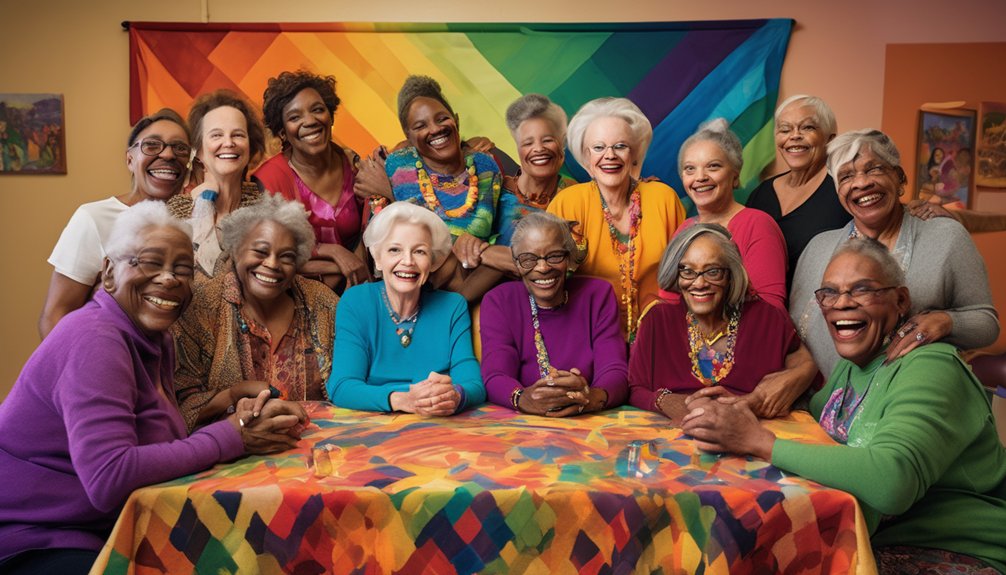
While traditional family structures may not always provide the support you need, many older LGBTQ individuals have found strength and comfort in creating families of choice. These chosen families offer crucial emotional support and caregiving, especially since over 80% of LGBTQ older adults express concerns about inadequate social support systems. Living alone and often without children, you may rely heavily on your community for resilience and companionship. However, the lack of legal authority for chosen family members in healthcare settings complicates care decisions. This underscores the significance of advocating for healthcare rights, ensuring that your chosen family is recognized and empowered. Ultimately, these vibrant support networks greatly improve the happiness and well-being of LGBTQ elders as you navigate aging together.
Maneuvering through the healthcare system can be daunting, especially when past experiences of discrimination lead you to hesitate in seeking medical care. Health disparities among LGBTQ older adults are significant, often worsened by financial constraints that force you to ration medications or delay visits to healthcare providers. Many providers lack training in affirming care, leaving you feeling unsupported.
| Issue | Impact on LGBTQ Older Adults | Need for Change |
|---|---|---|
| Discrimination | Increased anxiety and depression | Culturally competent care |
| Financial insecurity | Delayed medical care | Inclusive policies |
| Lack of social support | Poor mental health | Community engagement |
Addressing these issues through affirming care can improve your wellbeing, ensuring you receive the medical attention you deserve.
As you navigate the complexities of aging, embracing resilience becomes vital to redefining your wellness path. LGBTQ older adults often face challenges like social isolation and discrimination, but you can thrive in supportive environments. Prioritizing emotional health through affirming care is critical for your well-being. Engaging in community activities, such as peer-led support groups or LGBTQ+-friendly fitness programs, fosters connections and combats loneliness, enhancing your mental health. Implementing wellness strategies like mindfulness practices and advocating for inclusive policies can further support your experience. Remember, resilience isn’t just about enduring; it’s about actively creating a fulfilling life. By embracing these approaches, you can redefine dignity and experience a richer, more vibrant later life.
As an older LGBTQ+ adult, you should consider social isolation, healthcare access, and housing discrimination. Prioritize mental health and understand your legal rights to guarantee fair treatment. Seek community support to combat caregiving challenges and foster connections. Advocate for cultural competence in healthcare to receive respectful care. Don’t overlook financial planning, as it’s crucial for a secure future. Embracing these considerations can help you live with dignity and fulfillment in later life.
The queer theory of aging challenges conventional aging narratives by emphasizing identity fluidity and intersectional experiences. It advocates for queer temporality, recognizing that aging isn’t linear but shaped by historical context and social justice. You’ll see how community support fosters resilience building, allowing LGBTQ+ elders to reclaim their stories. Representation matters, as it highlights diverse relationships and promotes inclusive environments, ensuring dignity and respect in their aging process.
A common challenge for senior LGBTQ adults is social isolation, which often stems from a lack of community support and housing security. You might face discrimination experiences that discourage you from accessing healthcare, impacting your mental health. Financial instability can further complicate your situation, making it tough to navigate legal rights and ageism issues. It’s essential to foster connections and advocate for better resources to improve your general well-being and dignity in later life.
Aging with dignity means embracing the rich tapestry of your life experiences while steering through societal perceptions and health disparities. It’s about recognizing the importance of community support and LGBTQ+ representation in empowering initiatives that promote inclusive policies. As you grow older, your intersectional identities matter, and they deserve respect. By fostering connections and advocating for your needs, you can guarantee your aging experiences reflect the dignity and respect you truly deserve.
As you witness the vibrant colors of LGBTQ+ elders embracing their identities, you can’t help but feel the warmth of their chosen families wrapping around them like a protective quilt. Their resilience shines brightly, illuminating the path toward dignity in growing older. By advocating for inclusive care and community support, they’re not just redefining what it means to grow older—they’re creating a legacy of pride and authenticity that inspires us all to live our truth, no matter our stage of life.
Originally posted 2025-09-10 21:44:26.

 Featured PostsOctober 21, 2026The Trans Journey to Passing
 Featured PostsOctober 17, 2026From Job Search to Success: A Transgender Woman’s Employment Journey
 Activism and ChangeOctober 17, 2026Trans Rights at Risk? The Implications of a Trump 2024 Win
 Featured PostsOctober 17, 2026One Step Closer: Trans and Passing