Between Pride and Prejudice: Life as a Transgender American

Nearly 40% of transgender individuals experience serious mental health issues due to societal stigma and discrimination. This statistic highlights a profound crisis that often goes unnoticed amidst the celebration of LGBTQ+ pride. As you investigate the intricacies of identity, representation, and the pressing challenges within the transgender community, consider how these elements intersect to shape lived experiences. What does it truly mean to endeavor for acceptance in a world that frequently oscillates between pride and prejudice?
As you navigate your identity in a complex world, the challenges can often feel overwhelming, especially when societal pressures and discrimination loom large. Identity exploration becomes a delicate balancing act, where the desire for authenticity clashes with societal expectations. Many transgender individuals find themselves boxed in by rigid norms, leading to high rates of violence and mental health struggles. The fear of coming out, reflected by the 83% of the global queer population who remain closeted, highlights the secrecy that often accompanies this odyssey. With 592 anti-trans laws emerging, the socio-political landscape adds to the uncertainty. Yet, within this turmoil, solidarity and advocacy within the LGBTQIA+ community offer vital support, fostering understanding and acceptance in a world that can feel hostile.

Representation in media plays a pivotal role in shaping societal perceptions of transgender individuals. When media portrayals are authentic and diverse, they can foster understanding and acceptance, reducing stigma and discrimination. Unfortunately, the lack of authentic trans narratives often reinforces harmful stereotypes. For instance, only 15% of LGBTQ characters on TV are transgender, which underscores a significant cultural gap.
| Media Portrayal | Cultural Impact | Examples |
|---|---|---|
| Authentic representation | Reduces stigma | “Pose”, “Billions” |
| Stereotypical roles | Reinforces misconceptions | Misrepresented characters |
| Increased visibility | Inspires solidarity and support | Documentaries and films |
As you can see, the stories we choose to tell matter. By amplifying authentic voices, we can create a more inclusive society.
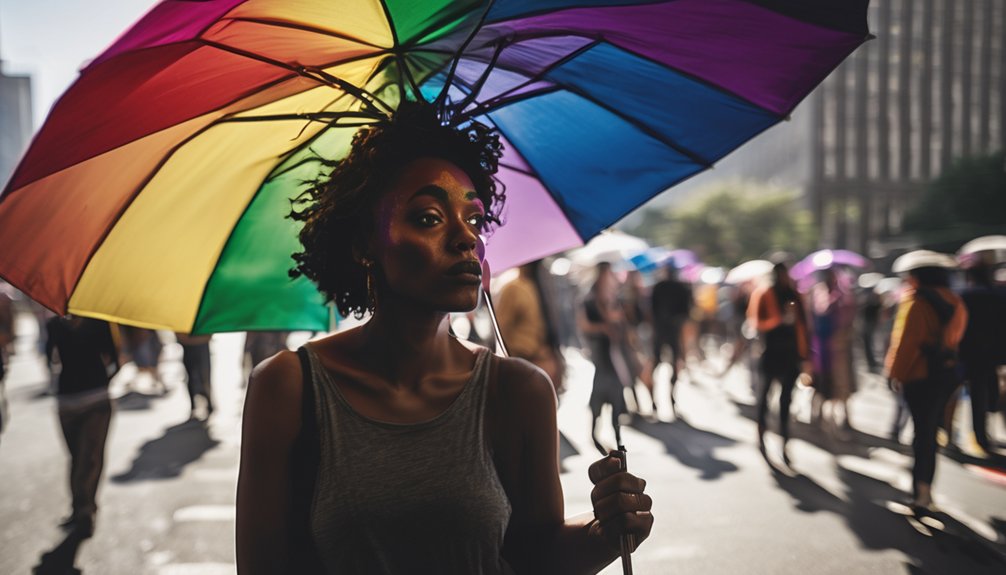
Though society has made strides toward acceptance, the challenges faced by the transgender community remain daunting and multifaceted. You’re likely aware that high rates of violence and hate crimes disproportionately target transgender individuals, leaving many in a constant state of fear. This societal rejection often manifests as significant mental health challenges, such as depression and anxiety. Economic instability compounds these issues, with many transgender people facing unemployment or underemployment simply due to their gender identity. Furthermore, the introduction of over 590 anti-trans laws in 2023 threatens healthcare access, particularly for transgender youth. The stigma pushes many individuals into silence, as approximately 83% of queer individuals worldwide remain closeted, further isolating them from needed support and resources.
While the landscape for transgender rights remains fraught with challenges, advocacy and solidarity have emerged as powerful tools for change. With over 592 anti-trans laws introduced in 2023 alone, the urgency for community engagement becomes clear. Intersectional advocacy acknowledges that the struggles of transgender individuals intertwine with issues like racial justice and economic inequality, amplifying the call for collective action. Events such as Transgender Day of Visibility foster awareness, support, and understanding, uniting diverse voices in the fight against misinformation that fuels societal divisions. By prioritizing accurate representation and education, you can help combat rising anti-trans sentiment, ensuring that transgender voices are not only heard but respected in policy discussions and societal narratives. Your involvement matters.
Authentic narratives hold immense power in shaping societal perceptions of transgender individuals. By sharing real-life experiences, you offer significant identity validation that counters harmful stereotypes and misinformation. This storytelling impact is imperative, especially in a climate marked by anti-trans legislation and social tension. The high rates of violence, mental illness, and poverty faced by many in the community underscore the urgent need for these genuine stories. Furthermore, many potential readers struggle financially due to societal marginalization, making community support for initiatives like “Pride, Not Prejudice” fundamental. These projects enhance diverse voices, reflecting a collective desire for visibility and representation. Ultimately, authentic narratives not only foster empathy but also advocate for the rights and acceptance of transgender individuals in society.
In “Pride and Prejudice,” you’ll see that gender roles shape every character’s life, dictating their choices and relationships. Women are often trapped by social norms, valued for marriageability, while men are expected to embody wealth and status. Elizabeth Bennet’s defiance of these norms highlights the struggle for agency and self-discovery. As you explore further, you’ll recognize how both male and female characters navigate these expectations, revealing vulnerabilities that challenge traditional stereotypes.
The queer version of “Pride and Prejudice” reimagines Austen’s classic through LGBTQ+ lenses, offering nuanced queer representation that challenges traditional social norms. In adaptations like “Pride” by Samantha Ryan, you’ll find a fresh perspective on romance and class dynamics. These narratives investigate the complexities of love, acceptance, and identity, mirroring the original themes while highlighting the unique struggles of queer individuals. You’ll relate to the “will-they-won’t-they” tension, making it deeply engaging.
Transgender rights today feel like a flickering candle in a storm, struggling against powerful winds of discrimination. One observes societal acceptance wavering, with over 590 anti-trans laws threatening to snuff out that light. Despite some progress, many still hide in the shadows, fearing rejection and violence. The rising mental health crises among transgender individuals highlight the urgent need for compassion and support. You can be part of the change, advocating for visibility and understanding.
In a world where acceptance can feel like chasing rainbows, it’s essential to amplify the voices of transgender individuals. By embracing authentic narratives, you not only foster understanding but also challenge the prejudices that persist. When you stand in solidarity with the community, you contribute to a culture of empathy and respect. Together, you can break down barriers and pave the way for a future where everyone can live openly and proudly. Your support makes all the difference.

 Featured PostsOctober 21, 2026The Trans Journey to Passing
 Featured PostsOctober 17, 2026From Job Search to Success: A Transgender Woman’s Employment Journey
 UncategorizedOctober 17, 2026Trans Rights at Risk? The Implications of a Trump 2024 Win
 Featured PostsOctober 17, 2026One Step Closer: Trans and Passing