From Self-Doubt to Self-Acceptance: Confronting Internalized Transphobia

Embarking on a transformative journey from self-doubt to self-acceptance may seem like an insurmountable task, especially when faced with the complexities of internalized transphobia. The struggle to break free from societal constraints and embrace one’s true identity is a profound challenge that many in the transgender community face.
However, by unraveling the layers of self-doubt and confronting internalized biases head-on, individuals can pave a path towards liberation and self-empowerment. Stay tuned to discover the pivotal steps and empowering insights that can lead to a profound shift in mindset and a newfound sense of self-acceptance.
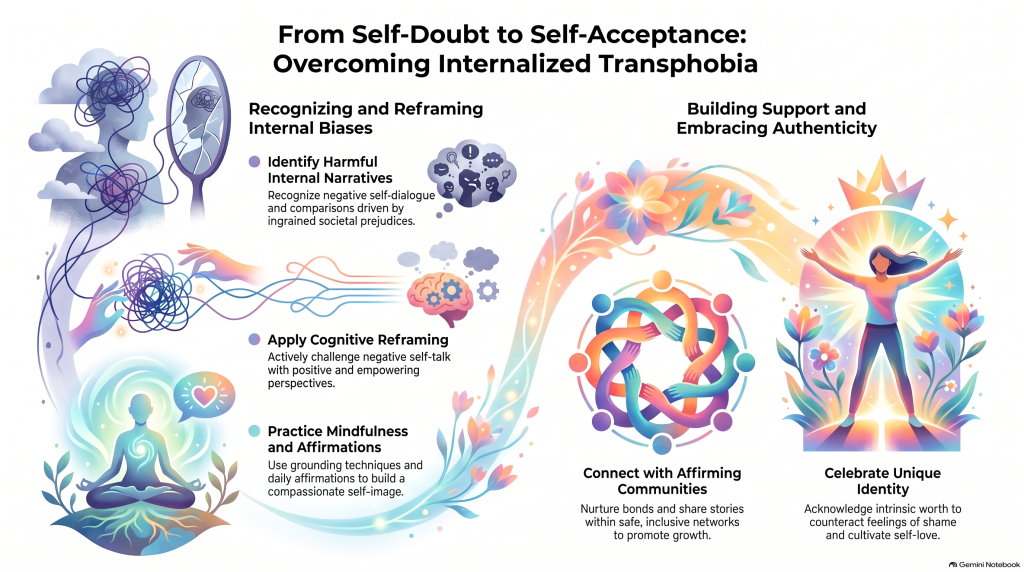
When exploring internalized transphobia signs, individuals may observe patterns of negative self-perception and self-criticism that stem from societal prejudices. Self-reflection plays a crucial role in recognizing these signs, leading to personal growth and understanding triggers that fuel such beliefs. Addressing misconceptions by challenging ingrained societal biases is key to dismantling internalized transphobia. By promoting self-awareness, individuals can cultivate positivity and begin reframing their thoughts towards self-acceptance.
Recognizing internalized transphobia involves acknowledging the harmful effects of negative self-narratives, self-stigmatization, and comparisons with other transgender individuals. It impacts self-esteem, mental health, and can lead to identity conflicts. By fostering a culture of self-compassion and awareness, individuals can overcome these challenges. Cultivating positivity through mindful practices and seeking support from affirming communities aids in combatting internalized transphobia. Embracing authenticity and celebrating one’s unique journey are essential steps towards confronting and dismantling harmful beliefs.
Challenging negative self-perceptions involves confronting internalized beliefs that hinder self-acceptance and well-being. This process is crucial in the journey towards self-acceptance and overcoming internalized transphobia. Here are four key strategies to help individuals navigate this challenging but transformative process:
To overcome internalized transphobia, individuals can empower themselves by cultivating self-awareness and seeking support from affirming communities and professionals. Mindfulness practices can help individuals become more attuned to their thoughts and feelings, allowing them to recognize and challenge negative beliefs.
Self-reflection techniques enable individuals to explore the roots of their internalized transphobia and work towards reframing harmful narratives. Engaging in affirmation exercises, such as repeating positive statements about oneself, can gradually shift self-perception towards self-acceptance.
Emotional support from friends, family, or mental health professionals plays a crucial role in validating feelings and providing a safe space for growth. Incorporating positive affirmations into daily routines can boost self-esteem and promote a more compassionate self-view.
Empowering individuals to confront and overcome internalized transphobia involves establishing a network of supportive communities that foster empathy, understanding, and inclusivity. Creating connections and building bridges within these communities is essential for fostering acceptance and promoting understanding.
Here are four key ways to develop a supportive community network:
Embracing self-compassion and authenticity starts with acknowledging one’s intrinsic worth and unique journey towards self-acceptance. Cultivating empathy towards oneself allows for a deeper understanding of personal struggles and challenges. Promoting self-love involves treating oneself with kindness and respect, nurturing a positive self-image. Practicing mindfulness aids in staying present and connected to one’s emotions, fostering self-awareness and acceptance. Fostering acceptance of all aspects of oneself, including the ones that might have been sources of shame, is essential for growth and healing. Embracing uniqueness celebrates the individuality and diversity within each person, embracing what makes them special and different.
| Strategies for Embracing Self-Compassion and Authenticity |
|---|
| Cultivating empathy |
| Promoting self-love |
| Practicing mindfulness |
Spirituality and religious beliefs can profoundly impact the journey of overcoming internalized transphobia. Meditation and prayer offer solace and self-reflection.
Engaging with sacred texts and rituals can provide guidance and healing. Community support and acceptance within spiritual circles foster understanding and self-compassion.
Seeking spiritual guidance aids in reframing negative beliefs and promoting self-acceptance. Embracing one’s unique journey with the help of spiritual practices can lead to profound personal growth and acceptance.
Exploring cultural rituals and healing practices can aid individuals in their journey towards self-acceptance and combating internalized transphobia.
Community support and celebration events foster identity exploration and self-expression.
Engaging in traditional healing and ritual ceremonies promotes personal growth and empowers individuals on their self-acceptance journey.
These practices not only provide a sense of belonging but also offer a space for healing and empowerment through cultural traditions.
When exploring internalized transphobia, the intersectionality of race, gender identity, and sexual orientation influences individuals’ experiences. Racial identity, gender dysphoria, and societal norms impact self-acceptance within the LGBTQ+ community.
Internalized stigma, self-confidence, and personal growth intertwine with sexual orientation. Understanding these complexities fosters empathy and support, encouraging individuals to confront biases and celebrate diverse identities.
In this journey, acknowledging intersectional challenges is vital for promoting inclusivity and combating internalized transphobia.
Engaging in creative outlets like art, music, or writing can aid in addressing and resolving internalized transphobia. These therapies, known for their healing properties, offer avenues for self-expression and processing complex emotions.
Through art therapy, music therapy, or writing therapy, individuals can explore their feelings, challenge negative beliefs, and promote self-acceptance. Healing through creativity provides a safe space for reflection and growth, fostering a pathway towards overcoming internalized transphobia.
In the process of building self-compassion and embracing authenticity while confronting internalized transphobia, affirmation power can uplift self-worth, visualization techniques aid in manifesting positive beliefs.
Mindfulness practices enhance self-awareness, fostering acceptance. By cultivating these practices, one can navigate doubts, nurture self-acceptance, and embark on a self-love journey towards healing transphobia.
This journey of embracing identity involves confronting fears, promoting self-love, and celebrating uniqueness in the face of biases.
As the sun sets on their journey, they stand tall amidst the shadows of doubt, their hearts alight with the flickering flames of self-acceptance.
Like a phoenix rising from the ashes of internalized transphobia, they embrace their true selves with courage and grace.
Through the power of community, self-compassion, and resilience, they pave a path towards liberation and authenticity.
In this newfound light, they find strength, hope, and the beauty of their own unique story.
Originally posted 2024-02-16 21:28:43.

 Activism and ChangeOctober 14, 2026I’m I7 and Male, I Don’t Know Whether or Not I am a Trans Girl
 Featured PostsOctober 13, 2026Colorado and Michigan Join States Ending Medicaid Coverage for Trans Youth
 Featured PostsOctober 8, 2026From Self-Doubt to Self-Acceptance: Confronting Internalized Transphobia
 Featured PostsOctober 8, 2026Say NO to Props 134 & 135 in Colorado