Celebrating Trans Existence: Letting Go of Fear, Embracing Visibility

When you celebrate trans existence, you refuse the lie that safety must come through silence. You make room for joy, memory, and truth, even when visibility carries risk. A pronoun shared, a flag displayed, a story protected—these acts say trans lives belong here. Still, visibility isn’t simple, and fear doesn’t vanish on command. What matters is how you move through that tension, and what kind of world your choices begin to build.
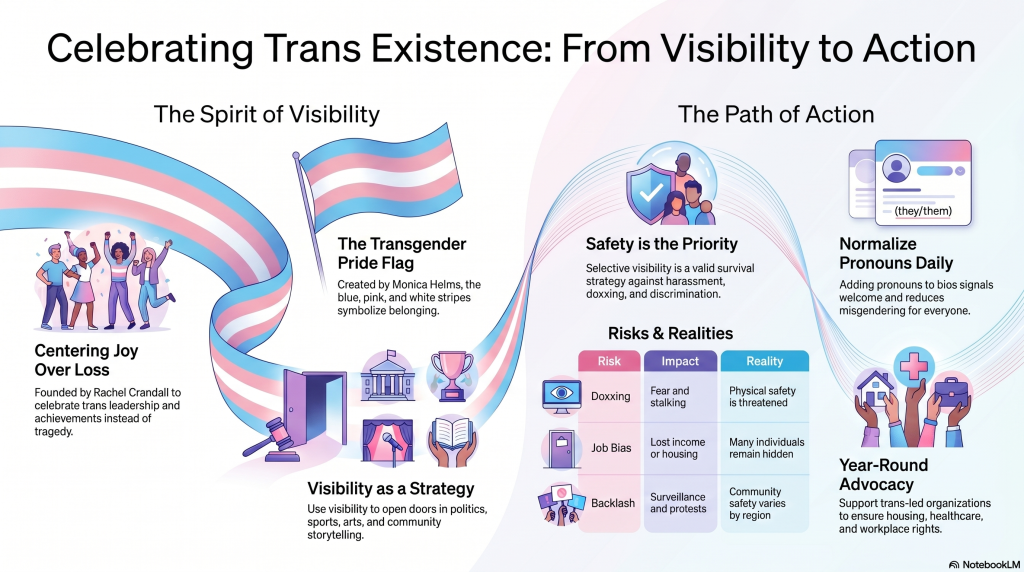
Although Trans Day of Visibility falls on March 31 each year, its meaning reaches far beyond a date: created by activist Monica Helms, TDOV celebrates transgender people’s lives, leadership, and achievements instead of focusing only on loss. You witness its power in everyday choices: family photos that include trans relatives, bios with pronouns, and trans colors displayed without apology.
You honor TDOV when you practice pronoun education, uplift trans artists, and fuel community storytelling that says trans lives belong everywhere. The Transgender Pride flag’s blue, pink, and white stripes make that belonging visible. Visibility can open doors in politics, sports, and the arts, but it also carries risk during violent, hostile times. That’s why you treat visibility as both celebration and strategy—sharing resources, donating funds, and standing boldly with your community.

To understand why Trans Day of Visibility carries so much power, you can look to its origin in 2009, when transgender activist Rachel Crandall created TDOV as a response to how often public attention centered only on anti-trans violence and loss.
You celebrate historical milestones every March 31 through bold community action:
That history matters because visibility didn’t appear by accident; you built it. TDOV insists trans people belong in politics, art, sports, and culture. You honor joy, resist erasure, and support trans-led organizations with compassion and courage today.

While visibility can be powerful, it isn’t uniformly safe for everyone. You may face harassment, doxxing, policing, or discrimination when you’re seen. Black trans women are targeted most brutally, and legislative attacks deepen danger by restricting care, school participation, and belonging. If you’re young, undocumented, poor, or dependent on family, being selective isn’t shameful; it’s survival. Protecting your mental health matters, and privacy strategies can be an act of defiance too.
| Risk | Impact | Reality |
|---|---|---|
| Doxxing | Fear, stalking | Safety threatened |
| Job bias | Lost income, housing | Many stay hidden |
| Organized backlash | Surveillance, protests | Communities vary |
You don’t owe visibility to anyone. Your worth doesn’t depend on public access to your life, body, or story. Safety and dignity come first.
Even when big public moments feel risky or out of reach, you can celebrate trans existence through small, steady acts that make daily life safer, warmer, and more visible.
These acts aren’t minor. You make trans life easier to recognize, harder to erase, and more rooted in everyday dignity, memory, and age for everyone.
Real support happens year-round when you turn solidarity into habits, not just headlines. Practice Pronoun normalization by adding your pronouns to bios, email signatures, and meeting names; that small act reduces misgendering and makes daily spaces safer. Keep trans visibility present with flags, stickers, pop-sockets, and TDOV hashtags that signal welcome without apology.
You can also give Financial support where it matters most. Donate to trans-led groups, fundraisers, and #transcrowdfund campaigns that help cover rent, healthcare, and legal needs. Learn trans histories, uplift elders, and share their stories so memory stays alive. Then push for policies that protect trans youth, expand gender-affirming care, and defend housing, school, and workplace rights. Your consistency tells trans people they deserve safety, joy, and tomorrow.
You can respectfully recognize Trans Day of Visibility by centering trans voices, paying employees for their labor, and creating Inclusive celebrations that aren’t performative. Update names, pronouns, benefits, and reporting systems so support shows up daily. Share education that challenges bias, protect privacy, and invite voluntary participation. Most crucially, pair visibility with Policy updates, accountability, and leadership action, so your workplace doesn’t just acknowledge trans people, it stands with them.
Avoid posting pity, prying, or performative praise; you should center respect, not spectacle. Don’t share someone’s story, photos, or identity without consent. Don’t use policing language about names, bodies, timelines, or who looks “real.” Don’t make yourself the hero. Instead, amplify trans voices, protect privacy, and challenge harm. When you post, you should sound steady, compassionate, and unapologetic—showing solidarity that listens, learns, and refuses to turn visibility into voyeurism.
You can support trans students during visibility campaigns by centering their safety, voice, and joy. Use an inclusive curriculum that reflects trans lives accurately, train staff to interrupt bullying, and offer confidential reporting for harassment. You should also respect names and pronouns, create gender-affirming spaces, and invite trans students to lead only if they want. Don’t make visibility performative; make it protective, bold, and backed by action every day.
Yes—you can teach children about trans identity in developmentally-appropriate ways by matching conversations to developmental milestones and using stage-appropriate resources. You start with simple ideas: names, pronouns, bodies, and respect. As children grow, you add nuance about identity and fairness. You don’t need fear or secrecy; you need honesty and care. When you affirm trans people openly, you help children build empathy, confidence, and courage against ignorance.
Support without performative branding by backing your values with actions louder than a thousand thunderclaps. You invest in Employee training, conduct a thorough Policy review, and pay trans people for their expertise. You update benefits, protect workers from discrimination, and respond quickly when harm happens. You don’t just post rainbow graphics; you build trust daily, share power, and prove your support where it counts: in decisions, budgets, and accountability.
You don’t celebrate trans existence only for a day—you choose brave, bright visibility whenever you can, and you respect caution when safety calls for it. You lift stories, share support, and stand with trans people in ways both public and personal. Through fierce, faithful solidarity, you help build safer spaces and stronger futures. Let your care be clear, your advocacy active, and your love loud: trans people deserve to thrive, belong, and be boldly seen.

 Featured PostsSeptember 5, 2026Administration Move Targets Trans Visibility
 Featured PostsAugust 27, 2026A Guide to Dating a Trans Woman
 Featured PostsAugust 27, 2026What Is Gender Dysphoria, and How Is It Treated?
 News and AdvocacyAugust 27, 2026Trump Says Hospitals Are Reversing Trans Surgeries “At My Order” — There’s No Evidence