Staying Together After a Partner Comes Out as Trans

Research suggests that many couples stay together after one partner comes out as transgender, though each relationship follows its own path. If your partner has come out, you may feel love, uncertainty, grief, or hope—sometimes all at once. You don’t have to resolve every question right away. Honest conversations about what’s changing, what you need, and what still connects you can help you find your next step. But one question may be harder to answer than the rest.
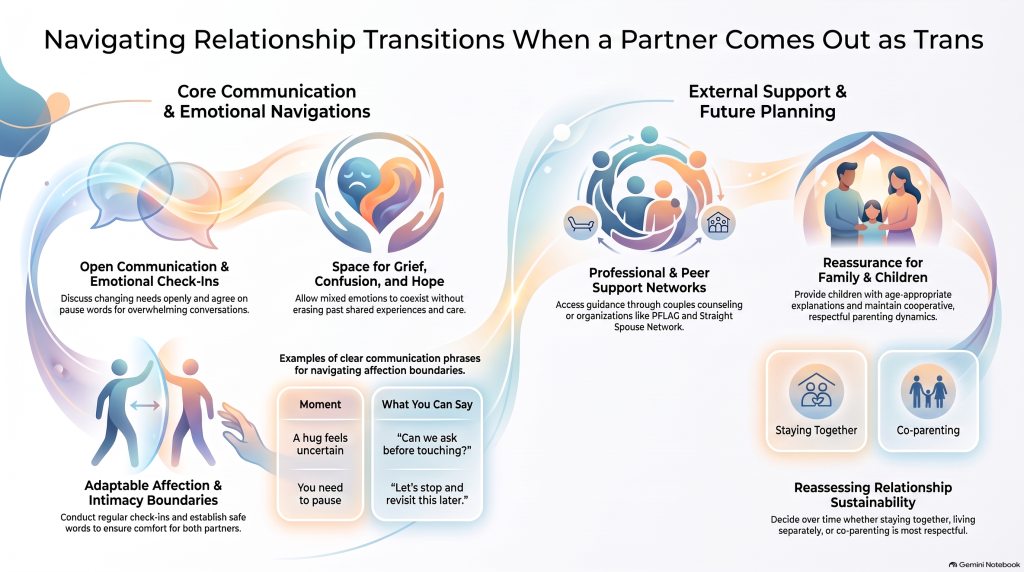
As your partner comes out as trans, talk openly about what’s changing and how you both feel. Make room for identity exploration by asking what support your partner wants, while sharing your own needs without judgment. Regular emotional check ins can help you notice what feels reassuring or uncertain for each of you. Agree on communication strategies for harder conversations, such as using a pause word when either of you needs a break. Discuss how relationship dynamics may shift, including boundaries around affection, intimacy, and privacy. You can also ask what legal or medical steps your partner is considering and how they’d like you involved. These conversations don’t need to settle everything at once. Keep listening, revisit agreements, and approach each change as a chance to understand one another better and protect trust.

You may grieve the relationship you knew while also feeling confused, angry, or hopeful—and those feelings can shift over time. Your partner’s coming out may change how you understand your shared past, but it doesn’t erase the care or shared experiences you’ve built together. Grief processing takes time, and you don’t have to choose one feeling or reach certainty right away.
You can grieve what’s changing while honoring the care and shared experiences that remain. Mixed feelings are normal, and clarity takes time.
Try these steps to make room for both of you:
You can seek support from PFLAG or the Straight Spouse Network. Connecting with others may ease isolation as you and your partner investigate what hope means for your relationship.

Affection and intimacy may feel different as you navigate this change, and there’s no need to force a pace that doesn’t feel right. Talk openly about what feels welcome, uncomfortable, or uncertain. Clear affection agreements can prevent misunderstandings while honoring both partners’ needs.
| Moment | What you can say |
|---|---|
| A hug feels uncertain | “Can we ask before touching?” |
| You need to pause | “Let’s stop and revisit this later.” |
Use a shared safe word if an intimacy conversation becomes overwhelming; it gives either of you a respectful way to pause. Regular intimacy check ins can help you notice changing comfort levels and feel valued. Emotional and physical closeness may evolve over time. Stay curious about each other, and make room for connection without treating any boundary as rejection.
Finding support can help both partners feel less alone as you navigate your loved one’s transformation. You don’t have to manage every emotion privately. Counseling or a transgender-focused group can offer space for emotional processing, while support networks such as PFLAG or the Straight Spouse Network can connect you with people who understand.
Support from counseling, transgender-focused groups, or peer networks can help you process emotions and feel less alone.
Support doesn’t require identical feelings; it can help your family stay connected through change.
Support can help you feel less alone, but it can’t decide what’s right for your relationship. Take time to notice how your partner’s change affects your emotional well-being. You might feel acceptance, confusion, grief, or several things at once; none of these feelings makes you unsupportive.
Talk openly and regularly about your feelings, boundaries, and concerns. Consider whether trust rebuilding and a shared understanding can support your relationship as your partner’s identity exploration continues. Both of you deserve room to express yourselves without pressure to reach an immediate decision.
Staying together may work for you, or you may need a different arrangement. Separate living spaces or co-parenting can help you create a supportive environment for everyone involved. Reflect on your relationship’s foundation, and decide together—or separately—what feels sustainable and respectful.
When your partner comes out as trans, how can you meet this moment with care? Start by listening, affirming their identity, and sharing your feelings honestly. Managing emotions takes time; understanding identity begins with curiosity, not assumptions. Use communication strategies, examine boundaries, and discuss redefining attraction together. Keep educating yourself, seek support from trusted groups or counselors, and welcome change at your own pace. You can protect both your well-being and your connection.
You might stay with your partner if love, trust, and shared goals still feel right, but you don’t have to decide immediately. Your feelings matter, and change can reshape relationship dynamics in ways you’ll need time to understand. Talk honestly about hopes, boundaries, and concerns, while offering each other emotional support. You can seek a counselor or peer group, then reassess together. Staying or separating can both be valid, compassionate choices for you.
Yes, you can still be straight if you’re a woman attracted to a trans man; labels don’t come with a relationship police badge. His gender identity is male, while your sexual orientation reflects your attractions. Relationship dynamics may shift as you investigate personal acceptance, societal perceptions, intimacy changes, and emotional support. Use honest communication strategies to discuss feelings and expectations together. You get to choose the label that feels right.
Yes, your marriage can survive a gender alteration, though you may both need time to adjust. Honest communication strategies help you share feelings, ask questions, and understand each other’s identity exploration. You might grieve familiar relationship dynamics while uncovering new ways to connect. Seek emotional support through counseling or trusted communities, and practice mutual respect as you’re steering through changes. There’s no single right outcome; you can decide together what feels healthy and sustainable.
Staying together after your partner comes out as trans isn’t a single decision you have to make today. Keep communicating about what’s changing, make room for grief and hope, and set boundaries that help you both feel safe. Seek support for yourselves and your children when you need it. Most of all, choose with care, compassion, and honesty. Your relationship may grow in a new direction—or change shape—and either path deserves respect.

 Featured PostsOctober 17, 2026One Step Closer: Trans and Passing
 Activism and ChangeOctober 14, 2026I’m I7 and Male, I Don’t Know Whether or Not I am a Trans Girl
 Featured PostsOctober 13, 2026A New Beginning: Embracing the Realization That I’m Trans
 Featured PostsOctober 13, 2026Colorado and Michigan Join States Ending Medicaid Coverage for Trans Youth