How Do Transgender Women Know What Size Clothes They Are?
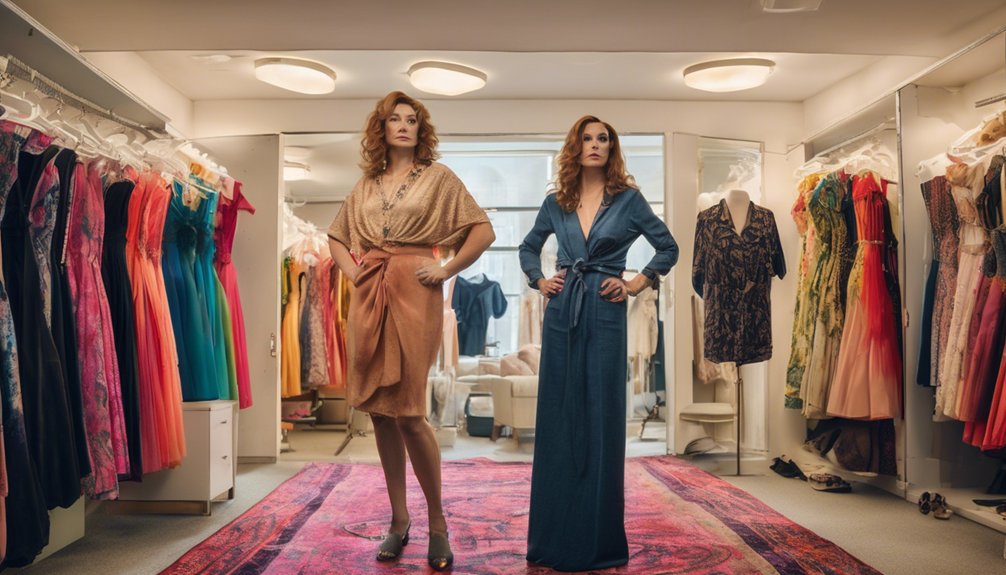
Understanding your clothing size means knowing your body measurements, choosing the right fit, and feeling confident. As a transgender woman, finding your size can be a unique experience, but it’s definitely achievable with the right tools and guidance. By using a measuring tape and focusing on areas like bust, waist, and hips, you can start deciphering sizes. Brand-specific charts and reviews offer valuable insights. Curious about how to make this process smoother and more fulfilling?
Understanding your body measurements is essential to finding clothes that fit well and make you feel comfortable. Start by taking precise measurements of your bust, waist, and hips using a tailor’s measuring tape. Make sure you’re standing straight and wearing minimal clothing for accuracy. When measuring your bust, wear a properly filled bra to get the best fit. Remember, body proportions can vary, so it’s vital to know how your measurements relate to sizing charts. Since sizes differ across brands, always consult multiple sizing charts and choose the largest size indicated for comfort. Regularly update your measurements, as changes during your transformation can affect your clothing size. Taking these steps will help you find clothes that truly fit your unique body.

Now that you’ve got a handle on your body measurements, let’s talk about finding the right bra and dress sizes. To determine your bra size, measure your chest just below the nipples for the band size. Then, measure your bust while wearing a well-fitted bra. The difference between these two measurements helps you find your cup size. For dress sizes, measure your bust, waist, and hips carefully. These measurements are key to finding the perfect fit in women’s clothing. Remember, size charts vary, so check the specific charts of brands you like. If you’re shifting from men’s to women’s clothing, try subtracting 1.5 to 2 sizes from your men’s size. Regularly reassessing your measurements guarantees a better fit over time.
Finding the right pants and skirts is all about knowing your measurements and exploring diverse styles. Start by measuring your waist and hips with a tailor’s measuring tape. Remember, sizes can vary between brands, so always consult the size chart that corresponds to your measurements. For pants, you’ll also need to know your inseam—measure from the top of your inner thigh to your ankle.
When it comes to skirts, measure your waist at its narrowest point and your hips at the widest. Make sure the tape is parallel to the floor for accuracy. Different cuts, like A-line or pencil, will fit differently based on your body shape. Try on various styles to find what feels comfortable and flatters you best.
After you’ve gotten a handle on your measurements, it’s time to focus on how to shop smartly and find resources that can help. As a transgender woman, understanding your size is key to a successful shopping experience. Here are some strategies:
While changing can be an exciting expedition, finding the right footwear can present unique challenges for transgender women. Shifting often requires you to choose shoes that are 1.5 to 2 sizes larger than your previous men’s shoe size. Start by measuring your foot accurately—measure from the heel to the tip of your longest toe to determine the correct shoe size. Remember, women’s shoe sizes differ from men’s, so use a size comparison chart to guide you. Different brands have varying fits, so it’s vital to consult specific size charts and try on multiple sizes and styles. This approach helps you find shoes that fit comfortably and match your style, ensuring that your path in footwear is as seamless as your shift.
You’re curious about a size 12 from the 1950s, right? Back then, it usually meant a bust of 36 inches, a waist of 28 inches, and hips of 38 inches. Sizes then were smaller compared to today, largely due to vanity sizing and different body ideals. Remember, sizing varied a lot between brands, so don’t worry if it seems confusing. Keep exploring, and you’ll find what works for you.
No, a plus size 14 isn’t the same as a regular 14. Plus sizes are designed for curvier body shapes, offering extra room in bust, waist, and hips, while regular sizes are more standard. To find the right fit, check each brand’s size guide since measurements can vary. Don’t worry if it takes a bit of trial and error; understanding these differences helps you make better clothing choices and feel great in your outfits!
Unisex sizing can be a bit tricky, but don’t worry! It generally uses standard sizes like small, medium, and large, which can differ from women’s sizes. When shopping, always check the size chart for chest, waist, and hip measurements. Trying things on is key because fit varies between brands. Remember, labels aren’t as crucial as how the clothes fit you. Trust your measurements, and you’ll find what works best!
When you’re measuring your size, think of it like sculpting a masterpiece. Use a tailor’s tape to measure the bust at its fullest, the waist at its narrowest, and the hips at their widest. This creates a personal blueprint for your wardrobe. Check brand-specific size charts, as they can vary like the seasons. Welcome trial and error; every measurement is a step towards finding clothes that celebrate your unique shape.
Maneuvering the world of fashion as a transgender woman might feel like a delightful puzzle, but with a little patience and practice, you’ll find your perfect fit. Welcome the path of uncovering your unique style by using your trusty measuring tape, consulting size charts, and listening to the experiences of others. Remember, every brand is a new adventure, so don’t be afraid to investigate. With these strategies, you’ll soon feel at home in your wardrobe.

 Featured PostsOctober 21, 2026The Trans Journey to Passing
 Featured PostsOctober 17, 2026One Step Closer: Trans and Passing
 Featured PostsOctober 14, 2026Navigating Manhood: The Challenges FTM Individuals Face
 Activism and ChangeOctober 14, 2026I’m I7 and Male, I Don’t Know Whether or Not I am a Trans Girl