A Guide to Bilateral Orchiectomy as Gender-Affirming Care

For some people, bilateral orchiectomy can represent a door closing on unwanted testosterone effects and opening toward greater comfort in your body. This gender-affirming procedure removes both testicles, permanently ends sperm production, and may simplify your hormone care. Your goals, fertility wishes, support needs, and future surgery plans all matter. Knowing what to expect before, during, and after surgery can help you decide whether this step fits your path—and what questions to ask next.
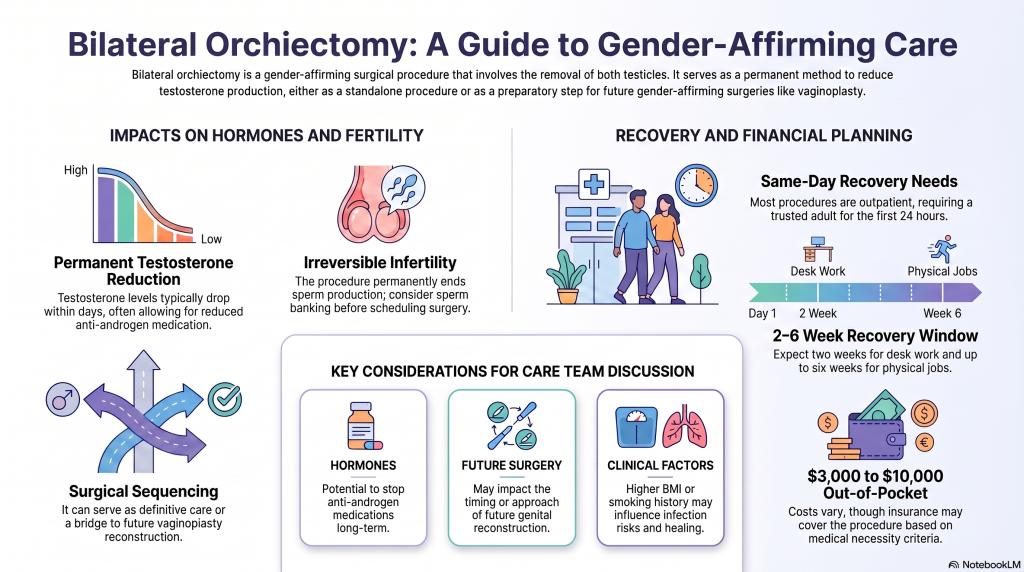
Gender-affirming orchiectomy removes both testicles through a small incision in the scrotum, taking away the body’s main source of testosterone. You may pursue it as a standalone procedure or before vaginoplasty. It’s often part of care for transfeminine and some nonbinary people, and your care team should respect your identity, choices, and boundaries throughout.
The procedure is usually brief, performed under general or spinal anesthesia, and commonly allows you to return home the same day. Testosterone levels fall quickly afterward, which may let you stop anti-androgen medication. You’ll still need individualized hormone management to support bone and general health.
Because it permanently affects fertility, you can discuss sperm cryopreservation, surgical alternatives, and psychosocial counseling before surgery. Your clinician can also explain uncommon risks, including bleeding, infection, abscess, or persistent pain, using clear, consent-centered information.

Orchiectomy may fit your goals if you want a permanent reduction in testosterone, don’t want or aren’t ready for vaginoplasty, or see it as a step toward future genital reconstruction. Your reasons are valid, and you can choose a timeline that feels safe and affirming.
Orchiectomy can offer a permanent reduction in testosterone while honoring your goals, timeline, and readiness for future care.
Many people go home the same day and resume routine activities within two to three weeks. Still, eligibility and timing matter: your care team may review medical history, support needs, and infection risk, including higher BMI. After surgery, you’ll need ongoing hormone management and bone and cardiovascular monitoring.

A bilateral orchiectomy permanently ends testicular sperm production and sharply lowers your body’s testosterone, so it’s essential to weigh fertility, hormone needs, and sexual changes before surgery. Infertility is irreversible unless you choose fertility preservation, such as sperm banking, beforehand.
Testosterone usually falls within days, which may let you stop anti-androgens and simplify your regimen. You’ll still need ongoing estrogen or other affirming hormones and regular monitoring to support bone density and general health. Your clinician can help create a plan that respects your goals and comfort.
You may notice fewer spontaneous erections or changes in libido. These experiences vary, and altered erectile function doesn’t automatically reduce sexual satisfaction; some people feel greater gender congruence and comfort in intimacy. Persistent scrotal or groin pain is uncommon, but you deserve responsive, affirming care if pain or concerns arise.
Preparing thoughtfully can make surgery and recovery feel more manageable and give you time to address permanent fertility changes. Your care team can support your choices without pressure.
Tell your team about smoking or health factors, including higher BMI, so they can tailor preparation. Contact your surgeon for infection signs or heavy bleeding.
Beyond recovery, it helps to take into account how bilateral orchiectomy may fit your long-term goals for hormone care and genital surgery. It’s irreversible and causes infertility; discuss sperm cryopreservation before surgery if genetic parenthood matters to you.
| Consideration | What it may mean | Discussion point |
|---|---|---|
| Hormones | You may stop anti-androgens | Plan long term monitoring |
| Future surgery | It can support later vaginoplasty | Ask about surgical sequencing |
| Infection risk | Higher BMI may increase risk | Review timing and support |
Some people choose orchiectomy as definitive care; others use it as a bridge to vulvoplasty or vaginoplasty. In one cohort, 39% planned reconstruction, and seven later had vaginoplasty. Centers may consider BMI and healing risks when scheduling future surgery. Compassionate postoperative counseling can help you revisit goals without pressure. Reported regret was absent in this series, but your choices and timeline remain yours.
Gender-affirming orchiectomy often costs about $3,000–$10,000 in the U.S. when you pay out of pocket, though surgical pricing varies by location, surgeon, anesthesia, facility fees, and follow-up care. Insurance may cover much or all of the procedure if your plan includes gender-affirming care, but deductibles and copays can still apply. You deserve clear, respectful estimates; ask providers for an itemized quote and insurance authorization support before scheduling.
Yes, your insurance may cover gender-affirming orchiectomy, but approval can feel affirming one moment and exhausting the next. Coverage variations depend on your plan, state, provider network, and medical-necessity criteria. You may need letters, documentation of gender dysphoria, or prior authorization. If you face an insurance denial, you can appeal, ask your surgeon’s office for support, and request a detailed explanation of benefits from your insurer.
Before scheduling, you’ll usually provide government-issued ID, insurance details, medical history, and signed informed consent forms. Your surgeon or insurer may also require a referral letter or mental health validation from a qualified clinician, depending on local policies and your coverage. You can ask the surgical team for a checklist and support with paperwork. Requirements vary, so you don’t need to navigate uncertainty alone—your care team should explain each step respectfully.
You shouldn’t travel alone immediately after outpatient orchiectomy. Anesthesia, pain medication, and limited post op mobility can affect your alertness and safety, so your surgical team will usually require a trusted adult to take you home and stay with you for the initial 24 hours. Plan pain management, transportation, food, and a comfortable recovery space in advance. If support feels difficult to arrange, tell your care team; they can help investigate options.
Yes—financial help can be a bridge when surgery costs feel like a mountain. You can ask your surgeon’s office about sliding scale fees, payment plans, hospital charity care, and insurance navigation. Community LGBTQ+ organizations, mutual-aid groups, and gender-affirming care funds may offer grants. You can also consider crowdfunding options, if sharing feels safe and comfortable. You deserve clear, respectful support, and a clinic social worker can help you identify local resources.
Choosing bilateral orchiectomy is deeply personal, and you deserve clear information, respectful care, and time to decide. You can discuss fertility preservation, hormones, sexual changes, recovery, and future vaginoplasty plans with an affirming surgical team. Your needs, identity, and comfort matter at every step. Like a compass helping you navigate changing terrain, informed consent can support your direction while leaving room for your goals to evolve. Reach out for support, plan your recovery, and honor your own pace.

 Featured PostsOctober 21, 2026The Trans Journey to Passing
 Featured PostsOctober 17, 2026One Step Closer: Trans and Passing
 Featured PostsOctober 14, 2026Navigating Manhood: The Challenges FTM Individuals Face
 Activism and ChangeOctober 14, 2026I’m I7 and Male, I Don’t Know Whether or Not I am a Trans Girl