Appeals Court Deals Blow to Trump Policy, Says Trans Military Ban Shows Signs of Prejudice

Although the Supreme Court later let the policy take effect while litigation continues, a federal appeals court’s refusal to lift a nationwide injunction marked an early and consequential rebuke to President Trump’s ban on transgender military service, finding the measure likely discriminates against service members with gender dysphoria and consequently appears to raise serious equal-protection concerns. That determination gave the dispute immediate constitutional implications, because the panel treated the government’s asserted interests in military readiness with caution rather than reflexive deference.
The appellate ruling came after U.S. District Judge Ana Reyes issued a March 18 nationwide preliminary injunction blocking the Pentagon’s Feb. 26 policy, which implemented Trump’s Jan. 27 executive order barring “individuals with gender dysphoria.” Other district judges entered related injunctions. When the administration sought emergency relief, the panel declined to disturb Reyes’s order, emphasizing that the record, at least at that stage, supported the plaintiffs’ claim that the policy classified and excluded people because of transgender status.
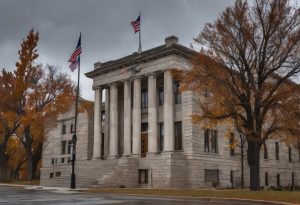
A federal appeals panel refused to lift Judge Reyes’s injunction, finding the record supported claims of discrimination based on transgender status.
That analysis reflected a familiar judicial pattern: even in military cases, courts don’t abandon equal-protection review when a policy appears to target a defined class. The plaintiffs—seven current transgender service members, one prospective recruit, and a nonprofit—argued the ban would expel thousands and fracture established careers. Commander Emily Shilling’s declaration sharpened the point; she noted the Navy had invested roughly $20 million in her training, illustrating how the policy could undermine, rather than preserve, military readiness.
The administration responded by asking the Supreme Court to intervene, and on May 6 the Court temporarily allowed enforcement while appeals proceed. Yet the order didn’t resolve the merits. Importantly, Justices Sonia Sotomayor, Elena Kagan, and Ketanji Brown Jackson said they’d have left the injunction in place, reinforcing the lower courts’ view that the ban likely rests on discrimination that the Constitution doesn’t readily tolerate.

 Featured PostsOctober 21, 2026The Trans Journey to Passing
 Featured PostsOctober 17, 2026From Job Search to Success: A Transgender Woman’s Employment Journey
 UncategorizedOctober 17, 2026Trans Rights at Risk? The Implications of a Trump 2024 Win
 Featured PostsOctober 17, 2026One Step Closer: Trans and Passing