The Work Starts Within: Confronting Internalized Transphobia Head-On

You don’t have to blame yourself for messages you learned to survive; internalized transphobia reflects harm you absorbed, not a truth about who you are. You may notice it in self-doubt, shame, or the urge to shrink parts of yourself. Meeting those reactions with patience can help you identify where they came from and begin choosing beliefs that honor your gender, your safety, and your life—starting with the voice you use inside.
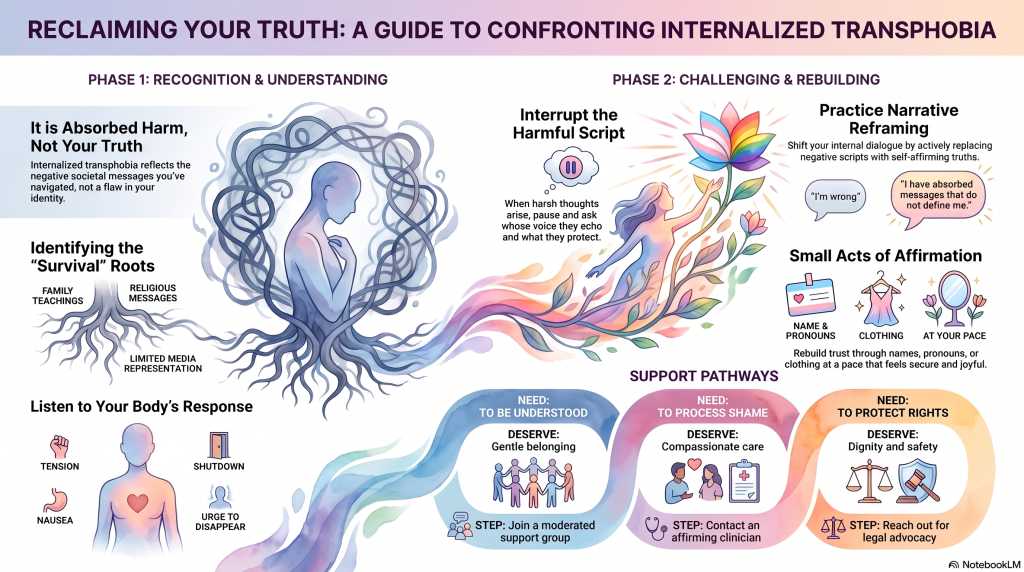
Internalized transphobia happens when you absorb negative messages about transgender people and begin directing them toward yourself. It doesn’t mean you’ve failed or that your identity is less real; it reflects the pressures you’ve had to navigate in a world that often misrepresents or excludes trans lives.
These beliefs can grow through family teachings, school policies, religious messages, discrimination, and silence. Historical omission can make it seem as if trans people have no past, community, or place in society, even though trans and gender-diverse people have always existed. Limited or harmful media representation can reinforce fear, shame, and narrow expectations about who you’re allowed to be. You didn’t create these messages, but you can gently question them. Understanding their roots helps you separate inherited harm from your own truth and make room for self-compassion.

You might notice internalized transphobia in everyday thoughts, choices, or reactions that leave you feeling smaller, unsafe, or undeserving. You may hesitate to correct someone who misgenders you, minimize your needs, or feel guilty for wanting affirmation. You might avoid certain clothes, spaces, photos, or conversations because being visible feels risky. These responses can reflect learned survival strategies, not personal failure.
Microaggression awareness can help you name moments that sting, including jokes, assumptions, intrusive questions, or repeated misuse of your name. Notice how your body responds: tension, shutdown, nausea, or the urge to disappear can offer crucial information. Pronoun practice, whether alone, with trusted people, or in low-pressure settings, may also reveal where discomfort or fear shows up. You deserve patience as you observe these patterns and honor what they’ve helped you survive.

When a harsh or shaming thought appears, pause and ask whose voice it echoes and what it’s trying to protect you from. Internalized transphobia often borrows its language from family, institutions, media, or past harm; it doesn’t reveal a truth about you. Notice the thought without treating it as a command. You can question its evidence: Is this belief fair, current, or shaped by someone else’s fear?
Try narrative reframing by replacing “I’m wrong for existing this way” with “I’ve absorbed messages that don’t define me.” You don’t have to force certainty or erase every doubt immediately. Instead, practice choosing thoughts that reflect your lived knowledge, values, and boundaries. Each time you interrupt a harmful script, you strengthen identity resilience and make more room for your own voice.
Offer yourself the care you may have been taught you don’t deserve. Internalized transphobia often grows from messages that hurt you, not from any truth about who you are. When shame appears, pause and name what you need: rest, reassurance, privacy, or a gentler inner voice. You don’t have to earn compassion before receiving it.
Try self forgiveness exercises that acknowledge survival without judging your past choices. You might say, “I did what I could to stay safe, and I can choose differently now.” Small acts of gender affirmation can also rebuild trust in yourself. Experiment with names, pronouns, grooming, movement, or wardrobe exploration at a pace that feels secure. Notice what brings relief, comfort, or joy. Your identity isn’t a problem to fix; it’s a part of you worthy of tenderness.
Gender-affirming connection can interrupt the isolation that internalized transphobia often creates. You don’t have to untangle painful beliefs alone. Seek peer support where your name, pronouns, and lived experience are respected. A trans-affirming therapist can help you build safety without judging your pace.
| When you need | You deserve | A possible step |
|---|---|---|
| To be understood | Gentle belonging | Join a moderated support group |
| To process shame | Compassionate care | Contact an affirming clinician |
| To protect your rights | Dignity and safety | Reach out for legal advocacy |
Choose spaces that honor consent, confidentiality, and boundaries. If a group or professional feels dismissive, you can leave; that response isn’t a failure. Ask trusted community members for referrals, check provider directories, and start small. Each affirming connection can remind you that your identity is real, worthy, and yours.
You can support them through active listening: believe their feelings, ask what they need, and avoid rushing their healing. Remind them that internalized messages aren’t their fault and don’t define their worth. Offer affirming resources, celebrate small steps, and respect boundary setting when conversations feel overwhelming. You can gently challenge harmful self-talk, but don’t debate their identity. Stay consistent, patient, and willing to learn alongside them.
Yes, internalized transphobia can affect your romantic relationships and intimacy. You might experience self esteem barriers, fear rejection, avoid vulnerability, or struggle with identity disclosure. These responses often reflect past harm and social pressure, not any failure in you. You deserve relationships where you feel safe, desired, respected, and fully seen. Gentle self-compassion, affirming support, and clear communication can help you build trust at your own pace.
You can address transphobia by creating policies that protect everyone without requiring anyone to disclose their identity. Offer confidential training on respectful language, pronouns, and intervention skills, and provide anonymous reporting channels with clear follow-up protections. You should enforce consequences consistently, review benefits and facilities for inclusion, and invite voluntary feedback. Don’t demand personal stories; you can build safety through accountability, privacy, and everyday respect for every employee.
You may have protections through federal, state, and local ordinances that prohibit discrimination based on age. These often cover employment, housing, education, healthcare, and public accommodations. Your state civil-rights agency, city human-rights office, or LGBTQ+ legal organization can explain what applies where you live. You don’t have to disclose more than you’re comfortable sharing to seek information, and confidential support may be available.
You might say, “When classmates misgendered you, did any hurtful messages start to feel true?” Create open dialogue without demanding answers, and listen calmly. Use affirming language, including your child’s name and pronouns, while naming transphobia as something learned, not their fault. Tell them you love and believe them. Ask what support feels safest, such as counseling, community, or simply quiet companionship. Reassure them they don’t have to earn belonging.
You don’t have to untangle internalized transphobia all at once. Each time you notice a harmful script, meet it with curiosity, and choose a kinder truth, you reclaim a little more space for yourself. Let affirming practices, trusted people, and professional support steady you when things feel heavy. Remember: healing isn’t a straight line, and you’re not failing when old messages resurface. Take it one step at a time—you deserve safety, belonging, and a life that feels like yours.

 Featured PostsSeptember 29, 2026A Kansas Law Voided 1,700 Licenses. Now Judges Must Decide Whether It Stands
 Featured PostsSeptember 29, 2026The First Time I Realised My Body Was Changing
 Featured PostsSeptember 28, 2026Staying Together After a Partner Comes Out as Trans
 Featured PostsSeptember 26, 2026Navigating Intimacy: A Trans Woman’s Path to Authentic Dating Experiences