Caitlyn Jenner on the Fear, Reality, and Relief of Her Surgery

When you hear Caitlyn Jenner say, “It’s not as bad as you think,” you might expect a polished reassurance. Instead, the remark carries the weight of public judgment, private uncertainty, and the daily choice to live openly. Her experience suggests that fear often grows louder before reality arrives. But that perspective also raises a harder question about what authenticity costs when the cameras never look away…
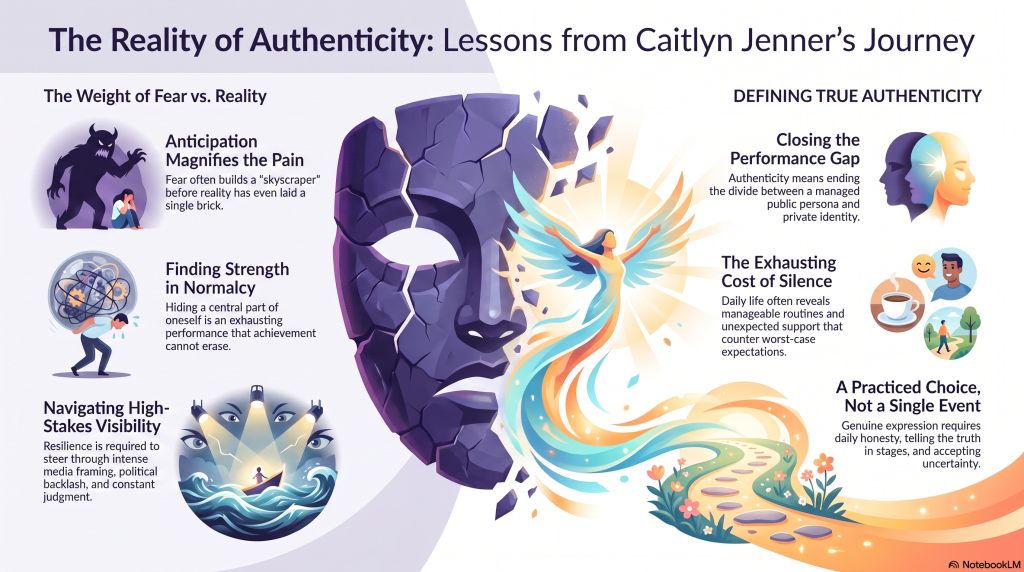
When Caitlyn Jenner said “it’s not as bad as you think.” she appeared to be addressing the fear that can surround public changeover and life under intense scrutiny. You can hear the phrase as a measured reassurance, not a claim that difficulty disappears. It suggests that anticipation often magnifies pain before you face it, while daily life may reveal manageable routines, support, and unexpected relief. Her wording also resists the sharp edges of media framing, which can reduce a personal experience to spectacle, conflict, or a headline-ready confession. Instead, the statement carries emotional nuance: fear can coexist with optimism, and vulnerability can sit beside resolve. If you focus on the plain language, you see someone challenging a worst-case expectation. She doesn’t promise an easy path; she suggests you may uncover more strength and normalcy than you expected.

To understand what Jenner meant by “it’s not as bad,” you have to place the remark within the pressures surrounding her public shift. You’re hearing a response shaped by a moment when identity, celebrity, and politics collided in real time. Jenner didn’t speak from a private setting; she spoke after years in the spotlight, with every interview clipped, interpreted, and recirculated. The media framing often reduced complex experiences to sharp headlines, leaving little room for qualifications or personal nuance. At the same time, political backlash intensified debates around transgender rights, representation, and party allegiance. You can see why her wording carried more than simple optimism. It reflected an attempt to describe her own reality while steering a national conversation that demanded certainty, conflict, and instant judgment from every public statement she made.

Few public figures have faced the kind of scrutiny Caitlyn Jenner encountered after announcing her changeover in 2015. You could see the pressure build immediately: tabloid headlines dissected her appearance, commentators questioned her politics, and social media turned personal moments into public trials. The media backlash came from multiple directions, including critics who doubted her motives and supporters who challenged statements they viewed as harmful to transgender communities. Her visibility also meant that every interview carried consequences beyond celebrity news. Meanwhile, legal challenges tied to a fatal 2015 Malibu crash intensified the attention, placing court filings beside transition coverage in relentless news cycles. If you followed the story closely, you saw a person steering fame, family tensions, political controversy, and legal exposure while strangers demanded answers to deeply private questions.
Authenticity, in Caitlyn Jenner’s own telling, meant ending the divide between the public persona she performed and the identity she says she carried privately for decades. When you trace her interviews and memoir, you find she frames the change not as a sudden reinvention, but as permission to stop editing herself. She describes years of carefully managed appearances, where achievement and visibility could conceal an inner conflict from even close observers.
For Jenner, genuine expression required more than changing a name, wardrobe, or public image. Observe her emphasize daily honesty: speaking plainly, accepting uncertainty, and allowing others to witness personal vulnerability. That account makes authenticity feel less like a polished reveal and more like an ongoing decision. She says she chose visibility because secrecy had become unbearable, even when openness invited judgment and misunderstanding.
Jenner’s account leaves readers with a lesson that reaches beyond celebrity: hiding a central part of yourself can become its own exhausting performance. As you’ll notice how public applause, athletic achievement, and family expectations can’t erase private conflict. Her story asks you to examine the roles you’ve learned to play and the cost of protecting them.
The revealing detail isn’t that transformation happened overnight; it’s that it followed years of fear, calculation, and silence. When you confront gender identity honestly, you may face scrutiny, loss, or uncertainty, but concealment carries consequences too. Jenner’s perspective doesn’t promise an easy path. Instead, it shows personal resilience as a practiced choice: you gather support, tell the truth in stages, and keep moving when others misunderstand.
You’ll find Caitlyn Jenner focused on media, advocacy, and personal storytelling projects. Reports have linked her to a potential new memoir, where she could revisit major turning points and current views. She’s also been associated with a documentary collaboration exploring public life, identity, and political commentary. While details remain limited, you can expect her to use interviews, appearances, and digital platforms to keep shaping her public narrative and engage supporters directly.
Caitlyn Jenner lives primarily in Malibu, California, within the Los Angeles area—a coincidence that keeps her close to the entertainment world that shaped her public life. You’ll find her residency tied to a coastal community known for privacy, where her Malibu lifestyle offers distance from Hollywood’s daily intensity. Public reports have long linked her to a Malibu home, though she keeps exact living arrangements appropriately private.
You’ll need to check Caitlyn Jenner’s official social media and event schedule for confirmed upcoming public appearance details, since appearances can change quickly. She often announces interviews, charity events, speaking engagements, and television-related commitments close to their dates. Watch her Instagram, X, and verified website listings, then confirm through venue or organizer pages. That approach helps you separate genuine announcements from rumor-driven reports and outdated promotional posts online.
Caitlyn Jenner’s charitable connections center on LGBTQ+ advocacy, youth mentorship, and transgender support. You’ll find her linked publicly to organizations such as the Trevor Project, GLAAD, and groups serving homeless LGBTQ+ young people, though her involvement has varied over time. Investigating her record reveals a mix of fundraising, visibility, and event participation rather than one consistently documented foundation. You can check each charity’s current partnership listings before donating.
You can follow Caitlyn Jenner through her verified social media accounts, especially Instagram, X, and Facebook, where she shares posts, interviews, appearances, and personal updates. Check account verification badges and links from reputable news profiles to avoid impersonators. You’ll also find discussion and updates in fan forums, though you should treat unofficial claims carefully. For the most reliable announcements, watch her official pages and confirmed media channels regularly.
You can’t fully grasp Caitlyn Jenner’s message until you catch sight of the mountain behind the headline: public judgment, political backlash, and relentless scrutiny crashing in like thunder. Yet her point stays surprisingly human—fear often builds a skyscraper before reality lays a single brick. When you stop editing yourself, you may lose comfort, approval, or certainty. But you can also gain breath, routine, support, and the stubborn relief of living honestly.

 Featured PostsSeptember 20, 2026Full or Partial Transition? Understanding the Options for Older Trans Adults
 Activism and ChangeAugust 27, 2026The Power of Resistance: Lessons From the Stonewall Riots
 Featured PostsAugust 27, 2026Dysphoria: Acknowledging the Pain, Finding Hope
 Featured PostsAugust 27, 2026Transgender Identity: Ancient Roots and Modern Understanding