Quietly Becoming You: Stealth Strategies for Early MTF Transition

Embarking on a male-to-female (MTF) transition is a profoundly personal milestone, yet the pressure to publicly announce your journey can often feel overwhelming. The truth is, transitioning doesn’t have to be an all-or-nothing, highly visible event from day one. If you are looking to explore your authentic self while protecting your safety, mental health, and privacy, a “stealth” approach can offer a safe harbor. In this guide, we will explore practical, low-risk strategies to help you quietly shift your presentation and medical care. From setting firm privacy boundaries and making subtle wardrobe changes to navigating discreet hormone therapy, discover how you can take control of your transition at a pace that feels entirely your own.
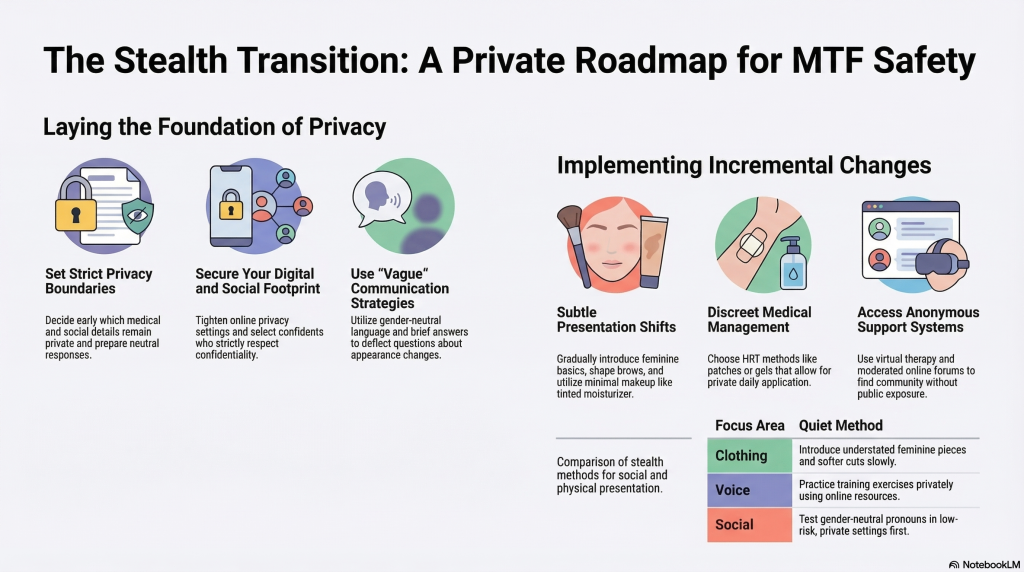
Before you share anything, decide which parts of your change are private and who, if anyone, needs to know. Start by identifying your personal priorities: medical details, social timeline, appearance changes, and identity conversations. Clear boundaries reduce stress and help you stay consistent when others ask questions.
Next, choose trusted confidants carefully. Pick people who respect confidentiality and support your decisions without broadcasting them. Review your online presence, tighten privacy settings, and avoid posting information that could reveal more than you intend. Prepare brief, neutral responses for questions about your body, name, or presentation, so you can protect yourself without overexplaining. Using gender-neutral language can also keep conversations appropriately vague. These privacy strategies support autonomy, lower unwanted exposure, and give you more control during a highly personal process.

If you want to start quietly, take an incremental approach that lets your presentation shift in ways that feel natural and manageable. Use stealth strategies: add subtle accessories, softer cuts, or neutral-feminine basics that blend with your current wardrobe. Practice voice training privately using online exercises, and refine hair or grooming gradually to reduce sudden contrast.
| Focus | Quiet method |
|---|---|
| Clothing | Introduce understated feminine pieces slowly |
| Voice/social | Practice privately; test gender-neutral pronouns initially |
Gradual exposure helps you monitor comfort and social response without forcing disclosure. You can grow your hair, use wigs selectively, and adjust grooming patterns over time. Online transgender communities also provide evidence-based guidance, peer support, and practical feedback, helping you build confidence while keeping your progression paced, deliberate, and safer for your circumstances.

Once you’ve made subtle changes in clothing, grooming, or voice, you may also want to investigate HRT in a way that preserves privacy and control. Review HRT options with a qualified clinician, including patches or gels that support discreet application and can fit easily into daily routines. Informed consent clinics may offer faster, more private access without extensive psychological gatekeeping.
You’ll want to track effects carefully. Breast development and body fat redistribution often begin within three to six months, which can allow gradual change at a pace you can manage. Keep notes on physical and emotional responses, and follow recommended lab monitoring. If privacy feels isolating, join online support communities where you can compare strategies, ask practical questions, and receive evidence-based peer support from people who understand your goals and concerns.
While you’re exploring what feels affirming and safe, subtle feminine presentation changes can help you build confidence without forcing a sudden shift in how others perceive you. Start with a feminine wardrobe that gently shapes your silhouette, like fitted tops or A-line pieces that feel natural and unobtrusive.
You can also add small accessories, such as delicate jewelry or scarves, to increase gender congruence without attracting scrutiny. Consistent grooming matters: keep nails neat, shape brows carefully, and use gentle skincare to soften texture and support general presentation. Minimal makeup, including tinted moisturizer or light lip gloss, can elevate features while preserving a natural appearance. In private, practice voice training to gradually modify pitch, resonance, and speech patterns. Incremental changes often reduce stress, improve self-observation, and help you identify what feels sustainable over time.
Because privacy can directly affect safety and stress levels during change, discreet support can help you access reliable guidance without increasing unwanted exposure. You can use anonymous online forums, moderated social media groups, and transgender-focused apps as online resources to compare experiences, ask questions, and reduce isolation without sharing identifying details.
You can also contact local LGBTQ+ organizations that offer confidential counseling or peer groups, since many protect participant privacy and strengthen community connections. If in-person visits feel risky, virtual therapy with a gender-affirming clinician lets you examine dysphoria, goals, and coping skills from a safer setting. When you’re ready to reflect on medical steps, research informed consent clinics with strong privacy practices. These clinics may streamline hormone access while limiting documentation demands and unnecessary public disclosure during change.
No—why would 25 be too old to change? You’re still well within a common stage of life for starting MTF change, and evidence shows many people begin in their 20s with positive outcomes. You likely have greater emotional maturity, which can help you navigate decisions, support networks, and legal steps. Gender-affirming care also correlates with improved mental health, and regret rates remain very low across studies for most people.
You’ll find that regret after gender-affirming change is rare, typically around 1% or less in published studies. Most people report improved well-being, reduced dysphoria, and positive change experiences. Regret factors usually involve limited support, untreated mental health concerns, or poor readiness rather than change itself. If you’re considering care, you can lower risk through informed consent, therapy, and strong social support. Ongoing evidence continues to show high satisfaction in general.
Yes—you can often begin changing your gender expression at 14; many teens socially shift, and about 1.4% of U.S. youth identify as transgender. Your options depend on local laws, your gender identity, and whether you have parental support. You can usually change your name, pronouns, clothing, and hairstyle initially. Medical steps, like blockers or hormones, typically require parental consent and evaluation. A supportive clinician can help you safely.
There isn’t one best stage to shift to MTF; the right time depends on your emotional readiness, social support, family acceptance, and available medical options. Many people start in late teenage years or early adulthood, but evidence shows benefits can occur at different stages. You should work with qualified professionals to assess timing, legal requirements, and health needs. Earlier care may improve outcomes, yet your safety and readiness matter most.
A “secret shift” isn’t all-or-nothing—that theory doesn’t hold up in practice. Evidence and lived experience suggest privacy works best when you choose what to share, when, and with whom. You can make gradual changes, monitor safety, and protect your mental health without rushing visibility. As you move forward, focus on informed medical care, realistic expectations, and discreet support. You don’t need to prove anything; you need a plan that keeps you safe, steady, and affirmed.

 Featured PostsJuly 15, 2026When Fact-Checking Yourself Goes Wrong: A Conservative Influencer’s Viral Humiliation (Parkergetajob on Youtube)
 Featured PostsJuly 15, 2026How to Be Respectful: Questions to Never Ask a Trans Woman
 Featured PostsJuly 15, 2026Major Policy Reversal, Trump Drops Plans for Federal Restrictions on Transgender Healthcare
 News and AdvocacyJuly 12, 2026Federal Court Sides With Transgender Military Personnel in Landmark Case