Shifting Sands: The Evolving American Views on Gender Identity and Trans Issues
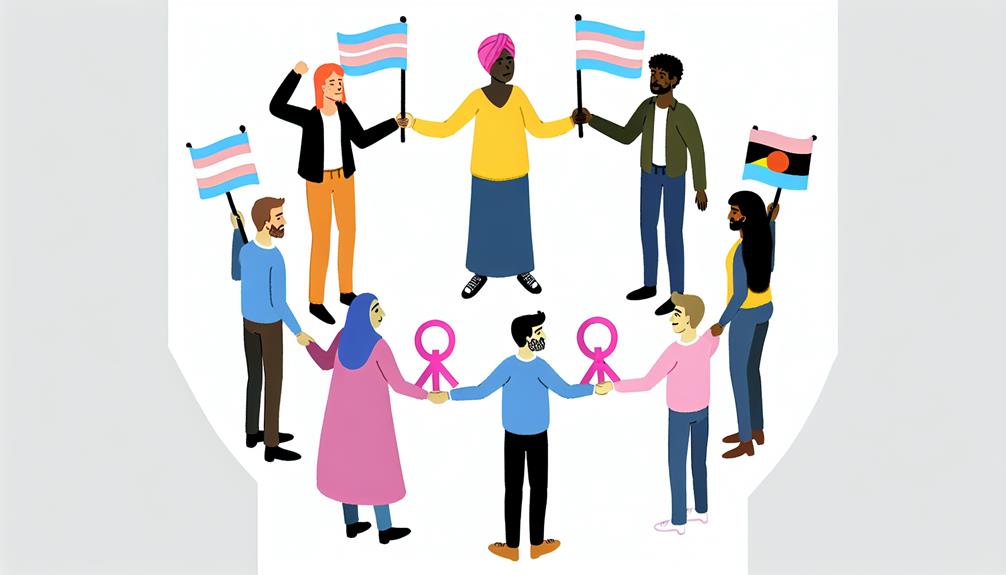
diverse perspectives on gender
diverse perspectives on gender
In the United States, opinions about gender identity and transgender matters vary greatly, showcasing the intricate blend of perspectives within society. While younger generations tend to distinguish gender from assigned sex, older individuals often link the two concepts closely. The ongoing evolution of views is influenced by scientific advancements and shifting societal norms, highlighting the need for continued discussions and research to grasp the complexities of these issues. Understanding the diverse viewpoints on these topics is essential for traversing the nuances that define Americans’ stances in this dynamic landscape.
Younger generations increasingly separate gender from sex, signaling a shift in societal perspectives on gender identity. This separation reflects evolving attitudes towards gender identity. While older individuals and those with lower education levels often associate gender with the sex assigned at birth, younger generations demonstrate a more nuanced understanding. Views on gender and sex are becoming less rigid and more fluid over time, influenced by factors such as science and societal changes.
Both younger and older adults acknowledge the role of science in shaping their opinions on gender identity. However, public opinion on this topic is varied and continuously evolving. These complex views on gender identity highlight the need for ongoing discussions and research to further educate individuals and promote understanding. As societal norms transform, it’s essential to recognize and respect the diverse perspectives on gender and transgender issues that exist within our communities.
As of early 2024, Utah has joined at least 10 other states in enacting legislation that regulates bathroom access for transgender individuals. These states include Alabama, Arkansas, Florida, Idaho, Iowa, Kansas, Kentucky, North Dakota, Oklahoma, and Tennessee. These laws generally require individuals to use bathrooms and locker rooms in public schools and government-owned buildings that match their sex assigned at birth. Additionally, West Virginia’s Legislature is considering similar legislation for students.
In Utah, the new law allows transgender individuals to defend themselves against complaints by providing proof of gender-affirming surgery and a change in the sex listed on their birth certificate. However, opponents of the law argue that not all states permit changes to birth certificates and that many transgender people may not opt for surgery. The legislation also mandates the creation of “privacy plans” for transgender students and others who might be uncomfortable using group bathrooms, potentially by allowing access to faculty bathrooms, raising concerns about inadvertently outing transgender children.
The law in Utah specifies that any new government buildings must include single-occupant bathrooms and encourages the consideration of adding more such facilities to existing government buildings, although it does not provide funding for these upgrades. Critics argue that the legislation targets transgender individuals unnecessarily and could lead to discriminatory enforcement against transgender, non-binary, and gender non-conforming people.
When considering policies on transgender bathroom access, it’s vital to acknowledge the divided public opinion among Americans. In a recent study, it was found that 41% of Americans at least somewhat favor policies requiring transgender individuals to use public bathrooms matching their sex assigned at birth, while 31% oppose such policies. Surprisingly, 28% neither favor nor oppose these measures, showcasing the complexity of the issue.
As discussions around gender identity and rights continue to evolve, finding a balance between ensuring inclusivity and addressing concerns about privacy and safety in public bathrooms is essential. It’s evident that addressing policies on transgender bathroom access requires a nuanced approach that considers the diverse perspectives within American society.
Perceiving widespread discrimination against transgender individuals, a majority of U.S. adults advocate for protective laws and increased societal acceptance. Public opinion reflects various attitudes towards transgender individuals and the challenges they face. To understand the current public perception of transgender discrimination, consider the following:
To support and affirm individuals’ gender identities, it is important to prioritize using their correct pronouns. Correctly addressing individuals by their chosen pronouns is a vital way to show respect for their gender identity and promote inclusivity. Misgendering, or using incorrect pronouns for someone, can have significant negative effects on the mental health and well-being of transgender individuals. By using the right pronouns, one demonstrates allyship and support for the transgender community, creating a more affirming environment for all. Education and awareness about pronoun usage are essential in fostering acceptance and understanding of diverse gender identities.
| Importance of Using Correct Pronouns | |
|---|---|
| Shows respect for gender identity | Promotes inclusivity |
| Demonstrates allyship and support | Fosters an affirming environment |
| Prevents negative mental health impacts | Raises awareness about diverse gender identities |
Concerns regarding the pace of change in societal views on gender identity vary among different age groups.
These contrasting perspectives highlight the complexity of societal attitudes towards gender identity. While younger individuals advocate for faster progress in acceptance and inclusion, older adults express concerns about the speed of change. The influence of science on shaping opinions underscores the importance of evidence-based discussions in navigating these evolving societal views. Recognizing these generational differences is crucial in fostering constructive dialogues and promoting understanding across age groups.
Amid increasing public attention to transgender legislation, significant debates and actions are shaping policies affecting transgender individuals across various states. The GOP-controlled U.S. House, as part of an anti-transgender legislative agenda, has made moves to amend civil rights laws to enforce a national ban on transgender women participating in women’s sports. This has sparked controversy and drawn widespread public attention to the issue.
To provide a snapshot of the current landscape regarding transgender legislation, here is a summary of the key points:
| State Laws | Specifics |
|---|---|
| Transgender Athletes | 21 states have laws preventing transgender athletes from participating in sports based on sex assigned at birth. |
| Youth Treatments | 17 states have banned hormone and/or medical treatments for transgender youth. |
| Classroom Discussion | 8 states have laws limiting classroom discussion of LGBTQ issues. |
| Discrimination | Momentum is seen in Republican lawmakers pushing an anti-transgender legislative agenda. |
These developments highlight the ongoing debates and actions surrounding transgender rights and discrimination at the state and federal levels, drawing significant public attention.
The controversy surrounding transgender athletes is a hotly debated topic in current discussions.
States have taken various stances on this issue, with at least 18 states imposing restrictions on transgender student athletes’ participation in sports. The complexity of views on this matter stems from concerns about fairness, inclusivity, and ensuring a level playing field for all athletes.
While some argue for upholding traditional gender norms in sports, others advocate for inclusivity and equal opportunities for transgender individuals. Addressing the controversy over transgender athletes requires a delicate balance between establishing clear policies that address concerns about competitive advantage while also promoting diversity and respect for all athletes.
As discussions around transgender athletes continue, there’s a growing advocacy for the inclusion of nonbinary gender options in official forms and documentation. Advocates believe that incorporating non-binary gender options is vital for promoting inclusivity and respecting gender diversity. By recognizing diverse gender identities through non-binary choices, society can create a more equitable environment that values acceptance and respect for all individuals.
Those supporting non-binary gender options argue that such inclusions are essential steps towards acknowledging the existence of gender identities beyond the traditional male and female categories. Offering these choices not only reflects a greater understanding of gender diversity but also helps foster a culture of inclusivity where everyone feels represented and valued.
Incorporating non-binary gender options is seen as a positive move towards gender inclusivity, where individuals can express their identities authentically and without constraints. By embracing and normalizing non-binary options in official documents, organizations can demonstrate their commitment to creating a more accepting and supportive environment for people of all gender identities.
Consider integrating lessons on transgender issues in schools to promote understanding and inclusivity among students. When discussing transgender identity in an educational setting, it’s essential to approach the topic with sensitivity and respect. Here are four key points to keep in mind when integrating education on transgender issues in schools:
Explore how anti-trans rhetoric influences public opinion and legislative efforts to restrict transgender rights.
Anti-trans rhetoric plays a significant role in shaping public opinion and driving legislative actions aimed at limiting transgender rights. When Republican elites advocate for anti-trans laws, it can lead to polarization along party lines, influencing how the public views transgender issues. Elite framing by political figures has a substantial impact on the current wave of anti-transgender legislation, often overshadowing the influence of public sentiment.
Gender identity is a multifaceted issue involving self-perception, societal norms, and personal experiences. It encompasses a spectrum of gender expressions, which can lead to identity confusion in individuals navigating social acceptance.
Mental health and discrimination faced by those exploring their identity are significant concerns. Legal recognition, medical transformation, and challenging gender stereotypes are part of the complex landscape.
Support systems play an important role in aiding individuals in their journey towards understanding and embracing their gender identity.
In society, problems with gender identity include:
These issues affect individuals’ well-being, rights, and opportunities, highlighting the need for thorough understanding, support, and advocacy to create a more inclusive and equitable society for all.
Gender identity refers to a person’s inner sense of their own gender, which may differ from their assigned sex at birth. It encompasses identity exploration, personal journey, and self-discovery.
Cultural perceptions, social acceptance, legal rights, and support networks play pivotal roles in this issue. Gender expression, psychological impact, and medical shifts are also key components.
Understanding the complexities of gender identity is important for fostering inclusivity and respect in society.
Gender dysphoria impacts a significant number of individuals, with estimates suggesting around 0.6% of adults and 0.5% to 1.3% of adolescents in the US experiencing this mental health condition.
Symptoms include distress from a mismatch between assigned sex and gender identity, leading to a desire for medical transformation.
Support systems, self-acceptance, and access to care are vital for those facing discrimination and social stigma due to their personal identity and gender expression.
In the ever-evolving landscape of gender identity and transgender issues, Americans hold complex views. Just like a kaleidoscope, perspectives shift and change, creating a beautiful and diverse tapestry of opinions.
It’s important to continue educating ourselves, using correct pronouns, and advocating for inclusivity. By embracing diversity and understanding the experiences of transgender individuals, we can work towards a more accepting and compassionate society.

 News and AdvocacySeptember 5, 2026Administration Move Targets Trans Visibility
 Featured PostsAugust 27, 2026Transgender Identity: Ancient Roots and Modern Understanding
 Featured PostsAugust 27, 2026What Does Non-Binary Mean?
 Featured PostsAugust 27, 2026A Guide to Dating a Trans Woman