Say NO to Props 134 & 135 in Colorado

If you’re a Colorado voter, verify what Propositions 134 and 135 would actually change before you decide. The measures concern election rules—not youth sports or healthcare—so claims about those issues don’t describe their stated effect. Check the official ballot language, fiscal analysis, and any court rulings, then consider how the proposals could affect local elections and legal challenges. One detail may change how you assess the case against them.
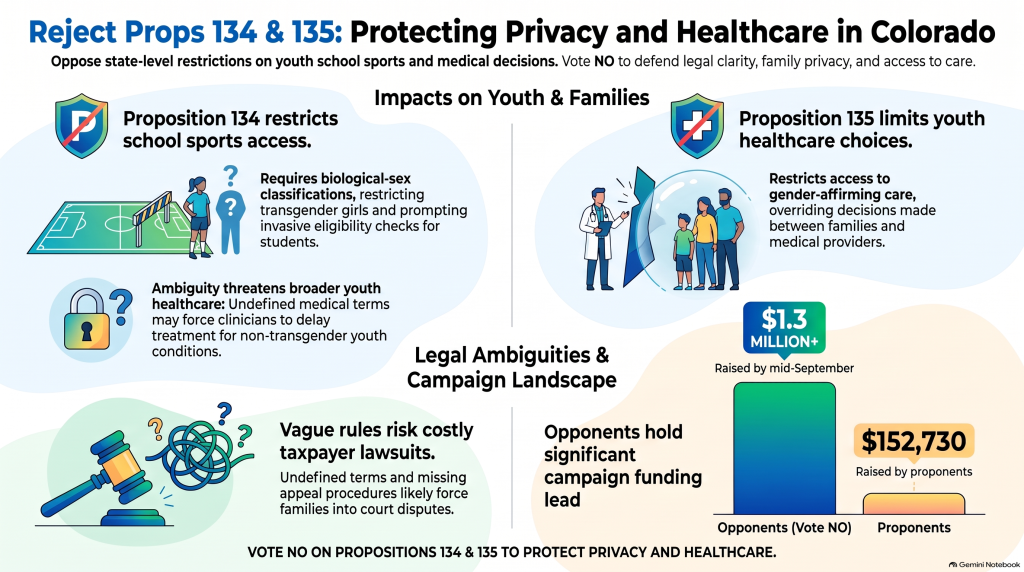
Colorado’s Propositions 134 and 135 would change rules affecting school sports and medical care for minors. If you vote on Proposition 134, you’d decide whether Colorado schools must classify athletic teams by biological sex. Transgender girls generally couldn’t join female teams unless a school offers no female team. The measure could also prompt invasive gender checks, raising privacy and emotional-well-being concerns for all students.
Proposition 135 would restrict gender-affirming medical care for minors, potentially prohibiting surgeries and hormone treatments for transgender youth while allowing exceptions for intersex surgeries. Together, the measures would place state rules between families and decisions about sports participation and healthcare, raising concerns about parental rights and family autonomy. Your vote determines whether these changes become Colorado policy; medical organizations, educators, and advocacy groups oppose them as government overreach.

If Colorado voters approve Propositions 134 and 135, state and local officials could gain greater influence over decisions that families and medical professionals now make about children’s sports participation and healthcare. In local elections, candidates could campaign on how they’d enforce these measures, shaping who sets policies affecting transgender students and other minors. Proposition 134 would put eligibility disputes in girls’ sports before public authorities, potentially prompting invasive checks and wider community scrutiny. Proposition 135 could restrict providers’ ability to offer certain care, shifting medical decisions away from families and clinicians. You can ask candidates whether they’ll protect privacy, evidence-based care, and families’ decision-making authority. The measures could also discourage families and professionals from speaking up. Colorado communities deserve policies guided by families not politics, and voters should weigh these consequences when choosing local representatives.

Beyond who enforces Propositions 134 and 135, voters should consider whether their rules are clear enough to apply consistently. These Colorado ballot measures leave key terms undefined, so you may not know how officials will apply them.
When you vote, consider whether these provisions give families, schools, and clinicians workable standards. Ambiguity could make compliance harder and produce inconsistent decisions across Colorado, even when similar circumstances arise.
Could Propositions 134 and 135 expose Colorado taxpayers to costly lawsuits? Their vague provisions could invite families and advocacy groups to challenge how state officials enforce them. Because neither measure establishes a clear appeals process, you may see affected people turn to court to contest government action and seek remedies.
Proposition 134’s invasive gender checks could prompt parents to sue over their children’s privacy and autonomy in sports. Proposition 135’s restrictions on medical care could spark legal disputes over parental rights and families’ ability to make informed decisions for minors. The measures’ broad reach may also create uncertainty for schools, providers, and state agencies. If you’re weighing these proposals at the ballot box, consider that litigation could strain Colorado’s courts and public resources, while leaving families and officials to navigate unresolved legal questions.
Before voting on Propositions 134 and 135, verify what each measure authorizes and how it could affect Colorado families. Read the ballot language, not just campaign claims, and consider how each proposition could reach beyond transgender people.
You should also confirm the November 3 voting deadline and assess how these measures could shift personal medical and family decisions to government. As a Colorado voter, weigh the text, practical effects, and available remedies before marking your ballot.
If enacted, Props 134 and 135 could restrict transgender adults’ access to gender-affirming healthcare in Colorado, depending on their provisions and implementation. You could face limits on treatment options, continuity of care, or decisions made with your healthcare provider. The measures may also create uncertainty for providers and affect care beyond transgender patients. Before voting, review each proposition’s official ballot language; your vote determines whether these restrictions become Colorado law.
Gender-affirming care is a bridge between your health needs and respectful, individualized treatment. It can include counseling, social support, puberty-related care, hormone therapy, or other clinically appropriate services for transgender people; not everyone needs or chooses the same care. In Colorado, qualified providers assess each patient’s circumstances and discuss options. As you consider Props 134 and 135, distinguish campaign claims from the measures’ actual legal effects before voting.
Restrictions on gender-affirming care could also limit treatment for non-transgender Colorado youth when doctors use similar medications or procedures for other conditions. For example, a young person might need hormone-related medication to address a medical disorder, or surgery to treat an injury or disease. If a law’s definitions or exceptions are unclear, you could see providers delay care, seek legal guidance, or avoid treatment—so review each proposition’s actual text before voting.
Your patient and their healthcare provider should make medical decisions together, based on individual needs and sound medical evidence—not political pressure. In Colorado, why should a ballot measure override that trusted relationship? As you consider Props 134 and 135, weigh how their restrictions could affect access to care for transgender people and other youth. You can vote against these measures to support patient-provider decision-making and protect access to medically appropriate treatment.
You can find reliable information about gender-affirming healthcare through Colorado’s Department of Public Health and Environment, licensed healthcare providers, major medical associations, and peer-reviewed research. For election details, check the Colorado Secretary of State’s official website and your county clerk’s election information. Read the full text and official fiscal analyses of Propositions 134 and 135 before voting. Compare claims with primary sources, and ask qualified clinicians how proposed restrictions could affect care.
Before you vote, read the official ballot language and check what each measure actually changes; don’t rely on a slogan. Colorado elections are like a relay: every rule affects who carries the next decision forward. Imagine a local race decided by a handful of ballots—unclear eligibility rules or added procedures could shape its outcome and invite disputes. You can protect fair, predictable elections by weighing the text, legal effects, and costs of Props 134 and 135 before casting your ballot.

 Featured PostsOctober 8, 2026Say NO to Props 134 & 135 in Colorado
 Featured PostsSeptember 29, 2026A Kansas Law Voided 1,700 Licenses. Now Judges Must Decide Whether It Stands
 Featured PostsSeptember 29, 2026Election Season & Transgender Rights: Reporting Responsibly in a Divided America
 Featured PostsSeptember 29, 2026Privacy, Dignity, and Rights: The Transgender Bathroom Controversy