How to Undo Decades of Internalized Transphobia

Internalized transphobia can feel like a fog you’ve breathed for so long you forget it isn’t air. You didn’t choose it, and you can unlearn it with steady, compassionate practice. You start by noticing shame in your body, naming the thought, and testing it against real evidence of who you are. You build support through affirming peers, media, and clinicians, then practice micro-integrity in everyday moments. The next step is the one most people skip…
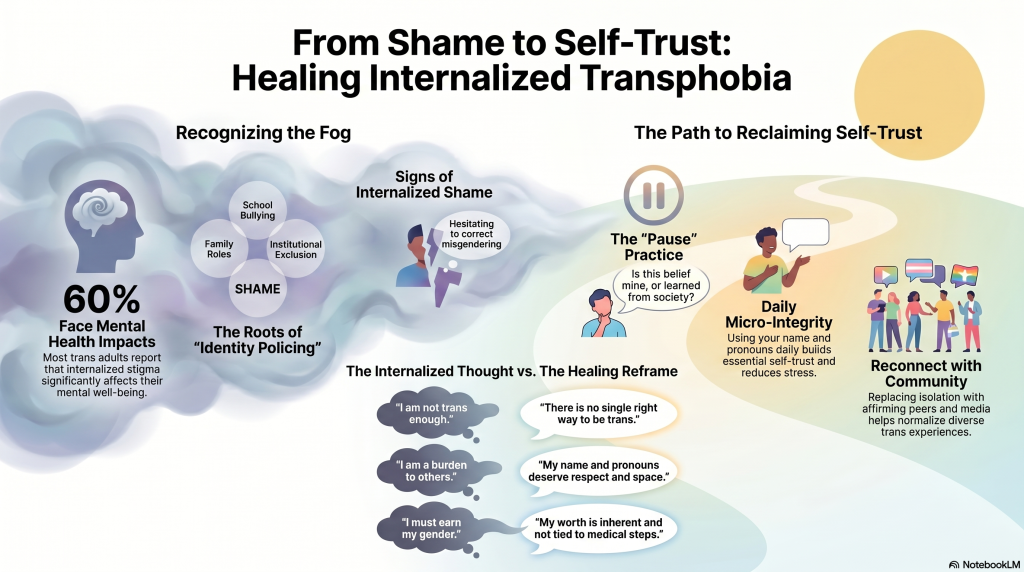
Even if you fully support trans rights, you can still absorb society’s cissexist messages and turn them inward. Internalized transphobia is when you unconsciously take in negative cultural beliefs about trans and gender-nonconforming people and aim them at yourself, creating shame, self-doubt, or pressure to distance from your gender.
This definition overview matters because research links internalized stigma to higher depression, anxiety, and suicidal ideation. You may learn these beliefs through family demands to conform, school rules that police gender, religious condemnation, bullying, or conversion therapy. Internalized transphobia can also shape choices, like delaying gender-affirming healthcare, avoiding coming out, or withdrawing socially, which harms holistic health. Your gender exists on an identity spectrum, and your worth isn’t something you have to earn.

Because internalized transphobia often works quietly, you might notice it more in your thoughts and habits than in anything you’d call “self-hatred.” You may engage in identity policing, believing there’s a “right” way to be trans, or thinking you’re “not trans enough” if you don’t match stereotypes. You might hesitate to correct people on your name or pronouns, or choose closet avoidance to avoid “burdening” others. You may tie your worth to visible medical steps—hormones, surgeries, passing—or feel you must prove your gender to be taken seriously. You might avoid other trans people or community spaces out of fear of being judged or “found out.” Over time, these patterns can show up as secrecy, harsh self-criticism, anxiety, depression, or delaying care and reporting harm.

In the moment, internalized transphobia can show up as a flash of shame—an urge to go quiet, to hide, or to “correct” yourself—so the initial move is to pause and name what’s happening. Use a Pause practice: breathe, feel your feet, and ask, “Is this belief mine, or learned from cissexist messages?” That question creates space between you and the thought.
Then reframe with evidence: gender diversity is broad, research shows there’s no single “right” trans experience, and your worth isn’t earned through appearance or procedures. Use Scripted affirmations to act fast: “My name is X, my pronouns are Y,” or “I don’t owe an explanation.” Redirect attention toward affirming media, trans creators, or peers. Track small wins; repetition rewires shame.
Internalized transphobia doesn’t appear out of nowhere; it grows from repeated cissexist messages that teach you cisgender identity equals “normal” and anything else deserves scrutiny. You absorb cues from family messaging that enforces strict roles, from schools that punish gender-nonconforming play, and from peers who bully you for standing out. Over time, those early experiences can predict lasting self-doubt.
Institutions reinforce it, too: gender-segregated restrooms, exclusionary sports rules, workplace bias, and healthcare gatekeeping can signal that your identity is unsafe or illegitimate. Conversion therapy and denial of needed care deepen that lesson. When media representation is hostile—or when you rarely see trans people portrayed with dignity—you may internalize shame. Trauma like rejection or abuse can compound this, increasing avoidance, depression, and suicidality.
Even when shame has felt like your default setting for years, you can rebuild self-trust and pride through small, consistent actions that prove to your nervous system you’re safe with yourself. Start with micro integrity: use your chosen name and pronouns daily, and correct misgendering when you can. These repeated affirmations reduce minority stress and support self-esteem over time.
Train your mind, too. Use CBT skills to catch the thought (“I’m not real”) and reframe it (“My gender is valid, and I deserve respect”), which can lower shame and depressive symptoms. Stay connected to trans-affirming peers, creators, or a gender-affirming therapist; social support predicts resilience. Set trackable goals—one brave conversation a month, one meeting attended—and practice community celebration of each step forward.
Studies suggest around 60% of trans adults report internalized stigma affecting mental health. You deconstruct internalized transphobia by using self reflection exercises to spot specific shame thoughts, then tracing where you learned them and labeling them as cissexist conditioning—not truth. Practice narrative reframing in the moment: replace “I’m not trans enough” with “My gender’s valid.” Seek affirming therapy or peer groups and repeat small affirming actions to build new evidence.
You develop internalized transphobia when social stigma and cultural conditioning teach you that being trans is wrong, unsafe, or less worthy. You absorb repeated childhood messages from family, school, and media that punish gender nonconformity. Institutional cissexism, like exclusionary bathrooms, sports, or healthcare, reinforces it. Bullying, abuse, or conversion efforts intensify shame and fear. Over time, chronic discrimination and narrow “acceptable” trans narratives can make you doubt your legitimacy.
Yes, gender dysphoria can lessen or sometimes resolve without medical gender-affirming care, but it doesn’t for everyone. You may feel relief through social affirmation, supportive environments, and therapy approaches like CBT or ACT that target distress and coping. You can also use identity exploration to clarify what aspects are social versus body-based. If dysphoria stays intense or persistent, you might consider medical options with a clinician.
You comfort them by holding steady like a lighthouse in fog: you use active listening, name their fear as understandable, and place blame on cissexism, not them. You ask reflective questions—“When did you initially learn that message?” “What feels safer right now?”—and follow their pace on visibility. You celebrate small wins (name, pronouns, clothes), and you offer concrete support: trans-affirming therapy, peer groups, Trans Lifeline.
You’ve spent years walking through a house where mirrors were covered and your name was whispered like a warning. Internalized transphobia is that old script, not your truth. When it shows up, you pause, label it, and answer with evidence: you exist, you’re real, you’re valid. You practice micro-integrity—use your name, correct misgendering, seek affirming care and community. Each small act opens a window. Over time, light becomes yours.

 Featured PostsSeptember 5, 2026Administration Move Targets Trans Visibility
 Featured PostsAugust 27, 2026Transgender Identity: Ancient Roots and Modern Understanding
 Featured PostsAugust 27, 2026What Does Non-Binary Mean?
 Featured PostsAugust 27, 2026A Guide to Dating a Trans Woman