The Weight Lifted: Navigating Your FTM Top Surgery Recovery

Did you know that over 95% of FTM top surgery patients report satisfaction with their results? That’s a demonstration of proper preparation and care. As you commence on this transformative expedition, you’ll encounter both excitement and challenges. Managing pain, tending to scars, and knowing when to rest or get moving are key. This guide will walk you through the steps to guarantee a smooth recovery. Are you ready to take control of your post-op experience?
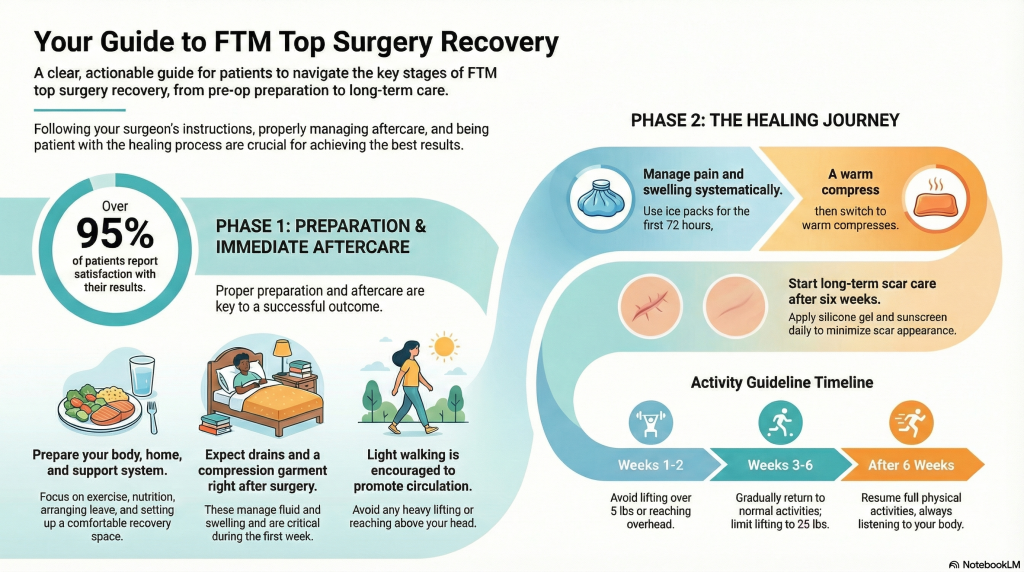

As you emerge from FTM top surgery, it’s normal to feel a mix of excitement and apprehension about the healing process. You’ll likely experience tightness and swelling, manageable with prescribed pain medications. Surgical drains will be in place to help manage fluid buildup, and you’ll need to monitor the output closely. These drains are typically removed within 5-7 days, depending on how much fluid they collect. It’s vital to wear a compression garment continuously for at least the initial week. This garment helps reduce swelling and provides important support to the surgical area. Remember to attend your follow-up appointments for dressing changes and progress checks, and avoid any heavy lifting. Light walking, however, is encouraged to promote circulation.
Before diving into your FTM top surgery expedition, it’s crucial to prepare effectively to guarantee a smooth recovery. Start by focusing on both your physical and mental preparation. Engage in pre-surgery exercise to improve your health and muscle tone. Pay attention to nutrition tips; a balanced diet supports healing. Avoid smoking and nicotine for 21 days before and after the procedure, and steer clear of alcohol for a week post-op. Inform your employer about your medical leave well in advance. Establish a solid support system for the initial three weeks after surgery, and prepare a comfortable recovery space with necessities.

How can you best manage the pain and swelling after your FTM top surgery? Pain management and swelling reduction are essential for a smooth recovery. You might feel tightness or pressure, but prescribed non-opioid medications can help. Wearing a compression binder snugly (without chafing) is vital for the initial week.
Apply ice packs during the initial 72 hours to keep swelling down, then switch to warm compresses for added comfort. A low-sodium diet aids in swelling reduction. Stay alert for sudden increases in pain or other signs of complications. Here’s a quick guide:
| Pain Management Tips | Swelling Reduction Tips |
|---|---|
| Use prescribed medications | Wear compression binder |
| Report excessive tightness | Apply ice packs (initial 72 hours) |
| Monitor for complications | Use warm compresses later |
| Stay in touch with your care team | Follow a low-sodium diet |
Managing pain and swelling lays a strong foundation for your recovery, and knowing which activities to avoid post-surgery will guarantee you’re healing effectively. During the initial two weeks, refrain from lifting over 5 pounds or reaching above your head. This is vital to avoid complications. As you progress in your recovery timeline, light cardio like walking can begin after two weeks, but remember to avoid vigorous arm movements. Here’s a quick guide:
Incorporating post-op exercises wisely guarantees successful healing.

As you begin your post-surgery path, taking care of scars and nipples is essential for achieving the finest healing outcomes. Start scar management by applying silicone gel daily about six weeks post-op. This practice aids healing and minimizes visibility, as scars mature over 12 months. Also, apply sunscreen to protect scars from sun exposure, preventing discoloration. For nipple maintenance, follow your surgeon’s instructions diligently. Keep the area clean and dry to promote healing and avoid complications. Normal scabbing is expected—resist picking to guarantee ideal scar formation. If interested in scar camouflage or nipple restoration tattoos, consult professionals well-versed in medical tattooing, but wait at least 12 months post-surgery. Your dedication to care will support positive healing.
You’ll want to wait at least six to eight weeks before wearing a binder again. Binder safety is vital, as prematurely binding can disrupt the healing timeline and potentially cause complications. Listen to your body and consult your surgeon about your progress. It’s important to prioritize comfort and gradual integration. Remember, your healing path is unique, and it’s okay to take the time you need to guarantee a successful recovery.
After surgery, you might experience a range of emotional changes, from relief and happiness to anxiety or even depression. It’s crucial to prioritize your mental health during this time. Seek emotional support from friends, family, or mental health professionals who understand your path. Remember, it’s completely normal to have mixed feelings. Be patient with yourself and acknowledge that healing is both a physical and emotional process. You’re not alone in this change.
You shouldn’t sleep on your stomach post-surgery as it can hinder your recovery. Opt for sleeping positions that keep you on your back or slightly raised with pillows. These positions help reduce swelling and pressure on surgical sites. Recovery tips include using a supportive pillow under your knees to improve comfort. Remember, listening to your body and following your surgeon’s advice is essential for a smooth recovery. You can do this!
Imagine your body as a garden needing nourishment to flourish. Yes, there are dietary recommendations for ideal healing. Focus on enhancing your protein intake; think of proteins as the building blocks repairing and strengthening your tissues. Don’t underestimate hydration’s importance; keeping well-hydrated is like watering your garden, ensuring every part thrives. Adopt a balanced diet rich in nutrients, and your body will thank you with a smoother recovery path.
After surgery, you’ll want comfortable post-op loungewear. Opt for loose, breathable fabrics like cotton or bamboo to guarantee comfort and prevent irritation. Look for supportive garments, such as a post-surgical bra or compression vest, which can aid healing and provide the required support. Front-closure tops are convenient and minimize strain. It’s crucial to prioritize your comfort and recovery, so choose clothing that makes you feel both supported and relaxed.
Remember, you’re not alone on this expedition. As you accept your new self, focus on healing with patience and care. Follow your surgeon’s advice, lean on your support system, and attend those essential follow-up appointments. With time, the tightness will ease, and the scars will fade, leaving behind the silhouette of your true self. Like a phoenix rising, you’re transforming, and every step you take today paves the way for your brighter tomorrow.
Originally posted 2026-02-02 13:16:07.

 Featured PostsOctober 21, 2026The Trans Journey to Passing
 Activism and ChangeOctober 17, 2026Trans Rights at Risk? The Implications of a Trump 2024 Win
 Featured PostsOctober 17, 2026One Step Closer: Trans and Passing
 Featured PostsOctober 14, 2026Navigating Manhood: The Challenges FTM Individuals Face