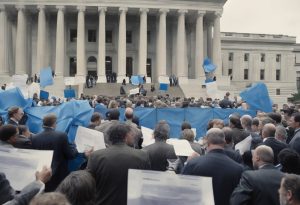
Opinion/Analytical: The Minneapolis Arrest of Don Lemon: A Dangerous Precedent for Modern Journalism

Federal agents arrested Don Lemon while he was covering the Grammy Awards in Los Angeles, in connection with a protest that disrupted a church service at Cities Church in St. Paul, Minnesota, on January 18. The protest, aimed at Pastor David Easterwood’s affiliation with ICE, sought to draw attention to concerns over ICE’s controversial actions and the deaths linked to its policies.
Lemon’s involvement, according to his attorney Abbe Lowell, was purely in a journalistic capacity, and the charges of conspiracy to deprive rights and interfering with Primary Amendment rights are being vigorously challenged in court.
This incident raises pertinent questions about journalism ethics and federal overreach. The arrest of Lemon, alongside fellow journalist Georgia Fort and two others, has sparked outrage among press freedom advocates, who argue that such actions pose a considerable threat to journalism and Primary Amendment protections.
Critics emphasize that targeting journalists for covering protests could set a dangerous precedent, effectively stifling free speech and the public’s right to information.
The legal proceedings against Lemon have been further complicated by a previous judge’s refusal to approve a criminal complaint, highlighting potential procedural inconsistencies. Attorney General Pam Bondi confirmed the arrests via social media, bypassing traditional legal channels, which some interpret as an instance of federal overreach.
This case underscores the delicate balance between lawful protest coverage and the perceived exertion of excessive federal power.
Ultimately, Don Lemon’s arrest is more than a legal matter; it’s a pivotal moment for examining how journalists navigate the complex terrain of ethics and federal authority.
The outcome could considerably impact the boundaries of press freedom and governmental intervention in journalistic practices, setting a precedent for future interactions between the press and federal agencies.

 Featured PostsSeptember 20, 2026Full or Partial Transition? Understanding the Options for Older Trans Adults
 Activism and ChangeAugust 27, 2026From Erasure to Oppression: The Rise of Anti-Trans Laws
 Activism and ChangeAugust 27, 2026The Power of Resistance: Lessons From the Stonewall Riots
 Featured PostsAugust 27, 2026Dysphoria: Acknowledging the Pain, Finding Hope