Full or Partial Transition? Understanding the Options for Older Trans Adults
You may be considering a change that lets your outer life better reflect who you’ve always been. At any stage of life, changeover can be full, partial, gradual, or centered only on the steps that bring you comfort. You might change your name or presentation, investigate hormones, pursue surgery, or choose none of these. Your health, finances, relationships, and independence all matter—and the next choices can be shaped around you.
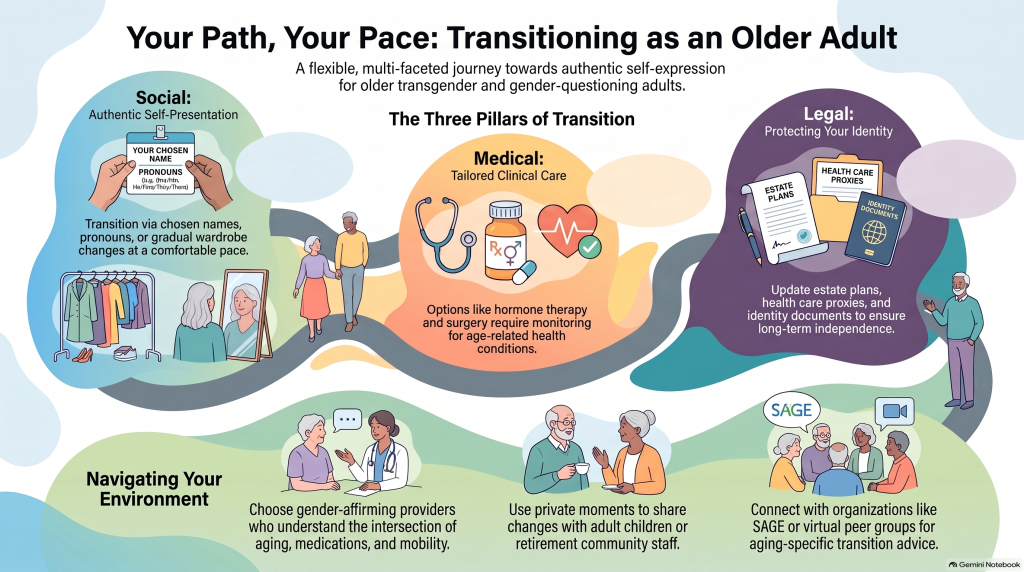
Change later in life can take many forms, and you can choose the options that best support your health, safety, relationships, and sense of self. You might socially shift by using a new name, pronouns, clothing, hairstyle, or voice. You may pursue medical care, such as hormone therapy, gender-affirming surgery, or treatments that address specific goals. Some people combine social and medical changes, while others choose only certain steps or none at all.
Your years, health history, finances, housing, and support network can shape what feels possible and comfortable. You deserve respectful care that considers medications, mobility, chronic conditions, and long-term wellbeing. Community resources can connect you with affirming providers and peers. Caregiver support can also help trusted people understand your needs while honoring your independence, privacy, and identity.

Choosing gender-affirming steps later in life starts with what matters most to you, whether that’s feeling more comfortable in daily life, improving wellbeing, or being recognized accurately by others. You don’t have to follow anyone else’s timeline or pursue every available option. Consider your health, finances, relationships, housing, privacy, and the energy you have for change.
You might begin with conversations with a gender-affirming clinician, therapist, or trusted advocate. Ask practical questions about benefits, risks, costs, and recovery needs. Small lifestyle adjustments can make a meaningful difference while you decide what feels sustainable. Community support can also help you weigh choices without pressure, especially when you’re navigating long-established routines or caregiving responsibilities. Your shift can be gradual, selective, and revisited over time. The right steps are the ones that support your safety, comfort, and sense of self.

Social changeover lets you shape how others recognize and address you in ways that feel right for this stage of life. You might begin by sharing chosen names or pronouns with one trusted friend, a support group, or an affirming family member. There’s no deadline, and you don’t owe everyone the same level of disclosure.
Presentation can evolve gradually, too. Wardrobe adaptation may mean adding colors, accessories, or styles that feel more like you while respecting comfort, mobility, budget, and your daily routines. You can practice introductions, signatures, and pronoun responses before using them in wider settings. Some people update social media or community contacts; others keep changes within selected circles. Your history remains yours. Social shift isn’t about erasing the life you’ve lived—it’s about making room for greater authenticity, safety, and ease now.
Medical shift can include hormone therapy, gender-affirming surgeries, hair restoration or removal, voice care, and other treatments, but you can consider any option at your own pace. You don’t need to pursue every intervention for your identity to be valid. A clinician experienced in transgender and older-adult care can help you weigh likely benefits against your health history, medications, and goals.
Hormone therapy may ease dysphoria and support physical changes that feel affirming. Regular Hormone monitoring helps your care team track levels, blood pressure, bone health, and other concerns that can matter more with aging. Surgery can also bring meaningful relief, yet Surgical risks may increase with conditions such as heart disease, diabetes, or reduced healing capacity. Ask questions, seek second opinions, and choose care that respects your comfort, wellbeing, and timeline.
As you consider change later in life, legal, financial, and personal-safety planning can help protect your choices and reduce uncertainty. You deserve support that respects your identity, independence, and long-term needs.
Create a safety plan for unsupportive relatives or environments, and keep trusted contacts close.
Yes, you can undergo a gender change while living in a retirement community. You deserve safety, respect, and control over your identity at every stage of life. Start at your own pace, whether that means changing your name, clothing, pronouns, or pursuing medical care. Consider privacy concerns and roommate dynamics, and ask staff about nondiscrimination policies, confidentiality, and supportive services. You can also connect with trusted friends, LGBTQ+ aging groups, or advocates who’ll help you navigate conversations confidently.
Start gently: “I want to share something significant about who I am.” Choose a calm, private moment, and explain your change in your own words. Invite open dialogue, but don’t feel pressured to answer every question immediately. You can set boundaries around names, pronouns, privacy, and respectful behavior. Give your adult children time to process, while reminding them that your identity isn’t new—it’s becoming more visible.
Yes, you can find trans-friendly support groups designed for older adults through LGBTQ+ community centers, SAGE, local Pride organizations, and online meetups. Ask about peer mentorship, social gatherings, and art therapy groups that welcome people exploring identity later in life. You deserve spaces where others understand aging, family changes, healthcare concerns, and transition decisions. If local options feel limited, virtual groups can offer privacy, connection, and regular encouragement.
Faith communities can be a lighthouse during your shift, offering belonging, care, and practical support. You may find affirming congregations that provide spiritual counseling, inclusive liturgy, peer connections, and help steering family conversations. Ask leaders directly about their policies, pronouns, and commitment to transgender inclusion. You deserve a community that honors your lived experience, respects your pace, and welcomes every part of you without asking you to shrink yourself.
You can’t predict every feeling, but you can reduce regret by moving at your own pace, exploring reversible steps, and working with affirming professionals. Later-life change may bring an emotional aftermath or identity reevaluation, and neither means you’ve failed. You’re allowed to pause, adjust, or redefine what change means for you. Your history, relationships, health, and goals deserve thoughtful attention. Choose support that respects your autonomy and experience.
There’s no finish line waiting with a clipboard to grade your shift. You choose the steps that help you feel more at home in your body, relationships, and daily life—whether that means a new name, hormones, surgery, or simply clothing that at last feels like yours. Ironically, the bravest “big change” may be moving at your own pace. With informed care, practical planning, and support, you can protect your wellbeing while honoring who you’ve always been.

 Featured PostsSeptember 20, 2026Full or Partial Transition? Understanding the Options for Older Trans Adults
 Activism and ChangeAugust 27, 2026The Power of Resistance: Lessons From the Stonewall Riots
 Featured PostsAugust 27, 2026Dysphoria: Acknowledging the Pain, Finding Hope
 Featured PostsAugust 27, 2026Transgender Identity: Ancient Roots and Modern Understanding