The “Bounty Hunter” Bill: Kansas Republicans Advance Sweeping New Anti-Trans Restrictions

Imagine walking through a labyrinth with shifting walls; that’s what maneuvering Kansas’s new “bounty hunter” bill might feel like for many. This legislation, driven by Kansas Republicans, imposes severe restrictions on transgender individuals, particularly targeting bathroom access. By allowing private citizens to sue for violations, it’s changing the legal landscape in ways that could incentivize discrimination and vigilantism. How will these changes ripple through the lives of transgender Kansans and beyond?
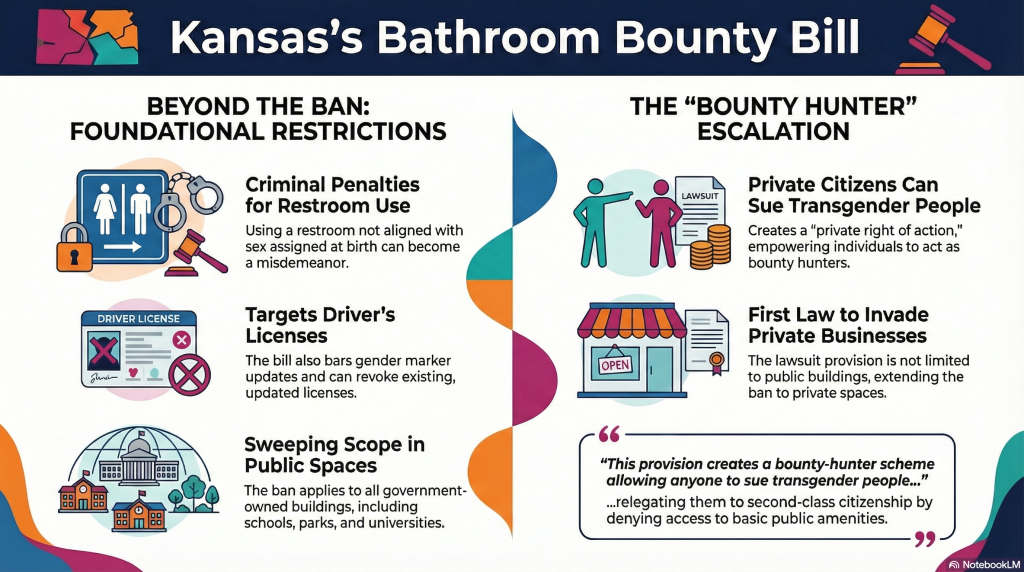

While controversy surrounds the Kansas Anti-Trans Bill, its key provisions are clear and impactful. The bill specifically targets transgender individuals by enforcing strict bathroom restrictions. You’re prohibited from using bathrooms aligning with your gender identity, which marks a significant shift from existing laws that only addressed public facilities. This legislation extends these restrictions to private bathrooms as well, a pioneering instance in the U.S. Violators of these bathroom usage rules face serious consequences, including misdemeanor charges and even potential jail time. The bill’s reach is broad, affecting both public and private spaces, expanding state oversight into personal and private choices. This controversial approach raises significant concerns about enforcement and personal rights.

As Kansas enacts SB 244 and HB 2426, the legal ramifications for transgender individuals intensify, particularly due to the introduction of a “private right of action.” This legal provision allows private citizens to sue transgender people who use bathrooms matching their gender identity, effectively criminalizing their use of gender-appropriate facilities. The concept draws on historical legal precedents but raises additional concerns:

The enactment of Kansas’ SB 244 and HB 2426 profoundly affects transgender individuals by legally restricting their access to bathrooms that align with their gender identity. This legislation places transgender safety at risk, as it subjects you to potential misdemeanor charges and jail time, fostering an environment of fear and discrimination. The allowance for private citizens to act as “bounty hunters” further exacerbates this hostile climate, potentially leading to increased harassment. Such measures can greatly harm your mental health, as constant scrutiny and limitations on public bathroom access heighten stress and anxiety levels. Advocates argue that these restrictions contribute to a sense of second-class citizenship, deeply affecting your daily life and well-being in both public and private spaces.
Understanding the impact of Kansas’ SB 244 and HB 2426 on transgender lives leads us to examine the political drivers and legislative tactics behind these measures. Political motivations among Kansas Republicans mirror a national GOP trend to restrict transgender rights, bolstered by Attorney General Kris Kobach’s endorsement. Legislative strategies play an essential role, employing “gut-and-go” tactics to limit public input and transparency. This approach signals urgency and alignment within the party to push these measures through swiftly.
Key points include:
While Kansas moves forward with restrictive legislation targeting transgender individuals, advocacy groups aren’t standing idly by. They’re mobilizing against Bills SB 244 and HB 2426, which impose severe bathroom usage restrictions and allow private citizens to act as “bounty hunters.” Advocacy strategies include community mobilization to raise awareness about the bills’ potential to criminalize transgender existence and foster discrimination. These organizations are preparing legal challenges, arguing that the legislation violates civil rights and undermines transgender dignity. Advocacy efforts focus on protecting the rights and safety of transgender individuals by highlighting the harmful impact of these laws. As the bills progress, significant pushback from LGBTQ+ rights organizations is anticipated, aiming to halt these measures and safeguard public spaces for all.
Kansas isn’t very safe for trans people, especially with the new legislation. The Kansas legislation poses significant risks to trans safety, as it can lead to increased discrimination, harassment, and even legal penalties. Advocates warn that such measures foster a hostile environment, making daily life more challenging for trans individuals. It’s essential to stay informed and involved in advocacy efforts to support trans rights and guarantee their safety in the state.
The new Kansas Woman Law, part of Kansas legislation, restricts bathroom access for transgender individuals, asserting women’s rights by limiting facility use to biological sex. It introduces criminal penalties and allows citizens to sue those violating the law, creating legal vulnerabilities for transgender people. This legislation affects both public and private bathrooms, posing regulatory challenges and fostering a climate of vigilance and fear regarding transgender rights in Kansas.
As you ponder the Kansas legislation, consider its implications carefully. This bill, while positioned as a measure for public order, considerably impacts transgender individuals‘ everyday experiences. By empowering citizens to engage more actively in community oversight, the law introduces new dynamics to social interactions. However, amidst this evolving landscape, advocacy groups are stepping up, ready to challenge these changes through the judicial system, highlighting the ongoing dialogue and legal scrutiny surrounding such policies.

 Featured PostsJanuary 30, 2026Threat Assessment: 47 Organizations Launch National Initiative Against LGBTQ+ Marital Equality
 Featured PostsJanuary 30, 2026My Wife Doesn’t Know I’m Trans
 News and AdvocacyJanuary 30, 2026Opinion/Analytical: The Minneapolis Arrest of Don Lemon: A Dangerous Precedent for Modern Journalism
 Activism and ChangeJanuary 29, 2026Strategic Shifts: Analyzing the Latest GOP Policy Proposals Regarding LGBTQ+ Households