What I Learned Living as a Man and a Woman

Living as both a man and a woman opens your eyes to the complexities of gender identity. You observe firsthand how biases shape professional experiences and social interactions. Acceptance from family enhances your self-worth, while traversing gender privilege reveals resilience in facing barriers. You learn the importance of empathy and active listening, understanding the unique challenges others face. Each experience enriches your perspective and shapes your path towards authenticity, offering insights just waiting to be examined further.
As you navigate the complexities of gender identity in your professional life, you may find yourself grappling with both internal and external challenges. Transition experiences can reshape your understanding of gender roles and communication styles, often revealing workplace bias that you hadn’t noticed before. Engaging in self-advocacy becomes vital, as you learn to assert your identity amidst professional challenges. Building confidence is a gradual process, but each step forward helps dismantle stereotypes. You’ll encounter varied responses based on your gender identity, which may influence how colleagues perceive your abilities. Embracing this expedition allows you to challenge preconceived notions, fostering a more inclusive environment while strengthening your resolve to navigate these complexities authentically and effectively.

How do social interactions shift when you traverse the world through a different gender lens? You quickly realize how deeply entrenched gender stereotypes shape communication styles and social expectations. As a woman, you may face condescension or doubt about your expertise, a stark contrast to your previous experiences. You witness the subtle power dynamics at play, where emotional labor becomes a constant necessity, often requiring you to validate your identity and knowledge in conversations. Intersectional identities further complicate these dynamics, revealing how race and gender intertwine in shaping perceptions. Each interaction carries weight, highlighting the everyday challenges women face, from apologizing for facts to traversing biases. This expedition deepens your understanding of the complexities surrounding gender, urging empathy in every exchange.
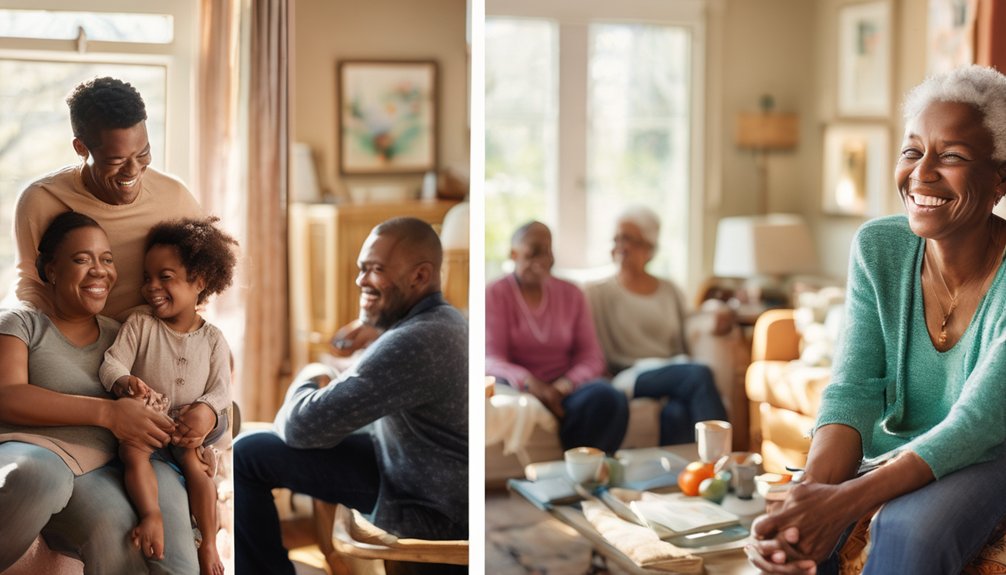
When you find acceptance from your family after a significant change, it can profoundly influence your path of personal growth. Family reconciliation isn’t just about mending relationships; it’s a powerful catalyst for your personal transformation. When your loved ones welcome your voyage, it affirms your identity and nurtures your self-worth. Their acceptance can ease the burden of societal judgment, allowing you to investigate your true self without fear. You may uncover newfound strength and resilience, as their support fosters a sense of belonging. This expedition isn’t always easy, but it’s crucial. Welcoming their love helps you heal and grow, ultimately shaping a more authentic life. Remember, you’re not alone; their willingness to understand can illuminate your path forward.
Understanding gender privilege and empowerment can feel like peeling back layers of a complex onion, where each layer reveals insights into societal norms and personal experiences. As you investigate your path, you may recognize how gender privilege shapes interactions and opportunities. You might notice that empowerment strategies differ notably between genders; women often navigate spaces with resilience, while men may not face the same barriers. Reflecting on these dynamics can deepen your empathy and awareness, prompting you to challenge assumptions. It’s vital to advocate for equity, recognizing that empowerment isn’t just for one gender but for everyone. By understanding these layers, you can cultivate a more inclusive environment that values diverse experiences and perspectives.
Empathy and awareness of diverse experiences are fundamental in fostering genuine connections and promoting inclusivity. You can cultivate empathy by actively listening to others’ stories, recognizing their unique challenges and triumphs. When you step into someone else’s shoes, you gain insight into their diverse experiences, allowing your understanding to deepen. Remember, every person’s path is different, shaped by their identities and circumstances. Acknowledging this can transform your perspective, making you more compassionate and supportive. As you practice empathy cultivation, challenge your assumptions and biases. This process isn’t just about understanding others; it’s also about growing yourself. Welcome the lessons learned from diverse experiences, and you’ll enrich your life and the lives of those around you, creating a more inclusive world.
After shifting, your hobby exploration deepens considerably. You find yourself drawn to activities that resonate more with your authentic self, like crafting or community involvement. Social activities shift too; you engage in more collaborative experiences, like group yoga or book clubs, where connection flourishes. You notice how these changes improve your sense of belonging and empowerment. Embracing new interests fosters growth, allowing you to appreciate the richness of diverse experiences in your life.
You might think fashion choices are trivial, but they’re essential for gender expression. For women’s clothing, I love brands like Aritzia and Free People, which offer stylish options that celebrate femininity. On the men’s side, I appreciate Uniqlo and Bonobos for their clean lines and comfort. These brands empower you to express your identity authentically. Embracing your style is more than just clothing; it’s a powerful statement of who you are inside.
You approach dating differently as a woman by recognizing the shift in dating expectations and communication styles. You find that honesty and openness are essential, as they help set clear boundaries and foster genuine connections. You’re more attuned to the nuances of conversations, ensuring your voice is heard while also encouraging your partner to express themselves. This empathetic approach not only deepens your relationships but also creates a space where mutual respect thrives.
If you’re considering a gender change, start by building strong support systems. Studies show that trans individuals with supportive networks have a 62% lower risk of mental health issues. Surround yourself with understanding friends or communities; they’ll help you navigate this path. Remember, it’s essential to prioritize your mental health throughout the process. Be kind to yourself, accept your authenticity, and take it one step at a time; you deserve love and acceptance.
Your culinary exploration post-transition might’ve shifted considerably. You may find yourself drawn to more diverse flavors and ingredients, embracing new dietary preferences that reflect your evolving identity. Cooking can become a form of self-expression, allowing you to experiment with recipes that resonate with your path. It’s not just about sustenance; it’s about nurturing your spirit and celebrating who you are. Each dish can reflect a piece of your authentic self.
As you reflect on your expedition through the lenses of both man and woman, you realize that understanding gender dynamics is essential for fostering empathy and connection. You’ve seen how privilege and prejudice shape experiences differently, prompting you to ponder: what could the world look like if everyone accepted these lessons? By sharing your insights and cultivating a deeper appreciation for each individual’s struggles, you empower not just yourself, but others to break free from societal constraints and celebrate their authenticity.

 News and AdvocacySeptember 5, 2026Administration Move Targets Trans Visibility
 Featured PostsAugust 27, 2026Transgender Identity: Ancient Roots and Modern Understanding
 Featured PostsAugust 27, 2026What Does Non-Binary Mean?
 Featured PostsAugust 27, 2026A Guide to Dating a Trans Woman