Born This Way? The Truth About Trans Identities
Imagine standing in a bustling city, where every person you see carries a unique story about who they are and how they came to be. When you consider trans identities, it’s crucial to think about both the biological and social influences that shape them. You’ve probably wondered if people are born with their gender identity or if society plays a bigger role. This topic delves into these questions, examining genetic, neurological, and hormonal factors, while also scrutinizing the impact of societal expectations and pressures. You’ll find that understanding this intricate interplay can lead to greater acceptance and advocacy for trans individuals.
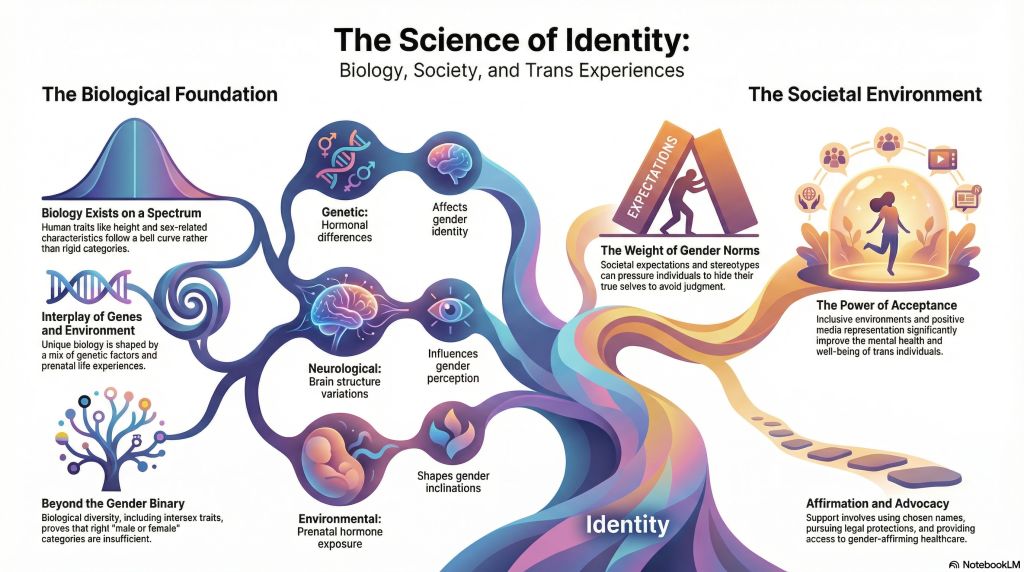
Understanding biological complexity and diversity means recognizing that traits like height and sex-related characteristics aren’t rigid but vary widely among individuals. For instance, if you look at height, you’ll notice people fall along a spectrum. Some are short, some are tall, and many are somewhere in between. This variability forms a bell curve, where most people cluster around an average height but there are outliers on both ends.
Sex-related traits work alike. While society often categorizes people strictly as male or female, biology tells a different story. Traits such as hormone levels, physical characteristics, and even chromosomes can vary considerably. For example, some people are born with intersex traits, meaning they’ve biological characteristics that don’t fit typical definitions of male or female. Just like height, sex characteristics exist along a spectrum.
Moreover, it’s crucial to realize that both genes and the environment shape these traits. Your unique biology is influenced by a mix of genetic factors and life experiences. This complexity and diversity create a rich tapestry of human variation, making it clear that rigid categories can’t capture the full range of human biology.
Embracing this understanding is key to appreciating the diversity inherent in all of us.
Society plays a significant role in shaping how individuals perceive and express their gender identity. From a young age, individuals are exposed to societal norms that dictate what is considered masculine or feminine. These norms can influence how individuals view themselves and others. For example, if a boy is interested in dolls, society might push him to conform to more ‘boyish’ activities.
As individuals grow, the pressure to fit into these gender stereotypes can be overwhelming. Many people find themselves hiding their true selves to avoid judgment or exclusion. However, it is important to understand that gender identity is not just about fitting into predefined boxes; it is a personal and often fluid experience.
Imagine living in a society that fully embraces gender diversity. In such a place, individuals would feel free to express their identity without fear. They would see people of all genders living authentically, breaking stereotypes, and setting their paths. Acceptance and visibility matter because they foster an environment where everyone can thrive.
Trans individuals often face significant challenges due to societal norms and prejudices. You might encounter discrimination in different settings, such as workplaces, schools, and even within your own family. For instance, using the bathroom that aligns with your gender identity can become a stressful ordeal because of restrictive laws and hostile attitudes. This societal resistance can lead to mental health struggles, including anxiety and depression.
Advocacy plays an important role in addressing these challenges. By supporting trans rights, you help promote inclusivity and equality. Education and awareness are key components. When you educate others about gender diversity, you challenge stereotypes and foster understanding. For example, schools that implement inclusive policies and curricula create safer environments for trans students.
Public figures and allies who speak out can also make a significant impact. When celebrities or community leaders advocate for trans rights, they bring visibility to the issues and encourage broader societal acceptance. Additionally, legal protections, such as anti-discrimination laws, are vital. They help make sure that trans individuals can live authentically without fear of persecution.
While advocating for trans rights addresses societal challenges, it’s also important to recognize the biological factors that shape identity. Understanding the role of biology can help explain why some people feel they were born with a particular gender identity, even if it doesn’t align with their assigned sex at birth.
Biology isn’t a straightforward blueprint. Traits like height, eye color, and yes, gender identity, fall along a spectrum influenced by multiple genes and environmental factors. For instance, just as there’s a range of heights in the population, gender identity can also vary widely.
Here’s a simple table to illustrate how biological factors influence identity:
| Factor | Example | Impact on Identity |
|---|---|---|
| Genetic | Hormonal differences | Affects gender identity |
| Neurological | Brain structure variations | Influences gender perception |
| Environmental | Prenatal hormone exposure | Shapes gender inclinations |
Understanding how identities are formed involves investigating the interplay between biology and societal influences. When you think about your identity, it’s not just about your biology—it’s also shaped by the world around you. For example, your gender identity might be influenced by how society views and treats different genders.
Imagine growing up in a place where traditional gender roles are strongly enforced. You might feel pressure to conform to those expectations, even if they don’t match how you feel inside. Conversely, living in a more accepting environment can help you investigate and understand your true self more freely.
Sometimes, understanding your gender identity can be a long process. You might spend years contemplating your feelings, especially if society’s binary view of gender complicates things. It’s not uncommon for trans individuals to grapple with these questions for a long time before coming to a realization.
Society’s acceptance and inclusivity play a vital role in this process. When people around you are supportive and open-minded, it becomes easier to acknowledge and express your true identity.
In the end, both biology and society work together to shape who you are and how you understand yourself.
Medical professionals support you during your transformation by providing hormone therapy, surgical options, and mental health counseling. They’ll guide you through informed consent, ensuring you understand the procedures and effects.
Regular check-ups monitor your health, adjusting treatments as needed. Moreover, they can connect you with support groups and resources, helping you navigate social and emotional aspects of evolving. Their goal is to support your well-being and affirm your identity.
Imagine maneuvering through a maze; that’s what legal rights for trans individuals can feel like across different countries.
In some places, you can change your legal gender easily, like in Argentina. In others, it’s a bureaucratic nightmare, requiring medical proof or court orders.
Countries like Canada and Germany offer strong protections, while others lag behind.
Always check local laws to understand your rights and possible hurdles.
Yes, there are specific healthcare needs unique to trans individuals. You might need access to hormone therapy, gender-affirming surgeries, and mental health support.
Regular medical checkups should consider your gender identity. It’s essential to find healthcare providers who understand trans health and respect your identity. This guarantees you receive appropriate care tailored to your unique needs, helping you lead a healthier, happier life.
Imagine you’re a lighthouse guiding your trans loved one through a storm. Start by listening and offering unconditional love.
Use their chosen name and pronouns, showing acceptance and respect. Educate yourself on gender identity issues and advocate for their rights.
Create a safe space at home where they feel valued. Attend support groups together to strengthen your bond and understanding.
Celebrate their path and milestones wholeheartedly.
Media representation plays a huge role in shaping public perception of trans identities. When you see positive and diverse portrayals of trans people in movies, TV shows, and news, it helps normalize their experiences. This visibility can challenge stereotypes and foster acceptance.
Conversely, negative or limited portrayals can reinforce prejudices. By supporting inclusive media, you contribute to a more understanding and accepting society for everyone.
In the end, you might think it’s all about biology or society, but guess what? It’s both. You can’t just point to one factor and say, ‘That’s it!’
The irony is, while you’re busy debating nature versus nurture, real people are grappling with these complexities daily.
So, instead of arguing, maybe focus on acceptance and understanding. After all, creating an inclusive world is far more productive than trying to solve an unsolvable puzzle.
Originally posted 2024-05-31 16:32:43.

 News and AdvocacySeptember 5, 2026Administration Move Targets Trans Visibility
 Featured PostsAugust 27, 2026Transgender Identity: Ancient Roots and Modern Understanding
 Featured PostsAugust 27, 2026What Does Non-Binary Mean?
 Featured PostsAugust 27, 2026A Guide to Dating a Trans Woman