In exploring Trump's ban on transgender service members, we uncover its profound implications for military readiness and the future of diversity in our armed forces.
0:00
Trump’s ban on transgender service members has sparked significant debate and concern. Major veterans organizations argue it undermines military readiness and morale. Many believe the ban is based on misconceptions rather than facts, especially since qualified transgender individuals have already shown their capabilities in service. But what does this mean for recruitment and the diversity of our armed forces? The implications are far-reaching, and the conversation is just beginning.
Key Insights
- Major veterans organizations oppose Trump’s ban, citing concerns about military readiness and morale among service members.
- Evidence shows qualified transgender individuals can serve effectively, challenging baseless misconceptions of their contributions.
- Commander Emily Schilling’s experience demonstrates that transitioning does not hinder military readiness or operational effectiveness.
- The ban could exacerbate recruitment challenges by discouraging skilled transgender individuals from joining the military.
- Promoting open dialogue about transgender service members is essential to dispel myths and foster an inclusive military environment.
Dora’s Deep Dive Podcast – Trump’s Ban on Trans Service Members
Major Veterans Groups Oppose the Ban
Major veterans groups are taking a strong stand against Trump’s ban on transgender service members, arguing that it undermines the sacrifices made by all who serve. These organizations, like Iraq and Afghanistan Veterans of America, emphasize that the ban affects military readiness and morale. They highlight that qualified transgender individuals have proven their ability to serve effectively, and the ban is rooted in misconceptions. Additionally, critics warn that this policy could discourage skilled transgender recruits from enlisting, worsening existing recruitment challenges. Veterans groups advocate for an inclusive military, believing it strengthens the armed forces. By supporting all service members, regardless of gender identity, they stress the importance of diversity in maintaining a capable and ready military.
The Journey of Commander Emily Schilling
As the conversation around Trump’s ban on transgender service members continues, the story of Commander Emily Schilling stands out as a testament to capability and resilience in the military. With nearly 20 years of military service, including two tours in Iraq and Afghanistan, Schilling transitioned two years ago and was promoted based on her merit. Her transition challenged misconceptions about transgender service members, as she quickly regained flight clearance with only a month of recovery. Schilling advocates for inclusivity, emphasizing that her leadership and connection with peers improved after her transition. By sharing her experiences, she aims to dismantle myths and show that transgender individuals can significantly contribute to military effectiveness, proving their dedication to service.
Debunking Myths About Medical Standards
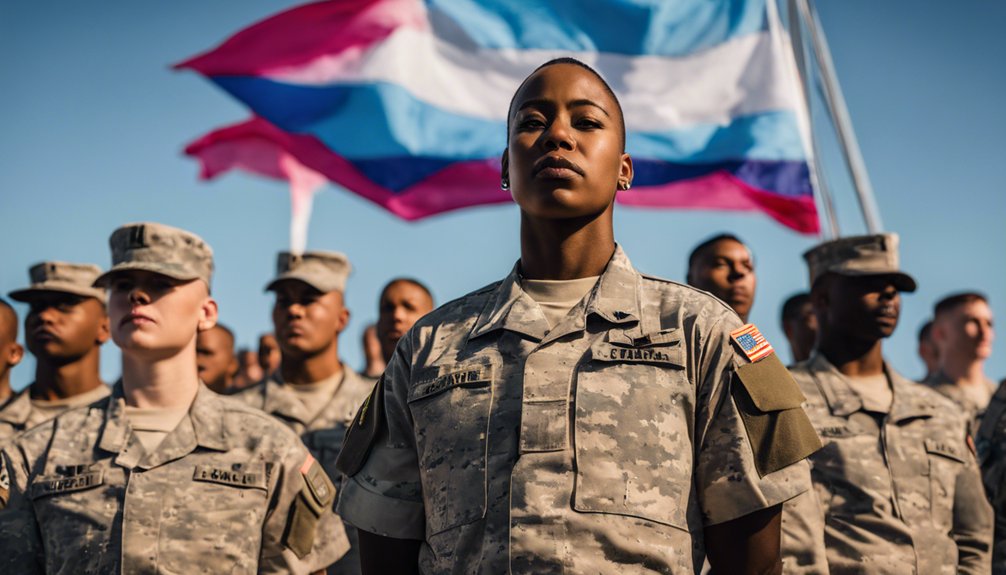
While some believe that transitioning can hinder military readiness, the reality is quite different. Major Emily Schilling‘s experience shows that transgender service members can maintain operational capabilities during and after their transition. She faced only a month of medical downtime, which is comparable to minor surgeries. The RAND Corporation found that the presence of transgender individuals minimally impacts military readiness and healthcare costs. Transition-related medical procedures, including gender-affirming surgeries, are planned to avoid deployment conflicts. Plus, access to gender-affirming care significantly improves mental health, leading to lower anxiety and depression rates. Ultimately, embracing these medical standards can enhance the overall effectiveness and morale of our military forces.
Impact on Military Recruitment
Given the ongoing recruitment challenges the military faces, Trump’s executive order banning transgender individuals from serving openly could have serious implications. This ban may discourage qualified transgender service members from enlisting, ultimately shrinking the talent pool.
- An estimated 15,500 transgender individuals currently serve in the military.
- The ban undermines efforts to create a diverse and inclusive military environment.
- Recruitment struggles could worsen, making it hard to fill essential roles.
- Potential recruits who identify as transgender may feel unwelcome or unsupported.
- Long-term consequences could hinder military readiness and effectiveness.
The Need for Open Dialogue and Understanding
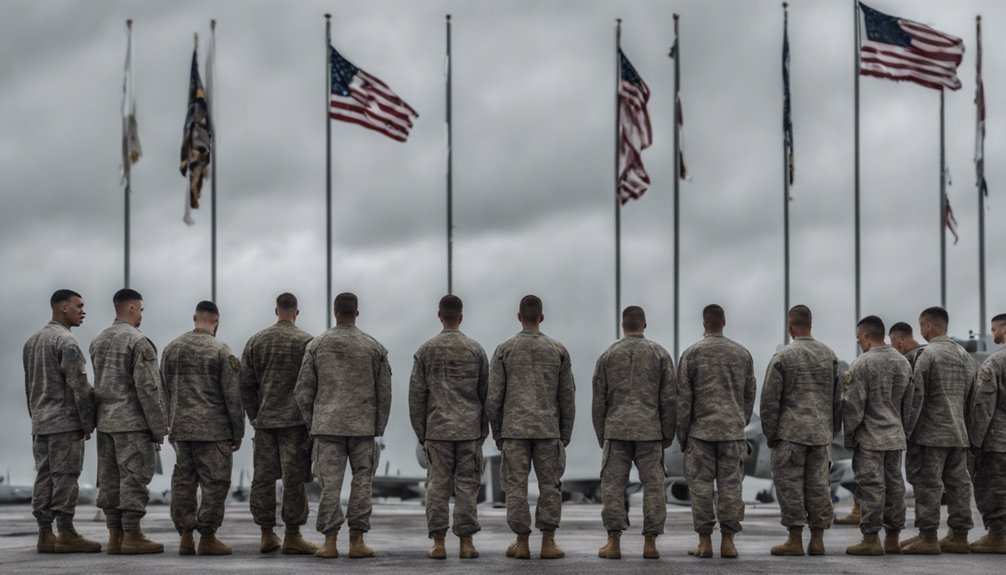
There’s a pressing need for open dialogue about transgender service members in the military. Conversations can help dispel misconceptions and promote understanding of their capabilities and contributions. Advocacy groups like SPARTA play a crucial role in highlighting the importance of inclusivity within the armed forces. By engaging with military leadership, you can foster a supportive environment that benefits everyone. Commander Emily Schilling’s successful service and promotions post-transition challenge stereotypes, showing that transgender individuals can excel in their roles. Encouraging discussions about the lived experiences of transgender service members opens the door to better understanding and acceptance. This dialogue can shift narratives, ensuring that all qualified personnel feel valued and welcomed in the military.
Frequently Asked Questions
Did Donald Trump Serve in the Military?
No, Donald Trump didn’t serve in the military. He received draft deferments during the Vietnam War, first for being in college and then due to bone spurs in his heels. While many criticized his avoidance of service, he described these deferments as common among his peers. Despite this, he often positioned himself as a strong supporter of the military and veterans throughout his political career, despite not having firsthand experience.
Conclusion
In the end, banning transgender service members is like closing the door on a room full of talent and potential. Imagine a diverse team, each member bringing unique strengths to the table, working together for a common goal. By fostering open dialogue and understanding, we can create an inclusive military that thrives on the varied experiences of all its members. Embracing these differences not only strengthens our forces but also paves the way for a brighter future.
Profile Author / Editor / Publisher

- Dora Kay Saparow came out in a conservative Nebraskan town where she faced both misunderstanding and acceptance during her transition. Seeking specialized support, she moved to a big city, where she could access the medical, legal, and social resources necessary for her journey. Now, fourteen years later, Dora is fully transitioned, happily married, and well-integrated into society. Her story underscores the importance of time, resources, and community support, offering hope and encouragement to others pursuing their authentic selves.
Latest entries
 Featured PostsOctober 21, 2026The Trans Journey to Passing
- Featured PostsOctober 17, 2026One Step Closer: Trans and Passing
- Featured PostsOctober 14, 2026Navigating Manhood: The Challenges FTM Individuals Face
- Activism and ChangeOctober 14, 2026I’m I7 and Male, I Don’t Know Whether or Not I am a Trans Girl