Republican Introduces Anti-Trans Bill as Transgender Woman Joins Congress

You might not know that Sarah McBride is the initial openly transgender congresswoman, marking a historic milestone in U.S. politics. At the same time, Republican Representative Nancy Mace has introduced a bill to restrict transgender women from using women’s restrooms, highlighting ongoing debates over transgender rights. Mace’s proposal aims to amend House rules based on biological sex, sparking discussions about legislative priorities. Meanwhile, McBride argues this bill distracts from critical issues like healthcare. You may wonder how this clash reflects broader societal conversations and what it means for future political dynamics.
In a significant political move, South Carolina Republican Nancy Mace introduced a resolution aimed at banning transgender women from using women’s restrooms in the U.S. This proposal emerged shortly after the historic election of Sarah McBride, the initial openly transgender member of Congress. Mace’s resolution seeks to amend the rules of the U.S. House of Representatives, focusing on bathroom access based on gender identity. This timing suggests a direct response to McBride’s election, highlighting the political motivations behind the measure.
Mace’s resolution has stirred debate about gender identity and access to facilities within government buildings. The proposal would require the House sergeant-at-arms to enforce the new bathroom rules, although specific implementation details remain unclear. As discussions continue, this resolution reflects broader national conversations about transgender rights and safety in public spaces.
The introduction of this resolution by Mace comes just two months before McBride’s swearing-in ceremony, underscoring the strategic timing of the measure. As lawmakers and advocacy groups weigh in, the resolution’s potential impact on legislative spaces and transgender rights remains a focal point of contention in the ongoing national dialogue.
Sarah McBride’s response to Nancy Mace’s anti-trans bill cuts right to the chase, dismissing it as a distraction from essential issues like housing and healthcare. McBride emphasizes the importance of respect and kindness, calling out the bill as a political maneuver that doesn’t address constituents’ real needs. Instead of focusing on divisive legislation, she urges lawmakers to concentrate on urgent policy matters that can make a real difference in people’s lives.
| Key Points | McBride’s Stance | Urgent Policy Matters |
|---|---|---|
| Anti-Trans Bill | Distraction from real issues | Housing |
| Call for Respect | Emphasizes kindness and inclusion | Healthcare |
| Political Maneuver | Criticized as culture war tactic | Childcare |
McBride’s campaign and public statements reflect her dedication to improving lives, not just celebrating her historic win as the initial openly transgender member of Congress. She highlights the need for respect and understanding, advocating for an inclusive environment where all individuals can thrive. Her response serves as a broader call for lawmakers to prioritize genuine solutions over targeting marginalized communities with divisive and unnecessary legislation. McBride believes that focusing on pressing issues like housing and healthcare will better serve the American people and foster a more supportive society.
Nancy Mace, a Republican Congresswoman, has introduced a bill to ban transgender women from using women’s bathrooms in the U.S. This legislation coincides with the election of Sarah McBride, the primary openly transgender member of Congress. Mace’s proposal seeks to amend House rules, emphasizing the need to protect the privacy and safety of women in restrooms and changing areas by restricting access based on biological sex.
Mace’s perspective is rooted in the belief that allowing transgender women in these spaces could compromise women’s rights. She cites her personal experience as the primary woman to graduate from the Citadel, using her background to bolster her stance. Her actions reflect a broader Republican strategy aimed at limiting transgender rights—a movement gaining traction across multiple states.
Mace’s goals include advocating for further measures she believes protect women’s rights. This bill is just one aspect of her commitment to pursuing anti-transgender initiatives. By proposing such legislation, Mace aims to appeal to constituents concerned about women’s spaces, aligning with a GOP focus on women’s issues post-Roe v. Wade. However, specifics on how this will be enforced remain unclear.
The introduction of Nancy Mace’s resolution to ban transgender women from using women’s restrooms at the U.S. Capitol comes at a critical moment, following Sarah McBride’s historic election as the initial openly transgender member of Congress. This move is part of a broader trend where anti-transgender legislation is increasingly proposed by Republican lawmakers. Mace’s resolution is designed to amend the House rules, reflecting ongoing debates over transgender rights.
Observing these legislative trends, you might notice:
Understanding these trends helps you grasp the complex dynamics shaping transgender rights within the current political landscape.
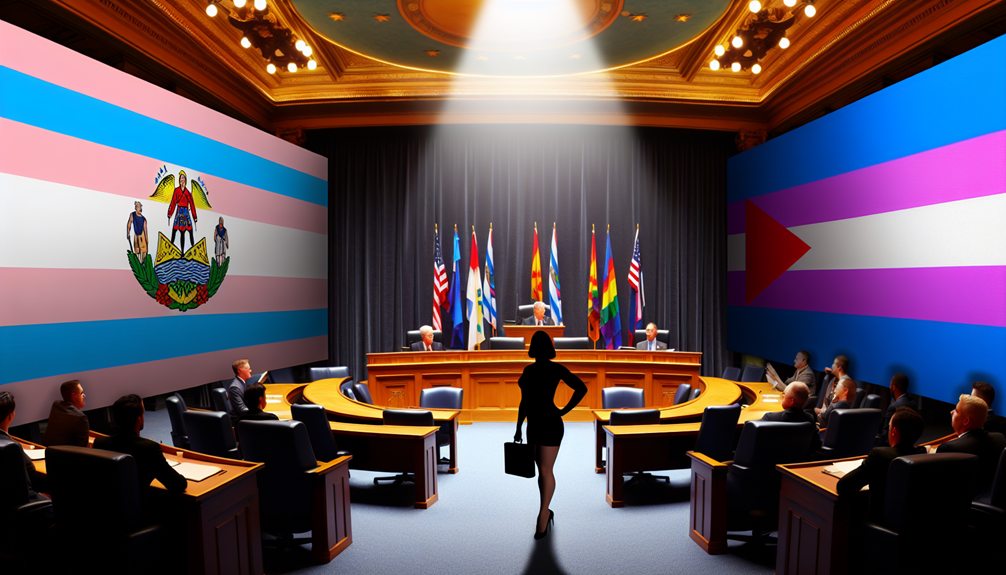
Introducing this resolution could considerably impact the future of transgender rights in legislative spaces. With anti-trans legislation like this, the political landscape might see a shift, affecting inclusivity and representation. Given the Republican majority in Congress, albeit slim, you can expect a careful navigation of such divisive issues. This proposal might set a precedent for future actions across different governmental spaces.
Here’s a look at potential implications:
| Aspect | Potential Outcome |
|---|---|
| Legislative Precedent | Future anti-trans laws in Congress |
| Public Opinion | Increased polarization |
| LGBTQ+ Advocacy | Heightened activism and backlash |
| Political Strategies | GOP’s tactical balancing act |
| Inclusivity in Spaces | Possible erosion or reinforcement |
The decision to introduce such a measure right after Sarah McBride’s historic election is telling. It’s likely to spark ongoing debates about transgender rights and the extent to which inclusivity is prioritized. As public opinion remains divided, how lawmakers respond could influence future elections. For allies and advocates, it’s vital to monitor reactions and remain active in discussions to guarantee that the rights and respect for all individuals stay on the legislative agenda.
You’ve asked about the specific provisions of the proposed resolution. The resolution aims to amend the rules of the US House of Representatives to ban transgender women from using women’s restrooms at the US Capitol. It reflects a belief that such spaces should be exclusively for cisgender women, citing concerns about women’s rights and safety. This proposal mirrors similar legislative efforts across multiple states, focusing on bathroom access for transgender individuals.
Picture the Capitol as a grand ship sailing through turbulent waters. You might wonder how the proposed resolution fits within existing restroom policies on this vessel. Currently, there’s no specific ban on transgender women using women’s restrooms at the Capitol. This resolution aims to change that, aligning more with recent state-level trends restricting access. It’s essential to balance understanding these policies with recognizing the broader implications for inclusivity and respect.
You observe advocacy groups strongly opposing the resolution, emphasizing that it discriminates against transgender individuals. They argue it undermines the dignity and rights of transgender women, calling the proposal a step backward for equality. These groups advocate for inclusive policies and stress the importance of focusing on broader societal challenges like healthcare and housing instead of targeting marginalized communities. Their response highlights the ongoing cultural divide and the need for respectful dialogue.
You can expect legal challenges if this resolution progresses. Advocacy groups often step in, arguing that such measures violate constitutional rights and anti-discrimination laws. You might see lawsuits aimed at protecting transgender rights, similar to past cases challenging bathroom-related legislation. Legal experts could argue that the resolution discriminates against transgender individuals, leading to potential court battles to guarantee equal access and rights in public spaces, including legislative environments.
Imagine a bridge being built, symbolizing progress for transgender candidates in Congress. This resolution places barriers on that bridge, creating potential hurdles for future candidates. It might discourage some from running, fearing discrimination or legislative battles. However, it could also inspire resilience and mobilize supporters to advocate for equality. You’ll see this challenge as a test of determination, rallying allies to guarantee the bridge remains strong and open to all.
As you watch the unfolding political drama, irony colors the scene. Representative Mace’s resolution lands just as Sarah McBride breaks barriers in Congress. While Mace focuses on restroom access, McBride highlights healthcare and housing needs. This contrast mirrors a broader legislative trend, where energy is poured into limiting transgender rights rather than tackling broader societal issues. You can’t help but wonder if this is the best use of political power and attention.

 News and AdvocacySeptember 5, 2026Administration Move Targets Trans Visibility
 Featured PostsAugust 27, 2026Transgender Identity: Ancient Roots and Modern Understanding
 Featured PostsAugust 27, 2026What Does Non-Binary Mean?
 Featured PostsAugust 27, 2026A Guide to Dating a Trans Woman