Facial Masculinization Surgery: Enhancing Your Masculine Identity

Imagine Alex, who’s been struggling with gender dysphoria for years, ultimately deciding to undergo Facial Masculinization Surgery (FMS) to align their appearance with their true identity. This procedure can reshape features like the jawline, chin, and forehead to create a more traditionally masculine look. Techniques such as brow bone augmentation and chin improvement play a vital role. But what exactly happens during these surgeries, and how do they impact someone’s life? Let’s investigate the key procedures and the profound effects they can have on both confidence and mental health.
Facial Masculinization Surgery (FMS) is designed to reshape feminine facial features to achieve a more traditionally masculine appearance. If you’re experiencing gender dysphoria and seeking gender affirmation, FMS can play an essential role in aligning your physical appearance with your gender identity. This surgery is primarily sought by individuals assigned female at birth (AFAB) who wish to shift to a more masculine look.
FMS involves modifying a range of facial features, including the chin, jawline, forehead, cheekbones, and Adam’s apple. These changes help create a more pronounced masculine appearance. For example, jaw contouring and chin augmentation can give you a stronger, more angular jawline, while brow bone augmentation can provide a more prominent brow ridge. Furthermore, rhinoplasty can be performed to achieve a nose shape that complements your new facial structure.
The surgery can be done all at once or in stages, depending on your aesthetic goals and priorities. Each technique is tailored to improve specific facial features, ensuring that the final outcome matches your vision of a masculine appearance.
Ultimately, FMS aims to elevate your self-confidence and improve mental health by helping you look and feel more like yourself.
When you undergo Facial Masculinization Surgery (FMS), you’ll encounter several key procedures that transform your facial features to achieve a more masculine look.
One of the primary techniques is brow bone augmentation, which involves raising and flattening your forehead to create a more traditionally masculine appearance. This is done through implants or reshaping techniques.
Another important procedure is rhinoplasty. This surgery reshapes your nose, correcting any bumps and guaranteeing it’s proportional to your other facial features. Surgeons make discreet incisions to minimize scarring, giving you a natural-looking result.
Chin and jaw augmentation are also essential. These procedures broaden your jawline and strengthen your chin, often using implants or bone movement. Incisions are typically made inside the mouth, so there are no visible scars. This greatly improves the masculine contours of your face.
Adam’s apple enhancement is another gender-affirming procedure you might consider. This involves using Y-shaped implants or your own cartilage to create a more pronounced Adam’s apple. Skilled surgical techniques secure a natural appearance and proper healing.
Each of these procedures is tailored to your unique facial structure and aesthetic goals, focusing on improving rather than reducing features to achieve your desired masculine look.
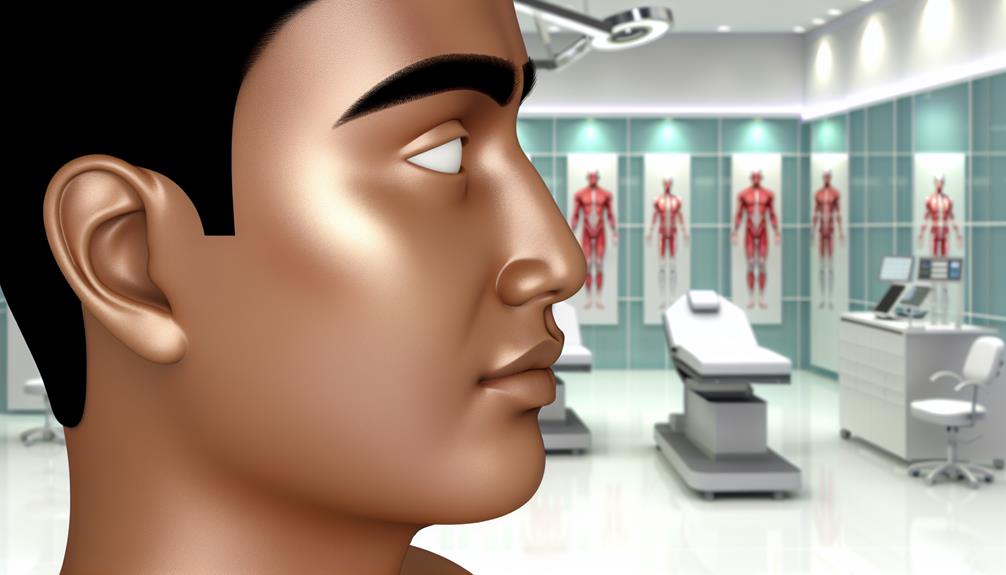
You can achieve a more masculine appearance without surgery by using non-surgical improvements like dermal fillers. These non-surgical augmentations can add volume to your jawline and cheeks, giving you a more defined and masculine look. Dermal fillers, often made from hyaluronic acid, can reshape your facial contours without the need for invasive surgery, making them an attractive option if you’re looking for less commitment.
The results from these non-surgical augmentations are temporary, typically lasting between 6 to 18 months. How long the results last can depend on the type of filler used and your individual metabolism. Because the effects aren’t permanent, you’ll need periodic touch-ups to maintain your desired masculine appearance.
Non-surgical augmentations are also usually less expensive than surgical options, with costs ranging from $500 to $2,500 per session. This makes them accessible if you’re exploring facial masculinization without a significant financial commitment.
While these non-surgical methods can offer a noticeable improvement, they may not provide the same dramatic or permanent changes as surgical interventions. However, they do offer a less invasive way to improve your facial features and elevate your confidence.
Testosterone therapy offers transformative changes that raise masculine facial features and can improve the results of facial masculinization surgery. When transgender people start hormone therapy, they usually see noticeable changes within 3 to 6 months. These changes are critical for achieving a gender-affirming appearance.
One of the initial effects of hormone therapy is the growth of facial hair. This development contributes to a more masculine facial look, making you feel more aligned with your gender identity. Alongside facial hair, testosterone also alters your skin’s texture, making it rougher and thicker, which improves the general masculine appearance.
Additionally, long-term hormone therapy redistributes facial fat, reducing it in areas typically associated with feminine features. This creates a more angular and defined facial structure. The combination of these changes makes subsequent facial masculinization surgeries, like jawline or chin augmentation, even more effective.
Being on testosterone for an appropriate duration before surgery guarantees the best possible results. It’s not just about the physical changes; the combination of hormone therapy and surgery can considerably enhance your self-esteem and reduce gender dysphoria, allowing you to present yourself authentically to the world.
Proper recovery and aftercare are fundamental for guaranteeing the best results from facial masculinization surgery. The recovery period typically lasts about 4-6 weeks, with swelling and bruising gradually subsiding. During the initial few days, you’ll likely experience some discomfort, but don’t worry—pain management medications will help ease this.
In the early stages, sticking to a soft or liquid diet is critical. This minimizes strain on your facial muscles, aiding the healing process. It’s also significant to avoid any strenuous activities for several weeks. This helps guarantee proper healing and reduces the risk of complications.
Regular follow-up appointments with your healthcare provider are essential. These visits allow your doctor to monitor your healing process, check the surgical site for any signs of infection, and ensure you’re following recovery guidelines correctly.
If you notice severe symptoms like difficulty breathing or excessive bleeding, contact your healthcare provider immediately. Early intervention can address potential complications promptly.
You’re probably wondering about the cost.
Facial masculinization surgery can range from $1,000 to $20,000, depending on the procedures and surgeon’s expertise.
Don’t forget to factor in extra expenses like medications, tests, and hospital fees, which can add up.
Also, consider potential time off work or school for recovery.
While Medicare usually doesn’t cover it, some private insurance plans might.
Patient assistance programs can help offset costs, too.
Facial masculinization surgery (FMS) helps transform your facial features to look more masculine.
You might consider this if you’re looking to improve your jawline, chin, or brow bone, or even adjust your nose.
It’s a series of procedures tailored to your needs, often sought by transgender men and nonbinary individuals.
FMS can increase your confidence and alleviate gender dysphoria, but you’ll need to prepare well and follow post-op care instructions.
You might wonder if the changes from this surgery are permanent. The answer is yes, the modifications are lasting.
Surgeons alter bone and soft tissue, making enduring changes to your facial structure. While aging and natural changes will still occur, the foundational alterations won’t revert.
Some might opt for touch-ups later, but the initial results remain stable. So, you’re looking at a permanent transformation.
Insurance coverage for facial masculinization surgery varies a lot. Some plans might cover it if it’s deemed medically necessary, but many consider it cosmetic and won’t pay.
Medicare usually doesn’t cover facial surgeries, though some state Medicaid programs do. You’ll need to research your specific policy details.
If you’re uninsured or underinsured, financial assistance programs like CK Life and The Jim Collins Foundation might help.
In summary, Facial Masculinization Surgery can be a life-changing experience for you, aligning your outer appearance with your inner self.
The combination of surgical techniques, non-surgical improvements, and hormone therapy works harmoniously to sculpt a more masculine look.
Remember, recovery takes time, but with proper aftercare, you’ll reveal a new version of yourself.
Imagine looking in the mirror and seeing the person you’ve always felt inside—it’s not just surgery; it’s a step toward true self-discovery.

 Featured PostsFebruary 2, 2026The Weight Lifted: Navigating Your FTM Top Surgery Recovery
 News and AdvocacyJanuary 30, 2026Threat Assessment: 47 Organizations Launch National Initiative Against LGBTQ+ Marital Equality
 Featured PostsJanuary 30, 2026Voice in Female-To-Male Transgender Persons After Long-Term Androgen Therapy
 Featured PostsJanuary 30, 2026My Wife Doesn’t Know I’m Trans