How to Start a Gender and Sexuality Alliance (GSA) at Your School
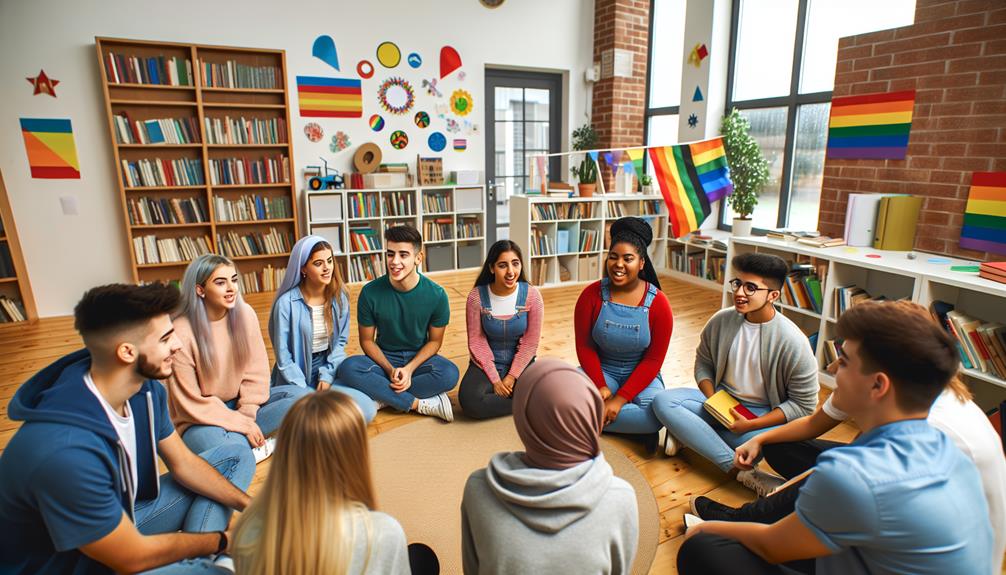
Imagine creating a safe space where LGBTQ+ students feel supported and empowered in your school environment. Starting a Gender and Sexuality Alliance (GSA) can be both fulfilling and transformative for your community, but where do you begin? By focusing on a clear mission, you can lay a strong foundation for your GSA. However, it’s not just about having a mission; gathering a diverse group of supportive members and finding a committed faculty advisor are essential steps. How do you navigate these initial phases and sustain momentum for your GSA’s impactful expedition?
To kick off your GSA, you’ll want to define its mission with clarity and purpose. Start by crafting a mission statement that highlights your club’s commitment to creating a supportive environment for LGBTQ+ students. This statement should clearly express your dedication to inclusivity and the essential role your GSA will play in fostering awareness of gender and sexual diversity. By focusing on these goals, you establish a foundation that resonates with your student body and invites allies to participate.
Involve prospective members in creating this mission statement. Their input guarantees it reflects the collective values and aspirations of the group, making it a powerful tool for unity. A well-articulated mission statement should also address the importance of combating bullying and discrimination, providing a safe haven for all students. By emphasizing these aspects, you set a tone of acceptance and resilience.
Additionally, outline specific objectives, like organizing educational workshops and social events. This gives your GSA a roadmap, aligning activities with its mission. A strong mission statement not only guides your group but also serves as a foundation for advocacy, helping you secure support from your school administration and the broader community.
When initiating the expedition of forming a GSA, gathering supportive members is vital to its success. Start by reaching out to friends and allies who are passionate about LGBTQ+ issues. These individuals will form a core group, helping to create a foundation for your GSA. It’s imperative to emphasize the importance of a safe place for all students. Utilize school events and social media platforms to promote your GSA. Highlight how it can foster inclusivity and provide a refuge for LGBTQ students.
To effectively gather supportive members, consider these steps:
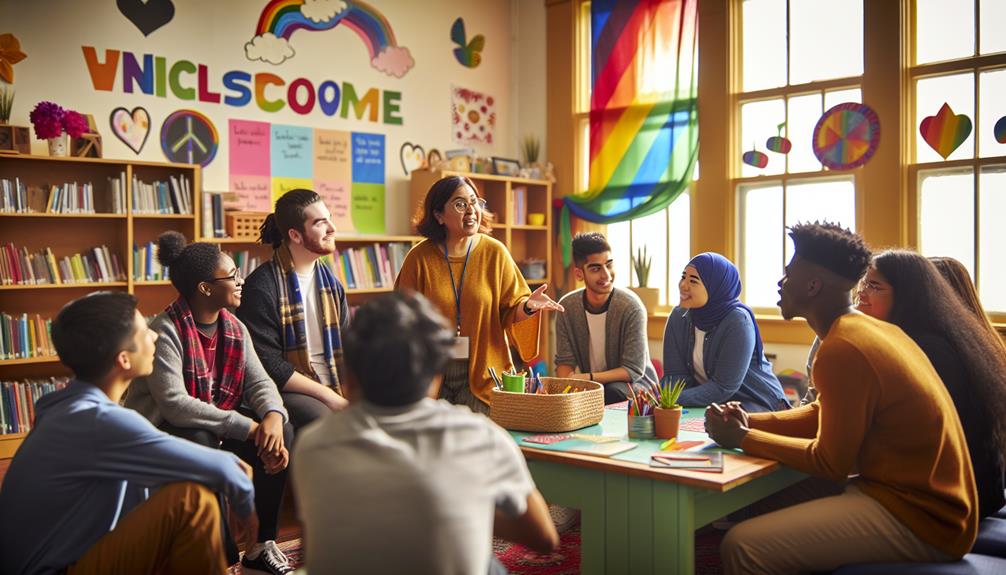
Securing a faculty advisor is a pivotal step in establishing your GSA’s foundation. A faculty advisor provides support and guidance critical to your GSA’s success. Choose a teacher, counselor, or staff member who is not only knowledgeable about LGBTQ issues but also committed to promoting inclusivity. Look for someone who has a positive rapport with students and is willing to advocate for your group’s goals. A strong faculty advisor can help navigate school policies and connect you with resources that strengthen your GSA’s mission.
| Criteria | Importance |
|---|---|
| Knowledgeable | Guarantees understanding of LGBTQ issues |
| Supportive | Promotes inclusivity and student rapport |
| Communicative | Facilitates effective collaboration |
When selecting your advisor, consider having co-advisors to bring diverse perspectives and extra support. This improves the GSA’s effectiveness by providing a broader base of guidance and advocacy. Establish clear communication from the start by discussing the GSA’s mission, goals, and expectations. This alignment guarantees your advisor can effectively support your GSA’s activities and objectives. Remember, your faculty advisor is a cornerstone of your GSA, fostering a supportive environment where open dialogue and inclusivity thrive. Effective communication with your advisor can make a significant difference in your GSA’s impact and success.
How do you find the ideal meeting location for your Gender and Sexuality Alliance? Start by considering places that are easily accessible and provide a comfortable setting for students. Here’s how you can guarantee your meeting location embodies a welcoming and inclusive environment:
A thoughtfully chosen meeting location can foster a strong sense of community and support within your GSA.

After securing a welcoming meeting space, it’s time to focus on creating engaging activities that will energize your Gender and Sexuality Alliance. Start by organizing educational workshops on essential LGBTQ+ topics like identity, allyship, and history. These workshops can foster understanding and engagement not just within your group, but also throughout the broader school community. Invite knowledgeable speakers or use interactive materials to make these sessions impactful.
Alongside workshops, plan social events that build a sense of community and belonging. Consider hosting movie nights, barbecues, or game days. These occasions provide safe spaces for LGBTQ+ students and allies to connect and unwind in a supportive environment.
Awareness campaigns are another key component. Host these during significant LGBTQ+ events such as Pride Month or the Day of Silence. Use these opportunities to promote visibility and educate peers about LGBTQ+ issues, enhancing the school’s inclusivity.
Collaborate with local LGBTQ+ organizations to enrich your GSA’s activities. Arrange field trips, invite guest speakers, or hold panel discussions that offer real-world insights into the LGBTQ+ community. By developing a diverse calendar of activities, you guarantee consistent engagement and active participation from your members.
One of the most effective ways to guarantee your Gender and Sexuality Alliance is successful is by leveraging available resources. When you’re starting a GSA, tapping into existing guides and support systems can make a significant difference. Begin by exploring “How to Start a GSA” guides and videos, which provide step-by-step instructions tailored for new clubs. These resources offer best practices and help you design a welcoming space for discussing sexual orientation and inclusivity.
To further bolster your efforts, consider these steps:

Building community partnerships is a powerful way to strengthen your Gender and Sexuality Alliance’s impact and reach. Start by connecting with local LGBTQ+ organizations. They can provide invaluable resources and support for your GSA’s initiatives. These groups might offer guest speakers, workshops, or materials to improve your club’s activities and advocacy efforts. Their expertise will help you create a more informed and inclusive atmosphere.
Next, consider collaborating with allied local businesses. These partnerships can lead to sponsorships or donations, elevating your GSA’s visibility and allowing you to host larger events. Engaging the community in this way not only provides financial support but also raises awareness about your GSA’s mission.
Don’t forget to involve parents and guardians through community events. Their support can be essential for building a welcoming environment and encouraging family participation in your GSA’s activities.
Additionally, develop relationships with local advocacy groups. They can facilitate educational workshops and training sessions on LGBTQ+ issues, benefiting both GSA members and the broader school community. Ultimately, partner with other student organizations to amplify awareness campaigns, ensuring a more inclusive atmosphere within your school. With these partnerships, your GSA will thrive.
A GSA in school is a student-run club where you can find a safe space to discuss gender identity and sexual orientation. It’s a supportive environment aimed at combating homophobia and transphobia, offering acceptance for LGBTQ+ students and their allies. You’ll engage in peer support, educational initiatives, and events like Pride Week. By participating, you help foster inclusivity, raise awareness, and create a welcoming community for everyone.
To start a queer club, gather interested students and find a supportive faculty advisor familiar with LGBTQ+ issues. Craft a mission statement outlining goals like providing a safe space and educating peers. Present a proposal to school administration to get approval. Promote your club through announcements, flyers, and social media. Organize regular meetings and activities, such as workshops and social events, to keep members engaged and foster a supportive community.
You’re wondering about activities for GSA students. Organize educational workshops on LGBTQ+ issues to improve understanding. Host social events like movie nights to build camaraderie and reduce isolation. Plan awareness campaigns, such as Pride Week, to promote inclusivity. Get involved in community service projects, like volunteering at local LGBTQ+ organizations. Regular meetings should include discussions on identity and support strategies, ensuring a safe space for sharing and peer support.
You’re curious about the purpose of a Gender and Sexuality Alliance (GSA). It’s all about creating a safe, supportive environment for LGBTQ+ students and allies. By promoting inclusivity, GSAs fight bullying and discrimination, making schools safer. They educate the community through workshops and events, raising awareness of LGBTQ+ issues. GSAs also provide a social network, helping members connect and reduce isolation. Ultimately, they improve school climate and foster understanding.
Starting a GSA at your school can greatly impact inclusivity and support for LGBTQ+ students. Did you know that schools with GSAs see a 23% decrease in reported bullying incidents? By defining your mission, gathering members, and securing a faculty advisor and meeting spot, you’re creating a safer space for everyone. Plan engaging activities, utilize resources, and build community partnerships to strengthen your GSA’s impact. Remember, your efforts are paving the way for a more accepting school environment.

 Featured PostsSeptember 2, 2026Trump Vows to End Transgender Policies if Republicans Hold Congress
 News and AdvocacyAugust 27, 2026Trump Says Hospitals Are Reversing Trans Surgeries “At My Order” — There’s No Evidence
 Featured PostsAugust 21, 2026Intimacy in Transition: Exploring Sexuality as a Trans Woman
 Activism and ChangeAugust 21, 2026LGBTQ+ Americans Navigate the Quest for Safer States