Trump Administration Moves to Legally Deny Transgender and Nonbinary Identities

You’re seeing a controversial move as the Trump Administration pushes policies that erase transgender and nonbinary identities federally. Their executive order mandates recognition of only two biological sexes, which impacts identification documents and access to health services for many individuals. This leads to increased discrimination and unsafe conditions in facilities segregated by biological sex. Legal challenges and protests by advocacy groups emphasize the threat to progress on transgender rights, highlighting significant societal division. Historic court decisions and ongoing advocacy aim to protect these identities. If you’re intrigued, there’s more to investigate about societal and legal reactions to these changes.
The Trump administration’s executive orders have sparked significant controversy by mandating that federal agencies recognize only two biological sexes—male and female. This executive order, titled “Defending Women from Gender Ideology Extremism and Restoring Biological Truth to the Federal Government,” requires all federal documents and policies to strictly adhere to this binary definition. This means that any recognition of transgender or nonbinary identities is effectively erased within governmental practices.
You might wonder how this impacts transgender rights. For starters, the executive order eliminates nonbinary gender options from federal identification and documentation. It also prohibits federal funding for gender-affirming healthcare, which many see as crucial for transgender individuals. This change in policy means that accessing necessary medical care becomes much harder for those who need it.
Moreover, the order mandates that federal facilities, including prisons, segregate individuals by biological sex. This raises serious concerns about the safety and well-being of transgender individuals, especially in correctional settings. Legal challenges are anticipated, as advocacy groups argue that these orders violate existing civil rights protections. Understanding these details helps you grasp the profound impact the executive order has on transgender rights.
Although the Trump administration’s policy changes redefine gender identity in a strictly binary way, it’s vital to understand how these actions affect people on a daily basis. By enforcing executive orders that recognize only male and female genders, the administration has eliminated nonbinary options from federal documents. This directly impacts how transgender and nonbinary individuals are classified, leading to increased discrimination and difficulties in accessing services that align with their gender identity.
Imagine needing a passport or social security card that doesn’t reflect who you are. This is now a reality for many under these policies. Furthermore, federal agencies have been directed to cut Diversity, Equity, and Inclusion programs, which were fundamental for promoting understanding and acceptance of diverse genders. Without these programs, there’s a risk of fostering environments that aren’t inclusive or supportive.
In federal facilities, transgender individuals face troubling changes. Transgender women are required to be housed with men, raising safety concerns. Moreover, discontinuation of gender-affirming healthcare poses serious health risks. These policy changes don’t just alter legal recognition but deeply affect the lives and well-being of transgender individuals across the country. Legal challenges are expected as advocacy groups endeavor to protect these communities.
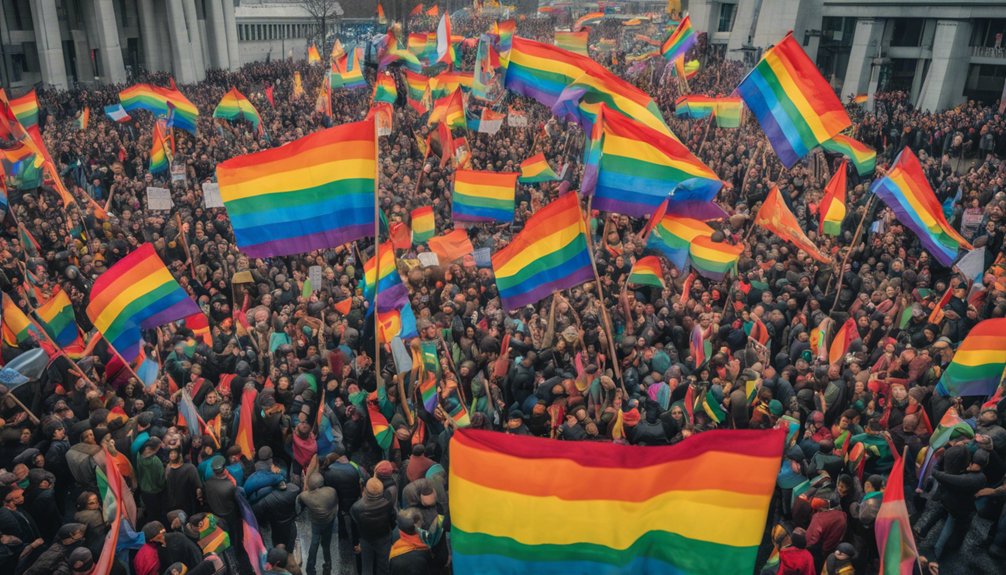
Faced with these sweeping policy changes, advocacy groups and political figures are rallying to defend transgender and nonbinary rights. Organizations like Lambda Legal and the Human Rights Campaign are stepping up to challenge these executive orders in court. They argue that the orders violate established protections for transgender individuals under federal law. You’ll see these groups working tirelessly to protect transgender rights, ensuring that everyone has the right to be recognized for who they truly are.
Political figures are also joining the fight. U.S. Rep. Mark Takano has openly criticized the Trump administration’s actions, calling them a direct attack on the transgender community. He emphasizes the importance of government support for all Americans, regardless of gender identity. This kind of political advocacy helps keep the conversation alive and builds momentum for change.
The recent pushback isn’t just happening in courtrooms or political offices. Protests and rallies are springing up nationwide, with LGBTQ+ communities and allies raising their voices. You can get involved by joining these advocacy efforts, raising awareness, and supporting legal challenges. Together, you can help uphold the rights and dignity of transgender and nonbinary individuals in these challenging times.
As the Trump administration pushes forward with its policies redefining gender identity, society finds itself in a heated debate over the implications. The executive orders that aim to eliminate the recognition of transgender and nonbinary identities have sparked significant societal reactions. On one hand, there are protests and legal challenges from civil rights organizations fighting to protect transgender rights. On the other hand, some individuals support the policies, believing they defend traditional gender norms.
Historically, the fight for transgender rights has seen both progress and setbacks. Landmark cases like Bostock v. Clayton County, which affirmed employment protections for LGBTQ individuals, highlight the ongoing struggle for equality. However, these new policies threaten to undo such advances, exacerbating discrimination and violence against transgender people. Public opinion remains divided, but there’s a noticeable trend toward greater acceptance of transgender and nonbinary identities.
You can see the influence of social media and education in amplifying marginalized voices, pushing the conversation forward. Awareness initiatives are essential in this situation, as they help bridge understanding across communities. By engaging in dialogue, society can better navigate the complexities of gender identity and advocate for a more inclusive future.
Given the recent policies by the Trump administration, the future of LGBTQ+ rights faces significant challenges and uncertainties. Executive orders that define gender strictly as male or female threaten to erase transgender rights, leaving many without proper recognition in federal documents. You might wonder how this will affect everyday life. Imagine not being recognized as your true self on your passport or driver’s license. This can lead to discrimination in jobs, housing, and even healthcare.
The revocation of diversity, equity, and inclusion programs further strips away protections for LGBTQ+ individuals, leaving workplaces less inclusive and potentially hostile. If you’re part of the LGBTQ+ community or an ally, you might feel frustrated and worried about these changes. But there’s hope. Advocacy groups are gearing up to fight these orders in court. They’re working tirelessly to protect and expand the rights of transgender and nonbinary individuals.
You can get involved by supporting these groups, raising awareness, and voting for leaders who prioritize equality. In this ongoing struggle, every voice counts. By staying informed and active, you help shape a future where everyone’s identity is respected and protected.
You’re probably wondering what legal challenges might arise against this executive order. Think of it like David versus Goliath, where advocacy groups will likely argue it’s unconstitutional, violating equal protection and due process rights. They’ll file lawsuits aiming to secure injunctions, preventing the order’s enforcement. Engage in actions like supporting legal funds, signing petitions, and attending rallies. These collective efforts can help preserve vital rights and dignity for all.
You might see this order strain international relations, especially with countries prioritizing LGBTQ+ rights. Allies could view it as a step back in human rights, potentially affecting diplomatic ties and cooperation on multiple global issues. Engaging in discussions, supporting advocacy efforts, and staying informed can be essential. You could participate in international forums or campaigns promoting equality to demonstrate solidarity and encourage a more inclusive approach to human rights worldwide.
You might notice economic impacts from this policy shift as it affects federal funding, healthcare, and workplace discrimination. Companies embracing diversity could face backlash, while others might lose talented employees seeking inclusive environments. Healthcare costs could rise due to increased mental health issues in transgender individuals denied care. This policy could reduce consumer spending within the LGBTQ+ community, affecting different sectors. Ultimately, it challenges businesses to balance ethics and economics.
You’re noticing a shift in how different countries handle gender identity. While some nations are embracing more inclusive policies, others are tightening restrictions. This change doesn’t align with the global trend toward recognizing diverse gender identities. Countries like Canada and certain European nations are moving forward with supportive policies. It’s essential to stay informed and engage in discussions, advocating for policies that respect and affirm everyone’s identity, reflecting a more inclusive world.
You’d think companies would just stick to selling products, but they can actually champion transgender rights in big ways. They can implement inclusive policies, provide gender-neutral restrooms, and offer healthcare benefits covering gender-affirming treatments. By fostering a supportive workplace culture and using their platforms to advocate for equality, businesses not only enhance their reputation but also create a more inclusive environment. It’s about aligning values with actions and making a positive impact.
As you watch this spectacle unfold, marvel at the sheer brilliance of redefining reality with a flourish of a pen. Who needs diversity when you can have uniformity, right? You’ll soon master the art of maneuvering through a world where science takes a backseat to political whimsy. Rally with advocacy groups, because embracing complexity and compassion might just be the craziest idea yet! Enjoy the ride through this satirical theater of policy-making.

 Featured PostsSeptember 5, 2026Administration Move Targets Trans Visibility
 Featured PostsAugust 27, 2026What Does Non-Binary Mean?
 Featured PostsAugust 27, 2026A Guide to Dating a Trans Woman
 Featured PostsAugust 27, 2026What Is Gender Dysphoria, and How Is It Treated?