Honoring Marsha P. Johnson: The Stonewall Rebellion and the Birth of Modern LGBTQ+ Activism

You might not know that Marsha P. Johnson, beyond her role in the Stonewall Rebellion, co-founded the Gay Liberation Front and STAR (Street Transvestite Action Revolutionaries). These efforts were essential in shaping the LGBTQ+ rights movement, especially for marginalized groups. Johnson faced personal struggles while advocating for inclusivity, making her contributions even more significant. Her resilience and dedication have left a lasting impact on the fight for equality. As you investigate her legacy, consider how Johnson’s story continues to inspire today’s movements and why her role remains critical in understanding LGBTQ+ history.
The Stonewall Rebellion‘s historical context is rooted in the tense atmosphere of the late 1960s, where LGBTQ+ individuals faced systemic discrimination and harassment. During this time, police frequently raided bars like the Stonewall Inn in New York City, targeting LGBTQ+ patrons under the guise of liquor license violations. The community endured constant surveillance and harassment, making daily life a struggle for dignity and acceptance.
On June 28, 1969, the Stonewall Inn became the epicenter of a significant uprising. Patrons and community members, tired of enduring systemic oppression and police brutality, stood their ground. This rebellion lasted several days, marking a pivotal moment in LGBTQ+ history. It wasn’t just a protest; it was a catalyst for change, sparking the modern gay rights movement.
Among the prominent figures of this uprising was Marsha P. Johnson. Her involvement emphasized the need for inclusivity and representation within the broader rights movement. The Stonewall Rebellion’s impact continues to resonate today, inspiring Pride events and advocacy for LGBTQ+ rights. It laid the groundwork for sustained activism, highlighting the community’s resilience and determination to fight for equality and justice.
Marsha P. Johnson’s expedition into activism began when she moved to New York City in the 1960s. As a Black transgender woman, she bravely accepted her identity, choosing the name Marsha P. Johnson with the “P” symbolizing “Pay It No Mind.” This name reflected her spirit of defiance against societal norms and her commitment to being unapologetically herself. Despite facing homelessness and discrimination, she immersed herself in the LGBTQ+ community, becoming a prominent figure.
During the Stonewall Uprising on June 28, 1969, Marsha’s involvement became a turning point in LGBTQ+ activism. Her courage and resistance against police brutality at Stonewall fueled the fight for LGBTQ+ rights, marking a significant shift in the movement. After Stonewall, she didn’t stop. Marsha co-founded the Gay Liberation Front and the Gay Activist Alliance, where her activism focused on greater inclusivity, especially for transgender individuals.
In 1970, alongside Sylvia Rivera, Marsha co-founded the Street Transvestite Action Revolutionaries (STAR). This initiative provided support for homeless transgender and gender-nonconforming youth, showcasing her dedication to uplifting marginalized voices. Through her activism, Marsha P. Johnson left an indelible mark on the fight for equality.
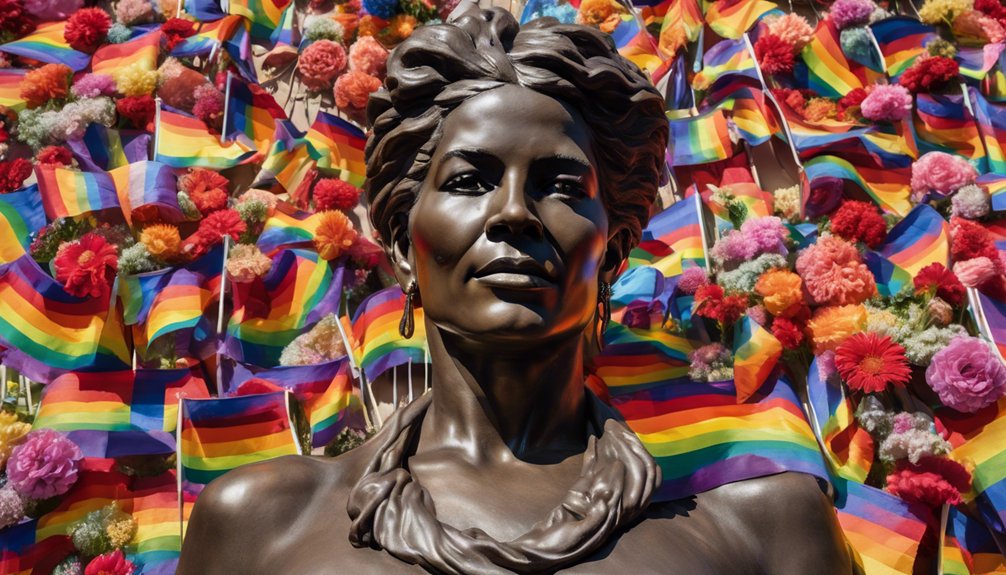
While embracing her role as an activist, Johnson encountered numerous personal struggles that tested her resilience. Moving to New York City, she faced bullying and sexual assault, which shaped her determination to fight for change. Homelessness was a constant reality, pushing her into sex work due to limited job opportunities. This harsh reality highlighted the systemic discrimination many LGBTQ+ individuals faced. Despite these challenges, Johnson remained an unwavering advocate for LGBTQ+ rights.
Her mental health was another battle. Diagnosed with H.I.V. in 1990, she continued to push for visibility and rights for marginalized communities. Through it all, she found strength in her friendships, especially with Sylvia Rivera. Their mutual support and mentorship helped them overcome personal struggles and fueled their activism. Here are three key lessons from Johnson’s odyssey:
Even in the face of adversity, Marsha P. Johnson’s influence on LGBTQ+ rights remains profound. Her pivotal role in the Stonewall Rebellion ignited a movement that transformed the landscape for LGBTQ+ activism. Johnson co-founded the Gay Liberation Front and the Gay Activists Alliance, which played a critical role in advocating for visibility and equality. Her efforts didn’t stop there—she also established the Street Transvestite Action Revolutionaries (STAR), highlighting the unique challenges faced by the transgender community, especially those enduring homelessness and discrimination.
Johnson’s work underscored the importance of intersectionality in activism. She connected gender identity with socioeconomic struggles, ensuring that marginalized voices were not only heard but also empowered. Her legacy continues to inspire modern movements, reminding you of the need for inclusivity and representation. The table below captures key aspects of her impact:
| Legacy Element | Impact |
|---|---|
| Stonewall Rebellion | Catalyst for modern LGBTQ+ rights movement |
| Gay Liberation Front | Increased LGBTQ+ visibility and advocacy |
| STAR | Support for homeless transgender youth |
| Intersectionality Focus | Highlighted interconnected struggles |
| Ongoing Inspiration | Continues to drive modern activism |
Through her unwavering dedication, Marsha P. Johnson’s legacy endures, advocating for a world where everyone has the right to live authentically and freely.
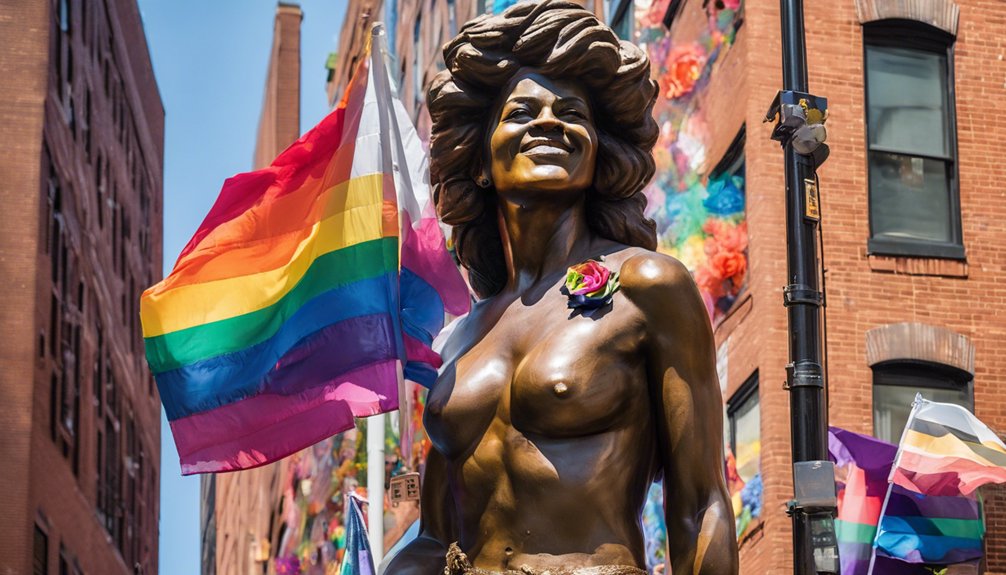
As Marsha P. Johnson became a cultural icon, she left an indelible mark on LGBTQ+ rights through her vibrant personality and unwavering activism. Her involvement in the Stonewall Uprising of 1969 highlighted the challenges faced by Black transgender individuals and emphasized the importance of inclusivity in the fight for equality. Johnson’s legacy is celebrated not just for her activism but also for her contributions to art and culture, which continue to inspire future generations.
You might wonder what makes someone a cultural icon. Here are three ways Marsha P. Johnson achieved this status:
You should know that Marsha P. Johnson made a huge impact on the LGBTQ community through her fearless activism. She co-founded STAR, supporting homeless transgender youth, and played a key role in the Stonewall Uprising. Johnson’s work helped ignite the modern LGBTQ rights movement, advocating for visibility and equality. Even amid personal struggles, she stood up for marginalized communities, leaving a legacy that continues to inspire activism and the fight for LGBTQ rights.
The Stonewall Riots changed everything for the LGBTQ community. You felt a surge of empowerment and unity. Before Stonewall, discrimination was rampant, but those nights of resistance sparked a movement. You saw the birth of Pride parades and the rise of activism, demanding rights and visibility. It became a symbol of defiance against oppression, inspiring generations to fight for equality. Stonewall reminded you of the strength found in community and collective action.
Imagine a guiding light lighting the way; that’s how Film Cooper saw Marsha P. Johnson. He praised her courage and resilience during the Stonewall uprising, noting her vibrant spirit as a Black transgender woman. Cooper emphasized her unwavering commitment to marginalized voices, especially transgender and homeless individuals. He highlighted her role in founding S.T.A.R., which supported at-risk LGBTQ+ youth, showcasing her enduring influence on modern activism and rights advocacy.
The Stonewall Rebellion symbolizes a vital turning point in the fight for LGBTQ+ rights. When you think of Stonewall, imagine a defiant stand against oppression and a demand for equality. It was a spontaneous uprising against police raids at the Stonewall Inn in 1969, sparking widespread activism. The rebellion laid the groundwork for modern LGBTQ+ movements, reminding you of the power of courage and unity in challenging injustice and advocating for rights.
You’ve seen how Marsha P. Johnson stood at the crossroads of struggle and triumph. While society often tried to push her to the margins, she chose to lead from the front, showing courage where others showed fear. By honoring her legacy, you acknowledge the ongoing fight for equality and the rich tapestry of LGBTQ+ history. Her story reminds you that change is both urgent and possible, inspiring you to continue advocating for a more inclusive world.

 News and AdvocacySeptember 5, 2026Administration Move Targets Trans Visibility
 Featured PostsAugust 27, 2026Transgender Identity: Ancient Roots and Modern Understanding
 Featured PostsAugust 27, 2026What Does Non-Binary Mean?
 Featured PostsAugust 27, 2026A Guide to Dating a Trans Woman