How to Support a Trans Friend

Imagine your friend Alex has just come out as trans and is handling new challenges. You might wonder how you can best support them during this time. Start by actively listening to their experiences and concerns without interrupting. Validating their feelings is important—acknowledge their emotions and the courage it takes to share them. Creating safe spaces and offering non-judgmental support can make a world of difference. But what about when they face discrimination? Let’s investigate how you can advocate for Alex and guarantee they feel accepted and valued.
Active Listening
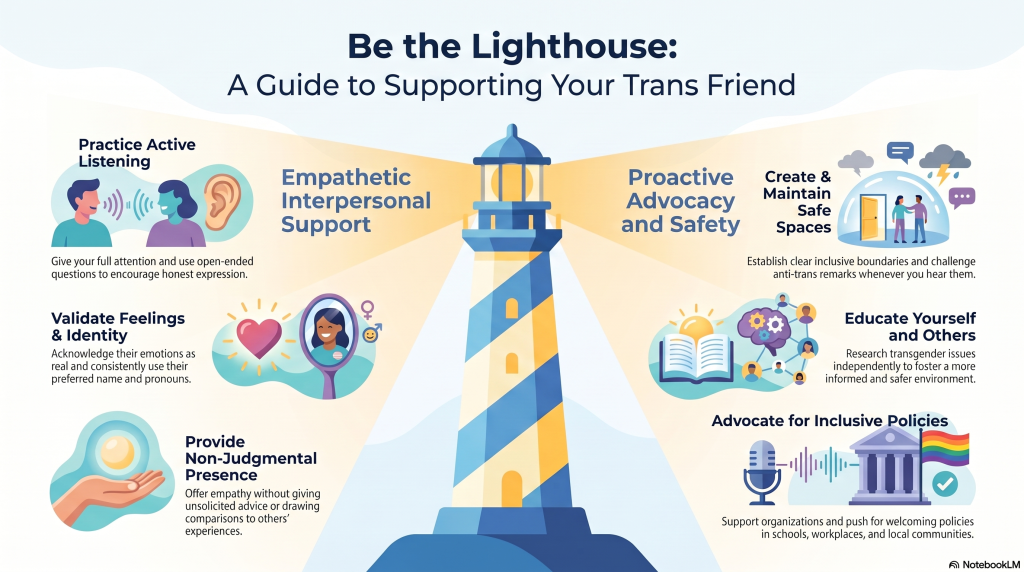
When you’re supporting a trans friend, active listening is one of the most vital skills you can develop. This means giving your full attention to your friend, focusing on their words and emotions without interrupting. When your trans friend shares their experiences or concerns, listen with empathy and understanding.
Reflect back what they say to show you’re engaged, like saying, “It sounds like you’re feeling frustrated because people aren’t respecting your pronouns.”
Nonverbal communication is also essential. Maintain eye contact, nod, and use gestures that show you’re present in the conversation. These small actions can make a big difference in making your friend feel heard and valued. Avoid distractions like checking your phone or looking around the room. This shows that your priority is supporting your friend.
Refrain from giving unsolicited advice or making judgments. Instead, encourage your friend to share more by asking open-ended questions like, “How did that make you feel?” or “What can I do to support you better?” This approach helps create a safe space for your trans friend to express themselves openly, reinforcing that their thoughts and feelings are significant to you.
Recognize your friend’s emotions by genuinely listening and acknowledging their experiences. When your trans friend shares their feelings, it’s crucial to let them know their emotions are valid. You can do this by nodding, maintaining eye contact, and using affirming language like, ‘That sounds really tough,’ or ‘I understand why you feel that way.’
Reflecting back what they say can also show you’re there to support them. For instance, if they express frustration about being misgendered, you could respond with, ‘It’s completely understandable to feel upset when people don’t respect your identity.’ This helps them feel heard and valued.
Empathy is key. Put yourself in their shoes and offer understanding without dismissing their emotions. Saying something like, ‘I can’t imagine how challenging this must be, but I’m here for you,’ can make a significant difference. Remember, it’s not about offering solutions but about being there for them.
Lastly, reassure your trans friend that their feelings are valid. Remind them that their experiences and emotions are real and significant. Your support can help them feel less isolated and more accepted.
After validating your friend’s feelings, the next step is to create secure spaces where they can feel comfortable and supported. Start by always respecting your friend’s gender identity. Use their preferred name and pronouns consistently. This small act shows that you honor who they’re and helps them feel seen and respected.
Creating secure spaces for transgender people also means challenging anti-transgender remarks whenever you hear them. Whether it’s a casual comment or a more serious statement, don’t let it slide. Speak up and let others know that such language is unacceptable. Your friend will appreciate knowing you’ve got their back.
Educate yourself on transgender issues and share what you learn with others. The more people understand, the safer the environment becomes. Foster open communication with your friend. Encourage them to share their feelings and concerns and listen without judgment.
Establish clear boundaries and guidelines to ensure inclusive environments. This could mean setting rules for your home, social gatherings, or online spaces. Ultimately, build a supportive network of friends and allies. A community of understanding individuals can greatly contribute to your friend feeling safe and supported in diverse social settings.
Listening without judgment is crucial in providing your trans friend the support they need. When they share their experiences and feelings, make sure to create a supportive atmosphere where they feel secure to express themselves. Show empathy by actively listening and acknowledging their emotions without making assumptions or passing judgment. A simple nod or an understanding smile can go a long way in demonstrating acceptance.
Your friend needs to know that you respect their gender identity and choices. Reassure them that your support is unwavering, regardless of any obstacles they might encounter. For instance, if they tell you about a challenging experience, respond with understanding phrases like, ‘I’m here for you,’ or ‘That sounds really difficult.’
Avoid giving unwanted advice or drawing comparisons to others’ experiences. Instead, focus on being a non-judgmental listener who offers empathy and understanding. This approach helps your friend feel valued and accepted for who they are.
Standing up against discrimination is vital in supporting your trans friend and promoting equality. Start by challenging discriminatory practices whenever you encounter them. If someone makes an anti-trans remark, calmly explain why it’s harmful and advocate for respect. Your actions can help change attitudes and create a more inclusive environment.
Support transgender individuals by offering resources and advocacy. Provide information on supportive organizations and assist them in navigating any obstacles they face.
Advocating for inclusive policies is another necessary step. Push for changes in schools, workplaces, and communities to guarantee they’re welcoming for everyone. You can do this by contacting elected officials and urging them to pass laws that protect transgender individuals from discrimination. Your voice can make a significant difference in creating safer spaces.
Promoting diversity is key to building an inclusive society. Celebrate and respect all gender identities, and encourage others to do the same. By fostering a culture of acceptance and understanding, you help create a world where your trans friend and others can thrive. Your proactive stance matters immensely.
To help a friend with gender dysphoria, listen without judgment and validate their feelings. Use their preferred name and pronouns to show respect. Encourage them to seek professional help, like therapists or support groups specializing in gender dysphoria.
Educate yourself on the issue so you can be more supportive. Stand up against discrimination they face, and remind them they’re not alone in their struggles.
Imagine a garden where every flower is unique. To support your non-binary friend, respect their pronouns and validate their experiences.
Listen actively and create a safe space for them to share. Use gender-neutral language like ‘partner’ instead of ‘boyfriend’ or ‘girlfriend.’
Educate yourself about non-binary issues and advocate for their visibility and rights. Your genuine support can help them flourish in a sometimes unwelcoming world.
When someone embarks, tell them you’re proud of their courage and authenticity. Use their chosen name and pronouns to show respect.
Say, ‘I’m here for you, whatever you need.’ Celebrate their milestones and listen without judgment.
Offer support by asking, ‘How can I best support you during this time?’ Remind them they’re not alone and that you’ll stand by them through their transformation.
Supporting a trans partner involves using their preferred name and pronouns, listening actively, and validating their feelings.
Educate yourself about trans issues and create a safe, inclusive environment. Address discrimination head-on and advocate for their rights.
Offer emotional support and encouragement, helping them navigate challenges. Open and honest communication is key to understanding their needs and experiences.
Remind them they’re not alone and stand by them.
Supporting a trans friend is like being a lighthouse in a storm; your steady light helps them navigate through rough waters.
By actively listening, validating their feelings, creating safe spaces, offering non-judgmental support, and advocating against discrimination, you’re building a guiding light of hope and acceptance.
Remember, even small actions can make a big difference.
Just like a lighthouse guiding ships, your unwavering support can help your friend feel seen, heard, and valued.
Originally posted 2024-07-03 15:15:20.

 News and AdvocacySeptember 5, 2026Administration Move Targets Trans Visibility
 Featured PostsAugust 27, 2026Transgender Identity: Ancient Roots and Modern Understanding
 Featured PostsAugust 27, 2026What Does Non-Binary Mean?
 Featured PostsAugust 27, 2026A Guide to Dating a Trans Woman